Dashboard

Financial News

Interview with Abdul Haseeb, Managing Director & CEO, TMC Pvt Ltd: ‘Pakistan has talent — but we lack employable expertise at scale’
brecorder119d ago

Interview with Abdul Haseeb, Managing Director & CEO, TMC Pvt Ltd: ‘Pakistan has talent — but we lack employable expertise at scale’

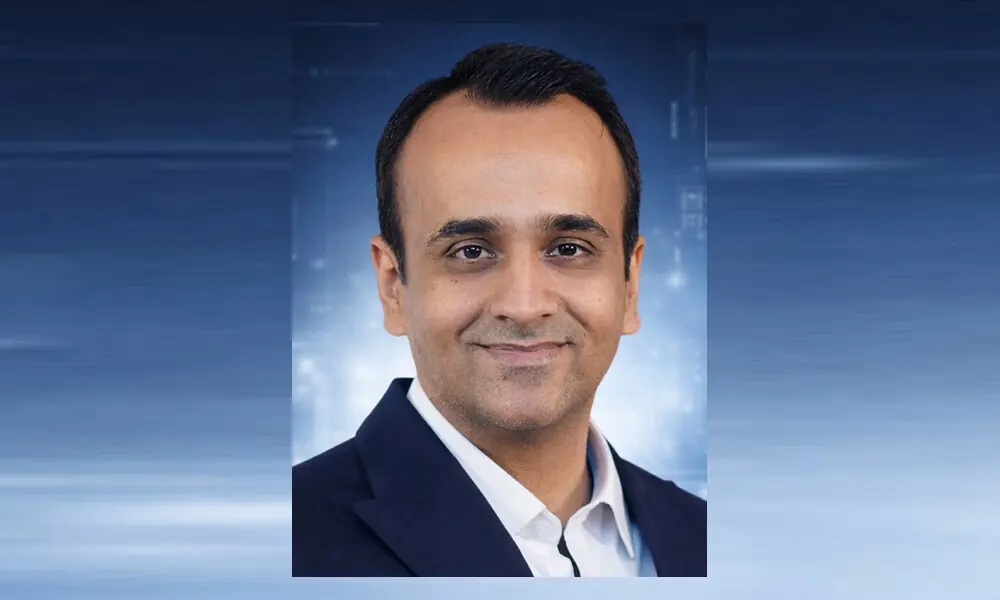
Abdul Haseeb is the Managing Director & CEO of TMC (Pvt.) Ltd, one of Pakistan’s leading enterprise technology and digital transformation firms.Under his leadership, TMC has grown into a 1,000+ person organization with a presence across Pakistan, the Middle East, and North America.The company partners with global technology leaders such as SAP and Qlik and has delivered transformation solutions for 310+ organizations across sectors including FMCG, telecom, energy, manufacturing, healthcare, and the public sector.TMC has also been recognized as Pakistan’s Top SAP Partner for five consecutive years (2020–2024) and is a multiple SAP Quality Award winner,Following are the edited excerpts of a recent conversation BR Research had with him:BR Research: Before we dive in, tell us about your role at TMC and what the company does.Abdul Haseeb: Prof-essionally, I am the Managing Director of TMC. TMC is now an IT company of around 1,000 people. We primarily focus on SAP implementation, cybersecurity, digital AI, and data. We have a presence in Lahore, Karachi, and across international markets including the UAE, Qatar, Saudi Arabia, and the US.I have been running this setup for around 16 years, and we have seen both organic and inorganic growth — including acquisitions such as Siemens Pakistan’s SAP Business and Xnrel — which have now been merged under the TMC umbrella.BRR: As an industry expert, how do you see Pakistan’s IT sector today — and how are Pakistani tech companies performing within the global technology ecosystem?AH: There are three ways to look at it, starting with the global perspective. From a global standpoint, Pakistan does have good talent that can attract work. But when international clients look deeper at the level of expertise, we have very little to provide at scale.Globally, IT work typically falls into three models. The first is providing services and resources to consulting companies, projects, and clients. The second is being a technology provider, where you build and sell products. The third is providing back-office support for large international companies.In Pakistan, we are mainly operating in the first category. We do not have much of the second category — large-scale enterprise B2B products operating globally. And we also lack the third category — the presence of major global firms running large development centres or back offices here.BRR: How does this compare with regional competitors?AH: If you look at countries competing for services work, Pakistan’s scale is still low compared to geographies of comparable size. Even Egypt, for example, has built much more service talent at scale.India is a different benchmark entirely. India has setups like PwC, SAP Labs, and Oracle innovation centres. Pakistan does not have large international development centres like that.BRR: You mentioned a gap in expertise. What specific skills is Pakistani tech talent lacking?AH: You have to understand the difference between a university graduate and an employable resource in the global market. A global company wants someone productive in a defined role — and there is a major gap between that expectation and what our graduates typically offer.An employable resource is someone who has genuine experience in a specific tech stack. International markets generally do not hire “freshers.” Freshers can be inducted into local training programs, but global clients typically want experienced professionals.BRR: So how do we close this gap?AH: We need large-scale training — and not superficial training. People assume a 3-to-6-month course can produce a globally competitive resource, but that is not realistic.What is required is structured on-the-job training, real project exposure, and time in productive environments. That is how you build a large population of employable professionals.BRR: What role should universities and academia play in this transformation?AH: If academia is to play its role, it must provide the training and exposure that the industry currently has to provide internally.Universities might teach a basic course on SAP or Oracle, but they lack practical industry application. Academia needs stronger linkages with industry so that they teach practical, market-relevant skills.Also, universities must keep up with technology cycles. Technology changes extremely fast. A tech stack can have a shelf life of only a few years. By the time a university develops a program, the market has already moved. Universities need a more robust mechanism to stay current.BRR: Are there global models Pakistan can emulate — particularly India?AH: In India, big companies like HCL built their own campuses where they run training and onboarding programs at scale.HCL produces around 5,000 trained people annually, with a substantial portion trained directly by the company.India also has institutions like IIT, which produce talent that meets global standards. Pakistan has fewer such institutions.India’s industry reached a scale worth billions of dollars, and that scale allowed them to train and absorb talent systematically.BRR: Does Pakistan need investment first to reach that scale?AH: It’s a chicken-and-egg problem, but the “India boat” has sailed. Pakistan now has to do it organically.Companies like TMC are already growing aggressively. We grow our revenue by 35–40% annually, and others are also expanding. If the government wants to help accelerate this, there are things it can do — but companies will continue regardless.BRR: How is TMC approaching the talent issue internally?AH: We have our own training institute called Knowledge Streams. We run a university alliance program and train around 1,000 students annually, and we hire roughly 250 of them.This solves our own company’s needs at our current scale. But if we want to solve it at a national level, we need much larger and more structured interventions.BRR: Do you think freelancers are helping the country — or holding it back?AH: From an economic standpoint, a structured setup is always better than freelancers because structured firms can build capability, create more value, train people, and scale.I am not discouraging freelancers. But if you want the country to move up the value chain, you need strong companies. Companies can grow into billion-dollar entities and build systems — including training, product development, and exports at scale.Right now, freelancers are given incentives like 1% income tax, while registered companies face much higher taxes — in some cases up to 33% on domestic income.This creates a structural imbalance. Companies are the ones that can deliver scale, higher value-added services, and long-term ecosystem development. The policy environment should reflect that.BRR: How can Pakistan move beyond traditional outsourcing/BPO models toward more innovative, value-added services?AH: There are multiple dimensions.First, we must raise the talent quotient. This includes improving how universities produce talent and how companies train people with authentic experience.Second, we need more entrepreneurship. Entrepreneurs are the ones who build high-margin businesses, drive innovation, and pull the ecosystem upward.Third is domestic consumption. Pakistan is a large country. If we grow indigenous technology adoption internally, we will develop deeper capability and solutions — and move beyond commoditized hourly billing.This is similar to the China model: nurture and nourish the industry internally first.BRR: How important is indigenous development of AI and emerging technologies for Pakistan’s digital future?AH: Technology is always emerging. There is no concept of “past technology.” In the tech business, you are either driving the road roller — or you are part of the road being rolled over.India rode the cloud wave successfully. We missed that boat. Now there is an AI wave, and we must leverage it fully.Globally, growth is now being driven by AI — whether you look at China, the US, or major global technology leaders. Everything from geopolitics to the global economy is increasingly dependent on AI. Our focus should be on AI.BRR: Where do we stand as a country in terms of AI progress?AH: We are slow.The recent AI summit was a good move, and it started a campaign. But we need AI in our schools, workplaces, and government departments. We need aggressiveness.Look at the UAE, Qatar, or the US. Companies are already restructuring workforces using AI. AI will define the future of nations.BRR: Should Pakistan focus on attracting foreign investment — and is it realistic to attract companies like Google?AH: We don’t necessarily need “investment” in the traditional sense. What we need is for foreign companies to establish back offices and development centres here. That is how technology transfer happens.We should not just focus on FDI. Companies will come if it benefits them.Historically, Pakistan has also had issues like restrictions on repatriation of profits, which discouraged international firms. Now, we must create a business environment where companies want to come here.Google’s move to set up in Pakistan is highly appreciated, because they are one of the four major global movers in AI. We should welcome them with open arms.BRR: Do you think Pakistan is over-regulated? Is the issue the regulations themselves — or the way they are implemented?AH: Developed countries actually have far more regulation and compliance than we do. What we lack are the right regulations.Right now, IT companies have to comply with many things that are not even relevant to the industry. What we need is stronger enforcement of laws around Intellectual Property (IP) and contracts.Everything should be aligned toward Ease of Doing Business.BRR: Can you give an example?AH: In Dubai, the UK, or the US, a process may have ten steps — but it happens instantly. In Pakistan, even one step can take forever.For example, local banks demand cash-backed bank guarantees. In the US, there is an insurance-based setup where you can obtain cyber, performance, or other guarantees in an hour without blocking your capital.This is the direction we need to move in.BRR: What two or three major reforms would you recommend for Pakistan’s IT sector right now?AH: First, the talent pipeline must be addressed holistically. We should encourage companies to take more fresh graduates and train them.If a company typically takes 10 graduates, it should take 30 or 40. We can learn from the medical sector.Medical graduates have a mandatory house job. Why can’t we have a concept of “Teaching Tech Firms” that do the same?Second, we need structural initiatives for entrepreneurship. It is not just about loans — it is about mentorship, ecosystem support, and monitoring outcomes.Right now, government initiatives are often fragmented — training programs, micro-loans, and co-working spaces exist, but separately. We need deeper, larger-scale incubation models with more funding and focus.

#ECONOMY
Stabilisation versus stagnation: rising poverty amid missing development
brecorder119d ago

Stabilisation versus stagnation: rising poverty amid missing development

The official data released by the Planning Commission on poverty and income inequality comes as no surprise. Real household income, adjusted for inflation, in 2024-25 is 13 percent lower than the level achieved in 2015-16, while real household consumption has fallen by 8 percent over the same period. This implies that the economy is stagnating, and there is no credible growth story the country can offer to investors.An obvious outcome of falling income is rising poverty, which is now at an 11-year high, while income inequality stands at a 27-year high. Out of 240 million people, 70 million are living below the poverty line. That translates into 29.4 percent of the population struggling to survive today, compared to 21.9 percent in 2018-19.Whatever growth the economy has witnessed in recent years appears to have favored the relatively affluent class. Income inequality, measured by the Gini Coefficient, stands at 31.7 in 2024-25, compared to 28.4 in 2018-19.The rise in inequality is more pronounced among rural dwellers, increasing from 25.1 to 29.2. However, urban inhabitants remain more unequal, with the latest reading at 34.4. At the same time, rural poverty is significantly higher and rising more steeply, standing at a staggering 36.2 percent, up from 28.2 percent.The impact of climate change, in the form of more frequent floods and changing weather patterns, is directly affecting the livelihoods of small farmers. The situation has been worsened by the mishandling of support price mechanisms and restrictions on commodity trade imposed by both provincial and federal governments.Massive inflation and falling manufacturing are hurting urban populations more severely. Large Scale Manufacturing, one of the biggest employment generators and export earners, has an index reading of 115 in 2024-25, significantly lower than its peak of 128 in 2021-22. This reflects weak market conditions, as the official unemployment rate has risen to 7.1 percent from 6.3 percent in 2021.Not all LSM sub-indices are sluggish. There has been a recent bounce back in automobiles, while wearing apparel is performing well, as reflected in the highest-ever level of readymade garment exports. On the other hand, food and textiles, particularly spinning and weaving, continue to struggle.Domestic sectors catering to large segments of the population are not showing healthy signs of growth. Poverty is rising while the middle class is shrinking. There is a youth bulge, but there is no growth story to support it. That is one of the prime reasons for shrinking investment, particularly foreign direct investment, and the exodus of multinational companies from the country.There was a flurry of investment and growth euphoria in the early 2000s, when poverty levels were falling and the middle class was expanding. The narrative then centered on rising incomes across a broad population, which attracted investment. Now, after reaching a peak, the economy at large is stagnating. Broad-based growth is missing, and general socioeconomic uplift is absent.This raises questions about the efficacy of continuously running stabilization policies that have failed to transition into a sustainable growth model. There are no major employment generation projects, and exports are stagnating. Existing manufacturing sectors have slack capacity, while the agriculture sector is struggling. The services sector cannot expand indefinitely in the absence of strong manufacturing and agriculture.Although the economy emerged from the COVID shock, it has failed to articulate a credible post-pandemic growth model. Recently, reliance for investment, which is essential for growth, has shifted toward geopolitics, but this has so far failed to deliver economic dividends.Authorities need to think in broader terms. The country has averted economic default, but its short-term external debt and growing domestic public debt remain the biggest impediments to triggering a growth spurt. In the early 2000s, growth was supported by debt restructuring, which created fiscal space for deregulation and reforms.The report card this time is poor, and a rethink of strategy is required. Debt, particularly the external profile, must be addressed. Banks must play a role in reducing domestic debt servicing, which is crowding out fiscal space for development.The poor of Pakistan cannot endure this trajectory indefinitely. Stabilization through the strangulation of growth is not a viable strategy. A bold rethink is required to deal with debt, broaden the tax base, and slash government expenditure. The state must take the lead so that the private sector can follow. Without such action, poverty and inequality will remain elevated, and hollow stabilization will continue until another crisis emerges.Copyright Business Recorder, 2026

#ECONOMY
Weekly Cotton Review: Prices show upward trend on better trading volumes
brecorder119d ago

Weekly Cotton Review: Prices show upward trend on better trading volumes

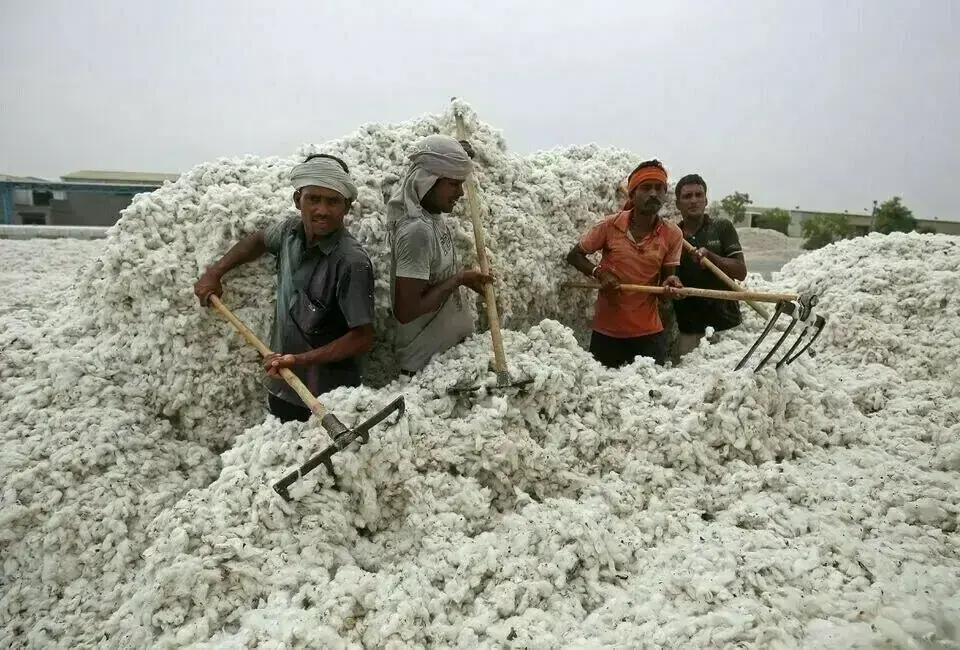
KARACHI: An overall upward trend in the prices of quality cotton has been observed in the domestic cotton market, while trading volumes have also remained relatively better.However, according to market sources, the availability of quality cotton is declining rapidly, which is likely to put pressure on prices in the coming days. On the international front, cotton prices in New York have also recorded an increase, the effects of which are being felt in the local market, as well.Separately, on a concerning note for the textile sector, the Federal Board of Revenue has decided to take strict action against textile spinning units for refusing to install video analytics, adding yet another burden on an industry that is already reeling under the weight of a super tax.Economic expert Syed Mudabbir Shah expressed serious concern over the situation, stating that the FBR, having already crippled the textile spinning sector, is now delivering the final blow to bury it altogether.In the agricultural sector, the Punjab Department of Agriculture has announced the allocation of 700,000 acres of land for the cultivation of early-season cotton. However, it is worth noting that Pakistan is no longer self-sufficient in cotton production and, due to persistent production challenges, the country has become heavily dependent on imports, which is placing an additional burden on the national economy.Furthermore, the dispute over the Cotton Exchange Building remains unresolved and the matter has been referred to the honourable court.As per details, stability in cotton prices has been observed across the domestic cotton market, driven largely by the keen interest of textile mills in procuring quality cotton. As the availability of quality cotton continues to diminish with each passing day, large textile mill groups are moving swiftly to secure whatever quality cotton remains in the market. On the other hand, several ginners who still hold stocks of quality cotton are demanding higher prices, while two major traders are also actively selling cotton in the market. Overall, trading volumes are showing improvement compared to previous days, although business activity is gradually slowing down due to the holy month of Ramadan.In the agricultural sector, Punjab has drawn up a program to cultivate early-season cotton on 700,000 acres this year. In the fertile regions of Sindh, early sowing takes place as it traditionally does every season. Cotton is planted after the wheat crop has been harvested, and in areas where wheat was not cultivated, early cotton is also being sown to make productive use of the available land.The country’s textile sector continues to remain in a state of distress, and the All Pakistan Textile Mills Association (APTMA) periodically conveys its grievances to the government; however, these complaints receive no attention, leaving the conditions of textile mills unchanged. All industries have strongly opposed the Super Tax imposed by the government and have appealed for its immediate withdrawal.On the other hand, the Karachi Cotton Exchange building has been sealed by ETBP with the assistance of the FIA since December 12. A case has been filed in the honourable court, the hearing of which is scheduled for March 4. Due to the sealing of the Cotton Exchange building, the daily cotton spot rate has not been issued since December 12, which has created a sense of uncertainty in the market.In the provinces of Sindh and Punjab, quality cotton prices are ranging between Rs. 15,300 and Rs. 16,800 per maund, depending on quality and payment conditions.Naseem Usman, Chairman of the Karachi Cotton Brokers Forum, stated that an overall bullish trend remained dominant in international cotton futures prices. New York cotton futures were trading between 64 and 69 US cents per pound. According to the USDA’s weekly export and sales report, a total of 466,300 bales were sold for the year 2025-26, with Vietnam topping the list by purchasing 144,800 bales, Bangladesh coming in second with 126,400 bales, and Pakistan securing third position with 50,000 bales.For the year 2026-27, a total of 33,100 bales were sold, with Bangladesh leading the list by purchasing 15,000 bales, Guatemala securing second place with 13,200 bales, and Nicaragua coming in third with 2,600 bales. During the same period, total exports amounted to 172,600 bales, with Vietnam topping the list by importing 51,500 bales, Turkey coming in second with 36,700 bales, and Pakistan securing third position with 20,000 bales.The Federal Board of Revenue (FBR) has decided to take strict action against textile spinning units that refuse to install video analytics (Digital Eye) systems in their facilities. These measures include import restrictions, sealing of business premises, penalties, suspension of sales tax registration, blacklisting, and other steps.Sources told Business Recorder that the FBR has decided to take comprehensive measures to enforce video monitoring systems or video analytics in spinning units. All field formations of the FBR have been directed to take strict action against non-compliant spinning units, and these measures will be enforced in the event of non-cooperation by such units.=Out of a total of 421 registered spinning units, approximately 300 are currently operational, where Digital Eye systems will be fully installed to monitor the movement of undocumented cotton bales. Units that resist compliance will face import bans, fines, sealing of business premises, suspension of sales tax registration, blacklisting, and obstruction in clearance from production sites.According to details, the FBR had earlier decided to electronically monitor the production of registered units through video analytics from November 1, but the deadline passed without implementation. The deadline was subsequently extended to December 31, 2025, which has also now lapsed.The total cotton consumption of textile units stands at approximately 13 million bales, of which 5 to 6 million bales come from domestic production and the rest are imported. Around 9 million bales fall within the tax net, while the remainder are consumed locally without payment of sales tax, commonly referred to in local parlance as “gol maal.” The FBR’s objective is to capture this unreported gol maal.Pakistan’s Federal Board of Revenue (FBR) has declared that it will install digital video analytics systems in all textile spinning units across the country at any cost, setting the stage for a major confrontation with one of the nation’s most critical industrial sectors.The FBR considers the spinning stage a key chokepoint in the textile supply chain for monitoring the movement of undocumented cotton bales. Officials confirmed that the All Pakistan Textile Mills Association (APTMA) has resisted the implementation of video analytics systems at the spinning level. The FBR had earlier assured textile spinning units of tax credits to cover the installation costs of the surveillance systems, and a joint FBR-APTMA committee had been formed to oversee the rollout. When affected units approached the Lahore High Court seeking relief, the court declined to grant a stay order against the installation. The FBR has now warned that it will proceed with the deployment regardless and will take stringent action against any unit that refuses to comply.The development comes against the backdrop of a deepening crisis in Pakistan’s cotton sector. A new report released by EMPAK Strategies warns that Pakistan has lost the self-sufficiency in cotton it maintained for decades and is now rapidly becoming dependent on expensive imports, placing mounting pressure on foreign exchange reserves and raising serious concerns about the future of the country’s largest export industry.According to the report, while Pakistan’s cotton sector showed some signs of recovery during the 2024–25 season, deep structural problems and climate-related pressures continue to pose severe threats to long-term stability. Although cultivated area has increased compared to recent years, it remains significantly below levels recorded a decade ago, reflecting an incomplete recovery following the sector’s prolonged decline. Cotton production this season is estimated at approximately five million bales, representing a modest rebound from the severe losses of previous years. Output had fallen from around seven million bales in 2015–16 to approximately 3.9 million bales in 2022–23, driven by environmental shocks, policy gaps, and shifting cropping patterns. Researchers describe the current recovery as fragile and insufficient to restore Pakistan’s former status as a largely self-sufficient producer. The country is now heavily reliant on imports to meet domestic demand, spending an estimated two to three billion dollars annually on cotton imports.Cotton analyst Syed Mudabbir Shah has described the FBR’s surveillance drive as “the final blow to bury the spinning sector after already killing it.” He pointed out that Pakistan’s spinning mills already face the most expensive electricity in the region, high borrowing costs, and elevated interest rates. He further noted that among the four major textile nations in the region — China, Vietnam, Bangladesh, and India — no tax authority has installed surveillance cameras inside spinning mills, raising questions about why Pakistan is pursuing a measure that has no regional precedent.Industry insiders have raised additional concerns beyond the competitive disadvantage. Reports indicate that spinning mills are being asked to pay installation fees of four to five million rupees per unit for the camera systems, even as the FBR has withheld tax refunds owed to the same mills. A spinning mill owner from Karachi warned that just as NADRA data is reportedly available in the market for a few hundred rupees, video footage from inside spinning mills could similarly end up being traded, exposing sensitive commercial information.Spinning mills guard their production volumes, machinery configurations, and operational methods as closely held business secrets in a fiercely competitive environment. Two mills running identical machinery may produce vastly different output owing to proprietary techniques, and no mill owner is willing to have those methods exposed to competitors or the wider market.The industry is also grappling with severe closures. A large number of spinning mills have shut down across Pakistan over the past year, with an estimated 30 to 40 mills in Punjab alone on the verge of closure. Industry representatives stress that a single mill operating 20,000 spindles provides direct and indirect employment to more than 3,000 people, making the sector’s collapse a serious threat to livelihoods across the country. Critics argue that 34 government departments have already collectively undermined the spinning industry and question what guarantee exists that FBR officials, once granted camera access to mill premises, will not use that leverage for blackmail.Copyright Business Recorder, 2026

#ECONOMY
Economy: country struggles day in, day out
brecorder119d ago

Economy: country struggles day in, day out

EDITORIAL: Pakistan’s economy is failing to find a path to success. The underlying model remains the same; only the faces change. It has become a scramble to grab a chunk of a shrinking pie. The basic structure for social and economic upward mobility is being completely ignored. Inequality and poverty are rising, while the state’s fiscal position is deteriorating. It needs a reset.A proven way forward is to uplift the masses by creating economic opportunities. Within a generation, many countries have achieved social mobility through economic gains driven primarily by export-led growth. That is what Pakistan should strive for, alongside a massive overhaul of governance in public service delivery, especially in education.There is recognition—at least in slogans and public speeches—of the importance of economic and social uplift through export-based growth. However, the ground realities are starkly different. Fiscal power lies with the provinces, and the larger ones are on a lavish spending spree.Political parties in power appear reluctant to exercise firm control at the centre, preferring instead to retain fiscal resources within their respective provinces. This explains their resistance to devolving power to the third tier of government. There is little incentive to broaden taxation within municipal and provincial domains. Instead, the burden falls on the federal government, which taxes formal income heavily. At the same time, inefficiencies in the energy sector are eroding competitiveness in export markets.Tax collection on land is minimal—Punjab collects less in property-related taxes than a single major city in India. Agriculture income tax and sales tax on services remain far below potential, while manufacturing is burdened by high taxation and expensive energy.The federal government is close to bankruptcy and requires burden-sharing from the provinces. The tax base must be broadened by bringing all stakeholders into the net. Municipalities should be empowered to collect taxes and provide amenities to make cities more liveable.At the same time, the federal government must reduce its footprint in the energy sector. The sector’s debt burden should be shared with the provinces. State-owned enterprises must be cleaned up and privatised, as has been attempted in the case of the national carrier, PIA. The government must reduce its overall size. Greater fiscal prudence is especially needed at the provincial level, where new inductions into public employment are rampant. This trend must stop.Even if all this is done, policy consistency remains imperative. It is currently the biggest impediment to investment, which is at a multi-decade low. Foreign direct investment has nearly dried up, and there is little sign of new local investment in export-oriented sectors.Government rhetoric is not enough. Credibility must be restored. With every regime change, policies shift dramatically, often by 180 degrees, and the focus tends to shift toward weakening opposition and associated business groups rather than ensuring economic continuity.Political suppression may create an illusion of stability, but it does not attract investment. Sustainable growth requires inclusiveness and institutional strength.Over-reliance on workers’ remittances to finance the trade deficit will not allow the economy to progress structurally. Remittance inflows are largely used for consumption, which fuels imports. This creates an illusion of external stability while delaying necessary structural correction.The structural reset is missing. Unless the fundamentals are addressed, the cycle will simply continue.Copyright Business Recorder, 2026

#ECONOMY
Minor Food mulls IPO in Hong Kong by end of 2026
bangkokpost119d ago

Minor Food mulls IPO in Hong Kong by end of 2026

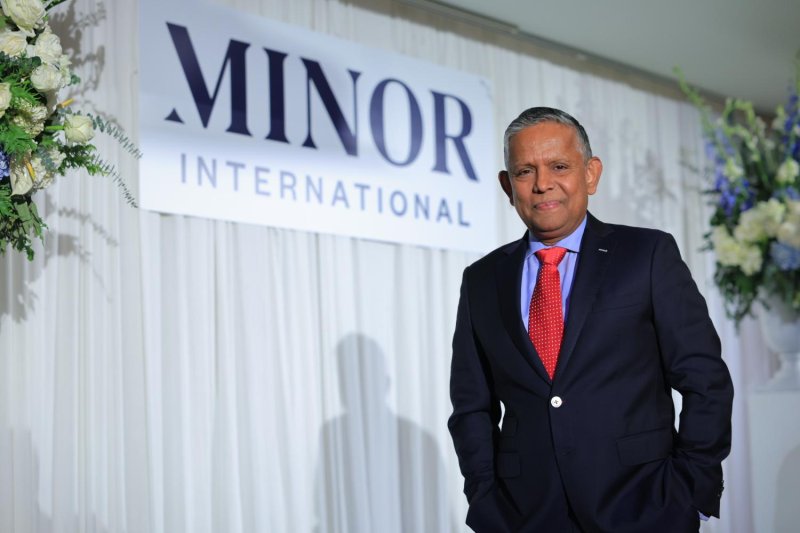
Minor Food, a subsidiary of SET-listed Minor International, is exploring an initial public offering (IPO) in Hong Kong by the end of the year, while its hotel arm, Minor Hotels, prepares to launch a US$1-billion real estate investment trust (REIT).

#STOCKS