
simpleflying10d ago
Here's Who Actually Earns American Airlines Executive Platinum Status In 2026
Anyone can now reach Executive Platinum without spending hundreds of hours in the air.
#ECONOMY
Anyone can now reach Executive Platinum without spending hundreds of hours in the air.

The drive for AI monetisation among Chinese tech companies has become a battle over “delivering measurable business value” rather than raw technical performance, according to Alex Yao, head of China equity research at JPMorgan. China’s AI landscape was rapidly consolidating from a fragmented “hundred-model” battle down to a smaller group of globally competitive leading players, particularly those that could transform consumer-facing features into reliable enterprise-grade infrastructure, Yao...

The Chinese legal system is grappling with a surge of artificial intelligence cases, but experts have warned that the lack of a unified legislative framework is hampering efforts to tackle the problem. In a recent landmark case, a court in the eastern city of Hangzhou ruled against a tech company that had fired one of its workers after he refused to accept a demotion and pay cut, with the company telling him he could be replaced by AI. The worker had been employed by a fintech firm to evaluate...

Apple has unveiled macOS 27, codenamed “Golden Gate,” a significant update designed exclusively for Apple Silicon Macs. This release marks a pivotal shift, as it officially ends support for Intel-based Macs, allowing Apple to focus entirely on optimizing performance, refining design, and integrating advanced AI capabilities. Currently available as a developer beta, the public beta [...] The post The Biggest Changes Coming to macOS 27 Golden Gate appeared first on Geeky Gadgets .

CHICAGO (AP) — Yoshinobu Yamamoto carried a no-hit bid into the ninth inning, sending the Los Angeles Dodgers to a 7-1 victory over the Chicago White Sox on Saturday.
9 Best Smart Home Gadgets Under ₹5,000 News18 5 smart home devices I refuse to spend a lot of money on Yahoo Tech Best Home Automation Gadgets Under Rs. 5,000 Analytics Insight

From smart plugs and security cameras to leak sensors and smart locks, these affordable gadgets can make your home safer, smarter and more convenient

By Lauren Kent, CNN (CNN) — What would you do with an $80,000 bonus, more than quadruple the amount of an average annual salary? Or with $140,000 in debt relief? Those are the questions being posed to men in Russia, as the military advertises multi-million-ruble incentives to fight in Ukraine. Ads plastered on roadside billboards The post Russia’s overwhelming manpower advantage against Ukraine is starting to wane appeared first on KRDO .

New York Knicks won the 2026 NBA Championship by beating the San Antonio Spurs 94-90 in the fifth game of the final. It is the third time the Knicks have won the national trophy, after 1970 and 1973.T...
Ocenaudio 3.19.3 by Razvan Serea Ocenaudio is a full featured, fast and easy to use audio and music editor. It is the ideal software for people who need to edit and analyze audio files without complications. Ocenaudio also has powerful features that will please more advanced users. To assist ocenaudio development, a powerful toolset of audio editing, analysis and manipulation called Ocen Framework was created. ocenaudio is also based on Qt framework, a well known library for cross-platform development. Cross-platform support ocenaudio is available for all major operating systems: Microsoft Windows, Mac OS X and Linux. Native applications are generated for each platform from a common source, in order to achieve excelent performance and seamless integration with the operating system. All versions of ocenaudio have a uniform set of features and the same graphical interface, so the skills you learn in one platform can be used in the others. VST plugins support Ocenaudio supports VST (Virtual Studio Technology) plugins, giving its users access to numerous effects. Like the native effects, VST effects can use real-time preview to aide configuration. Real-time preview of effects Applying effects such as EQ, gain and filtering is an important part of audio editing. However, it is very tricky to get the desired result by adjusting the controls configuration alone: you must listen the processed audio. To ease the configuration of audio effects, ocenaudio has a real time preview feature: you hear the processed signal while adjusting the controls. The effect configuration window also includes a miniature view of the selected audio signal. You can navigate on this miniature view in the same way as you do on the main interface, selecting parts that interest you and listening to the effect result in real time. Multiselection for delicate editions To speed up complex audio files editing, ocenaudio includes multi-selection. With this amazing tool, you can simultaneously select different portions of an audio file and listen, edit or even apply an effect to them. For example, if you want to normalize only the excerpts of an interview where the interviewee is talking, just select them and apply the effect. Eficient edition of large files With ocenaudio, there is no limit to the length or the quantity of the audio files you can edit. Using an advanced memory management system, the application keeps your files open without wasting any of your computer's memory. Even in files several hours long, common editing operations such as copy, cut or paste happen almost instantly. Fully featured spectrogram Besides offering an incredible waveform view of your audio files, ocenaudio has a powerful and complete spectrogram view. In this view, you can analyze the spectral content of your audio signal with maximum clarity. Advanced users will be surprised to find that the spectrogram settings are applied in real time. The display is updated immediately when altering features such as the number of frequency bands, window type and size and dynamic range of the display. Ocenaudio 3.19.3 changelog: Fixes issues with MP4 files with more than 8 channels Fixes incorrect VBR detection for some CBR MP3 files Other bug fixes and improvements Download: Ocenaudio 64-bit | Portable | ~40.0 MB (Freeware) Download: Ocenaudio for Linux and Mac OS View: Ocenaudio Homepage | Screenshot Get alerted to all of our Software updates on Twitter at @NeowinSoftware
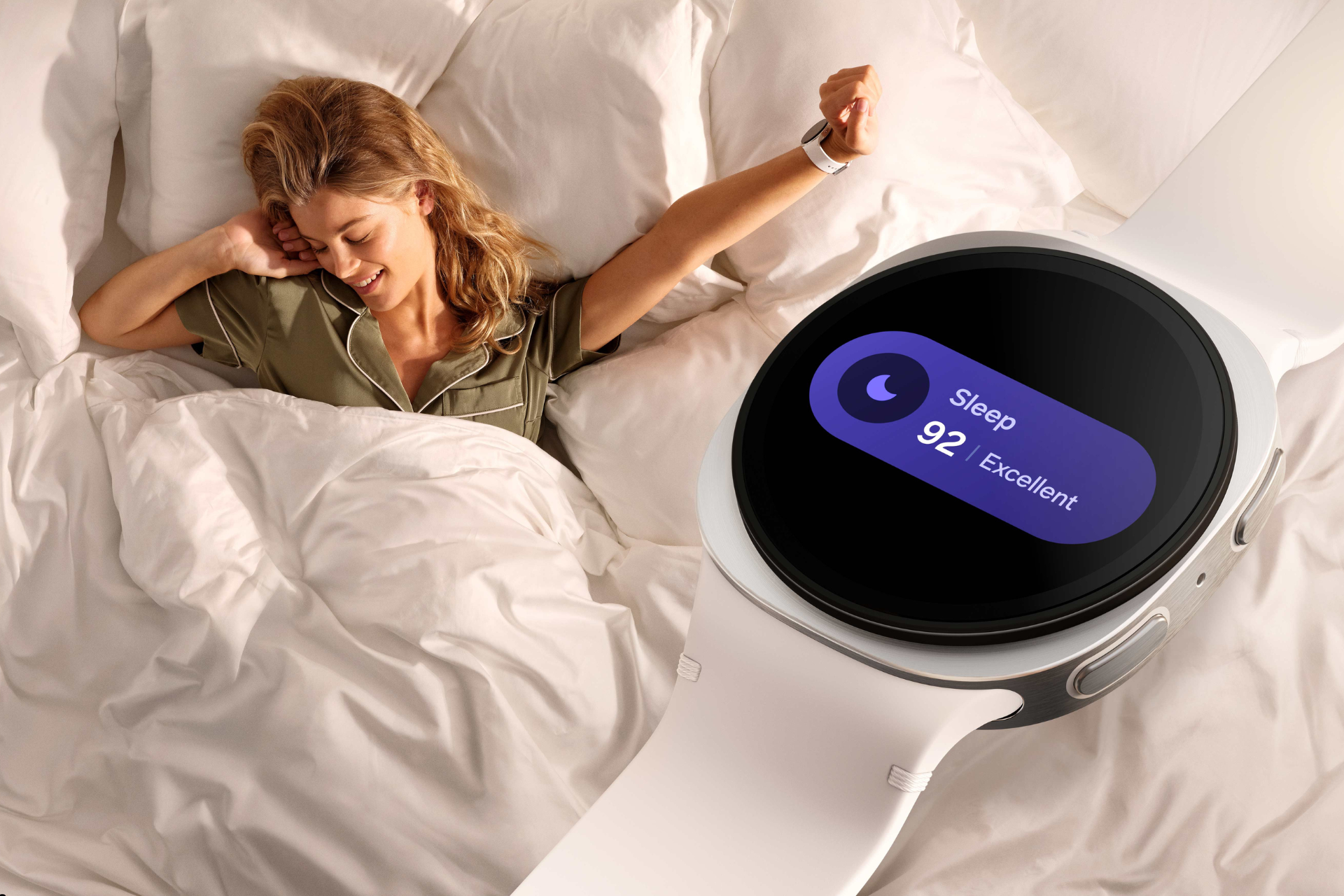
If you're wearing a Galaxy smartwatch, Samsung is treating you to a major health-tracking app update. The South Korean firm's wearables are designed to track your fitness, manage smart home devices, and provide Artificial Intelligence (AI)-powered health insights like sleep apnea detection. This is similar to the recently released Oura Ring 5 and Google's new Fitbit Air . And now with Samsung's new update to the watch's accompanying app, you'll be treated to a slew of handy new features. Existing Galaxy Watch owners will be treated to a redesigned layout, a new Vitals dashboard, and a Heart Health Score. However, key features within this update, like the upcoming Daily Cardio Load, Fitness Index and additional coaching advice, will be reserved for the hotly anticipated Galaxy Watch9 — expected to release later this summer. Here's everything you can expect to find in the app's latest instalment. Samsung's app had a makeover, with everything now organised into five easy-to-navigate sections: Sleep, Activity, Nutrition, Mindfulness and Vitals. Hon Pak, Senior Vice President for Samsung's Digital Health Team, said: "Samsung Health is evolving to connect health data measured by Galaxy Watch with AI-based insights, enabling users to understand their physical and mental condition more easily and intuitively. "Samsung Electronics will continue to expand proactive and personalized health management experiences based on the connected Galaxy ecosystem and digital health innovations." For example, complex health data your watch collects while you're sleeping and moving will be translated into straightforward advice you can actually use. It's similar to having a personal health coach on your wrist who speaks more conversationally instead of using intense medical jargon. This can be found in the revamped Vitals feature. Previously, the watches only monitored specific health metrics to help measure users’ daily Energy Score. Now it tracks five key signals overnight – your heart rate, heart rate variability, breathing rate, skin temperature and blood oxygen levels – then compares them to your normal resting baseline. And instead of the app bombarding you with notifications, it only pings you when it finds something genuinely off, like an abnormal heart rate. This is similar to Oura and Fitbit, which give insights into your workouts, steps, sleep, heart rate, and more without tethering you to a steady stream of notifications from your other devices. If you wake up feeling rough, the update can also help you work out whether you need extra rest or might be coming down with something. This is similar to the features already found in the Oura Ring's app, which divides up your different sleep patterns in a breakdown chart. LATEST DEVELOPMENTS 'Massive exploit' of Meta AI chatbot lets hackers break into more than 20,000 Instagram accounts New Oura Ring update brings one of the Ring 5's most exciting features to Ring 4 End of Freeview? UK looks to 'switch off terrestrial television' and replace it with broadband Best VPN deals Apple unveils slew of child safety features ahead of Keir Starmer's 3-month deadline Then there's the Heart Health Score, which builds on Samsung's previous Vascular Load feature. It pulls together data about your sleep, stress levels, physical activity and body composition into one simple daily number, making it much easier to spot which habits are helping or hurting your heart health long-term. For fitness enthusiasts, the Daily Cardio Load feature is ideal during a gym session, and you're looking to really push yourself. It measures the strain on your cardiovascular system and calculates your maximum training capacity, then suggests the right intensity and rest periods to hit your goals without overdoing it. It takes out the guesswork on whether you should go all out or take it easy — the watch figures it out for you. The Fitness Index is meant to take things further by analysing your heart rate, VO2 max ( how efficiently your body uses oxygen during exercise), and daily steps, then comparing them against people with similar metrics. It spots your strengths and weaknesses, serving up personalised targets and content to help you improve your overall fitness. There's also a brand-new Hearing Health feature that works across Samsung's Galaxy devices. It monitors the noise levels around you through your watch and delivers personalised insights to protect your ears, whether you're stuck on a noisy commute or blasting music during a workout. This particular feature competes directly with Apple's AirPods Pro 2 and AirPods Pro 3. It includes a "clinical-grade" hearing test — an over-the-counter hearing aid feature meant to track mild to moderate hearing loss. The buds also feature Hearing Protection, which is meant to reduce loud environmental noise. Samsung's app update is rolling out to everyone now. Our Standards: The GB News Editorial Charter