bgr_com77d ago
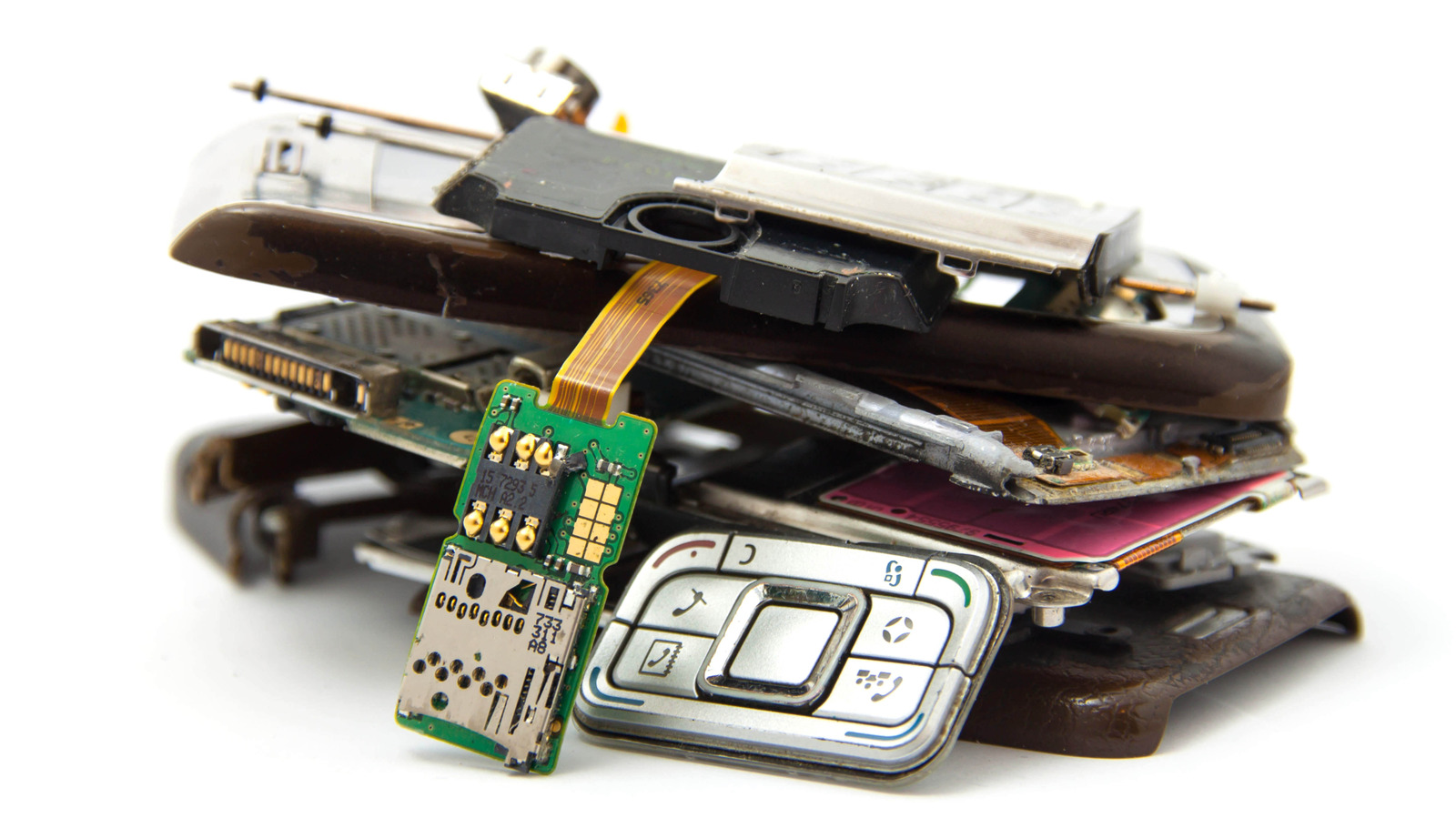
7 Discontinued Smartphone Features We Want Back (And 7 That Can Stay Gone)
Smartphones change every year, with features coming and going. Here are some discontinued smartphone features we want back, and some we can do without.
#TECH
Smartphones change every year, with features coming and going. Here are some discontinued smartphone features we want back, and some we can do without.
New PS5 Dashboard Update Leaks And Damn, Sony, That Looks Good Kotaku PS5 Update for April 2026 Stealth Drops UI Redesign playstationlifestyle.net Sony Is Beta Testing New PlayStation 5 UI Insider Gaming PS5 / PS5 Pro System Update: Sony is testing a new UI design for the home menu PlayFront New PS5 Console Update Is Changing One of Its Most Important Features ComicBook.com

The Middle East conflict has caused UK drivers to turn to hybrid cars in growing numbers as rising fuel prices hit the wallets of petrol and diesel owners. According to new data from Carwow, enquiries for hybrid vehicles jumped by 43 per cent in the first three months of the year compared to the previous quarter. The shift comes as ongoing tensions in the Middle East continue to drive up the cost of petrol and diesel, forcing many motorists to rethink their options. More than half of UK drivers are now reconsidering what car to buy next. A survey of over 1,200 people found 54 per cent are reassessing their choices due to higher fuel costs. TRENDING Stories Videos Your Say Around a quarter of drivers were found to be already looking at hybrids, with 26 per cent saying they would now choose a hybrid or plug-in hybrid specifically because of rising prices at the pump. The figures point ed to a clear change in behaviour, with drivers seeking cheaper alternatives without fully committing to electric vehicles. Interest in hybrids is now growing faster than demand for fully electric cars. While hybrid enquiries rose 43 per cent over the quarter, interest in electric vehicles increased by 35 per cent . Year-on-year, hybrid demand is also up by 35 per cent, showing the trend is not just a short-term reaction. Despite petrol cars still dominating overall sales, hybrids are increasingly seen as a middle-ground option, offering better fuel economy without some of the perceived drawbacks of electric vehicles. In fact, hybrids have now overtaken electric cars in terms of buyer interest, with reports showing how it made up 32 per cent of new car enquiries at the beginning of the year, compared to 30 per cent for EVs. The same pattern was found in the used market, where hybrids accounted for 18 per cent of enquiries, ahead of electric cars at 16 per cent. Many drivers appeared to see hybrids as a stepping stone. Around one in three said they view them as a transition before eventually switching to fully electric, while one in five said they would stick with hybrid technology long-term. LATEST DEVELOPMENTS UK drivers issued urgent petrol station warning as diesel is 'only 9p away from record high' M5 chaos: Drivers face 12mph traffic as 600-tonne 'abnormal load' impacts travel for thousands New congestion charge plans and toll routes could see thousands of drivers face 'supertax' When asked why they prefer hybrids, 24 per cent of drivers pointed to better fuel efficiency compared to petrol and diesel cars. Another 23 per cent said they liked being able to drive short distances on electric power without worrying about charging, while 19 per cent highlighted the flexibility for longer journeys. Among the most popular models, the Kia Sportage has seen the biggest surge in interest, with enquiries up 56 per cent over the quarter. New entrants to the UK market have also gained ground. The Jaecoo 7 ranked second in popularity, while the Chery Tiggo 8 recorded a huge 149 per cent rise in enquiries. Other high-ranking models include the BYD Seal U and the MG HS. The latest data from the Society of Motor Manufacturers and Traders found that demand for plug-in hybrids has risen by 45.9 per cent this year, now making up more than 12 per cent of the market, while conventional hybrids accounted for a further 13 per cent. Siobhan Doyle, Consumer Writer at Carwow, said: "Hybrids hit that sweet spot, offering a mix of better fuel efficiency and lower emissions without the full commitment of charging. They ' re ideal for drivers who want the benefits of electric driving without worrying about charging stations. " Ms Doyle also pointed out some of the practical challenges with electric cars. "Not everyone has home charging, and public chargers aren't always reliable. Plus, recharging takes longer than refilling a petrol tank," she said. She highlighted that some newer plug-in hybrids can travel significant distances on electric power alone. For example, the Chery Tiggo 8 can cover up to 56 miles on electricity, while the Skoda Kodiaq can manage around 45 miles before switching to its petrol engine. Our Standards: The GB News Editorial Charter
(MENAFN - GlobeNewsWire - Nasdaq) Green Bay Copper-Gold Project, Canada Latest assays include 70.8m @ 4.0% CuEq including 19.2m @ 7.5% CuEq; These exceptional results will help underpin a ...

The Artemis II astronauts are chatting it up with their friends aboard the International Space Station. Still aglow from their triumphant lunar flyby, the three Americans and one Canadian put in a call to their station colleagues Tuesday while heading...

MARTINSBURG - As residential growth continues across West Virginia’s Eastern Panhandle, DRB Homes is expanding its presence with a range of new communities aimed at meeting demand from both local and out-of-state buyers.

On March 24, Meta hosted ‘Build to Lead: The Brussels AI Symposium’ — bringing together European Parliament President Roberta Metsola, US Ambassador to the EU Andrew Puzder, Italian Vice Minister Valentino Valentini, UK AI Adviser Matt Clifford, and leaders from industry and civil society to ask a straightforward question: can Europe seize the AI opportunity? Below are the opening remarks from Markus Reinisch, VP Public Policy Europe, Meta: “We are truly honoured to have you here today. And it’s a moment that, lacking a better word, feels a little heavy. I don’t know about you, but when I wake up and open the news, I often feel a deep sense of uncertainty: uncertainty about the economy, about security, and about the direction of the world. Yet in uncertain times, there is one constant in Europe: we need to build a resilient future. That future is built with strong institutions and highly skilled people, but above all, it is innovation that drives the growth and productivity we need to secure it. That’s why we’re here. AI, and the ecosystem around it, may be the single most important engine of resilience in Europe. Tonight, we’re celebrating some truly outstanding European leadership, champions who are shaping what comes next. We have companies like Essilor-Luxottica, Circus Group, and many others represented in this room. They are the builders, the makers, and the deployers of the next platforms.But before we continue celebrating, allow me to share a few uncomfortable truths. First: the global AI race, especially at the frontier, is not just moving fast. It is increasingly becoming a two-horse race between the United States and China. This is a contest for technological and economic leadership. But it is also a contest over whether Western democratic values are embedded in the technologies that will shape the future. That is what’s at stake. Second: Europe’s position, even as a potentially distant third, is not guaranteed. Across India and the Middle East, we see ambition matched with investment, and, crucially, rapid adoption. And that combination can change the global scoreboard faster than we might think. Which brings us to the real question – how do we scale European leadership fast enough for this moment? A few ideas are often raised. One is sovereignty, tech sovereignty and strategic autonomy. Personally, I do see the case for certain forms of digital sovereignty. But if our response to the most transformative technology of our time is to wait until we can replicate every layer of the stack ourselves, we will miss the momentum. Europe’s challenge is not primarily a sovereignty crisis. Right now, it is a relevance crisis. And relevance isn’t created by pulling up the drawbridge. Another idea, one I’m much more sympathetic to, is simplification. Europe must roll back some of the mistakes and barriers we have built over the last decades. But if we’re being honest, current simplification efforts are not yet ambitious enough. What do we expect when the same people asked to reform the regulatory framework are often the ones who just finished writing it? Too often, for every step forward, we seem to take two steps back. Simplification is absolutely the right goal, but its execution is underwhelming. That’s why I believe in a third way. Europe should back what we uniquely do well, world-class science, design, engineering, and the ability to turn technology into trusted products that people genuinely want to use. That is why I’m proud there are so many champions here tonight. And I’m proud of Meta, the company I represent, and our partnership with EssilorLuxottica on wearables, which I believe will become the next computing platform. When Europe leads in design and hardware, it doesn’t just create products, it reshapes industries and strengthens societies. But to do that, we have to stop holding ourselves back, especially by applying rules written for yesterday’s technology. Let me give one example. Many of you have experienced these [AI] glasses, and what’s truly special is the impeccable Italian design. But that uniqueness is undermined by requirements like battery replaceability, requirements that don’t fit the reality of this new category and don’t help Europe’s position as a technology leader. So my message tonight is simple: Europe does not need less ambition. Europe needs fewer self-inflicted barriers. And above all, Europe needs more confidence. If we can match our values with speed, and our principles with investment, Europe won’t just participate in the AI era, we will lead in it. Meta is an American company. But we are deeply invested in Europe, through our people, our partnerships, our business, and the broader innovation ecosystem. When Europe succeeds, Meta succeeds too. So let’s keep building, together, with pride in technology. And I genuinely believe that, in doing so, we can fall in love with the future again.” For more information about the event and to watch full videos of the sessions please click here. The post Can Europe Seize the AI Moment? appeared first on Meta Newsroom .
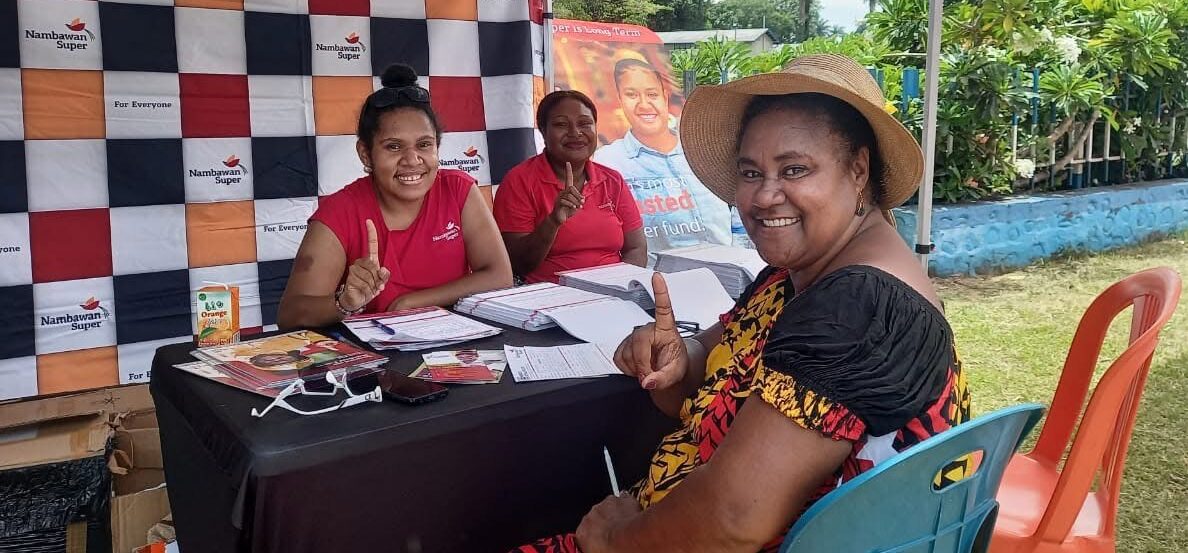
Stephen Howes and Jezreel Kassam examine the performance of Papua New Guinea's two dominant superannuation funds — Nambawan Super and Nasfund — from 2008 to 2024, finding that real returns to members have averaged just 1.9% and 2.8% respectively, below Australia's benchmark of 3.5%. They identify several constraints on performance, including unfunded government liabilities, limited access to offshore investment, growing reliance on government bonds and rapidly rising administration costs. The authors argue that a new round of reform is needed, starting with the superannuation regulator publicly benchmarking comparative fund performance. **AI Generation Score: 2/10** — The article draws on original analysis of annual reports and offers specific policy recommendations grounded in local institutional knowledge, consistent with expert authorship. Disclosure This research was undertaken with the support of the ANU-UPNG Partnership , an initiative of the PNG-Australia Partnership, funded by the Department of Foreign Affairs and Trade, and the ANU Greg Taylor Scholarship Fund. The views are those of the authors only. About the author/s Jezreel Kassam Jezreel Kassam is currently studying a Master of International and Development Economics at ANU's Crawford School of Public Policy. He is a Greg Taylor Scholar at the Development Policy Centre. Stephen Howes Stephen Howes is Director of the Development Policy Centre and Professor of Economics at the Crawford School of Public Policy at The Australian National University.

BitcoinWorld FDIC Proposes Landmark Rules for Stablecoin Issuers Under GENIUS Act, Excluding Deposit Insurance WASHINGTON, D.C. – In a significant move for the U.S. cryptocurrency sector, the Federal Deposit Insurance Corporation (FDIC) has proposed a comprehensive regulatory framework for stablecoin issuers under the newly [...] This post FDIC Proposes Landmark Rules for Stablecoin Issuers Under GENIUS Act, Excluding Deposit Insurance first appeared on BitcoinWorld .

Air travel for economy passengers has significantly changed over the past few decades. Things like free checked bags, adequate legroom, and a complimentary meal for flights lasting more than two hours used to be included in your ticket price. Now, in comparison, those are considered perks, often coming at a significant price increase. What we [...] The post Woman Takes United Airlines Flight. Then The Pilot Makes A Shocking Announcement: ‘We Have Failed You Today’ appeared first on BroBible.
Subsea7 and SLB OneSubsea Sign Strategic Collaboration Agreement with PETRONAS Suriname Stocks master_of_puppets Tue 07/04/2026 - 22:00 LU0075646355 SUBC Petronas 07/04/2026 - 22:00 Oslo Subsea7 and SLB OneSubsea Sign Strategic Collaboration Agreement with PETRONAS Suriname Non-regulatory press releases 90000-670089 Oslo Børs Newspoint Subsea 7 S.A. Euronext Oslo Børs Published 60101030 Oil Equipment and Services XOSL Language English Luxembourg - 7 April 2026 - Subsea 7 S.A. (Oslo Børs: SUBC, ADR: SUBCY) today<br /> announced the signing of a strategic collaboration agreement between PETRONAS<br /> Suriname E&P B.V. ("PETRONAS Suriname"), a subsidiary of PETRONAS and Subsea<br /> Integration Alliance (SIA), which comprises Subsea7 and SLB OneSubsea. The<br /> agreement creates a long-term framework for close collaboration on field<br /> development projects in Suriname.<br /> <br /> Through early engagement and integrated execution, the collaboration aims to<br /> simplify complex procurement processes, reduce total development costs and<br /> enhance delivery certainty. The optimisation of project timelines, combined with<br /> a reduction in execution risk, will enhance project economics and unlock<br /> opportunities across a portfolio of prospects in Suriname.<br /> <br /> Under the framework, SIA will provide pre-FEED, FEED and engineering,<br /> procurement, construction, installation and commissioning (EPCIC) solutions for<br /> multiple prospective projects. The scope includes subsea umbilical, riser and<br /> flowlines (SURF) from Subsea7, and subsea production systems (SPS) from SLB<br /> OneSubsea.<br /> <br /> Craig Broussard, Senior Vice President for Subsea7, said: "We are proud to be<br /> working with PETRONAS Suriname through this strategic agreement to establish<br /> strong, sustainable foundations in Suriname that will support growth in this<br /> emerging frontier basin. The agreement builds on our track record of<br /> collaborating with our clients to drive value creation through the delivery of<br /> optimised development solutions. We are excited to see the positive impact this<br /> work will have in the region."<br /> <br /> Olivier Blaringhem, CEO of Subsea Integration Alliance, said: "This is an<br /> exciting and important step for the development of the significant opportunities<br /> of PETRONAS Suriname in Suriname's frontier basins. The combined deepwater<br /> expertise and collaborative, agile approach of Subsea7 and SLB OneSubsea, will<br /> maximize value as the developments secure vital energy resources in the region."<br /> <br /> *******************************************************************************<br /> Subsea7 is a global leader in the delivery of offshore projects and services for<br /> the evolving energy industry, creating sustainable value by being the industry's<br /> partner and employer of choice in delivering the efficient offshore solutions<br /> the world needs.<br /> <br /> Subsea Integration Alliance (SIA) is a strategic global alliance combining the<br /> strengths of SLB OneSubsea and Subsea7. Working closely with SIA gives customers<br /> unique access to integrated subsea solutions-including field development<br /> planning, EPCI contracting models, end-to-end project delivery-and total life<br /> cycle solutions.<br /> <br /> Subsea7 is listed on the Oslo Børs (SUBC), ISIN LU0075646355, LEI<br /> 222100AIF0CBCY80AH62.<br /> *******************************************************************************<br /> <br /> Contact for investment community enquiries:<br /> Katherine Tonks<br /> Investor Relations Director<br /> Tel +44 20 8210 5568<br /> ir@subsea7.com ( mailto:ir@subsea7.com )<br /> <br /> Contact for media enquiries:<br /> Ashley Shearer<br /> Communications Manager<br /> Tel +1-713-300-6792<br /> ashley.shearer@subsea7.com ( mailto:ashley.shearer@subsea7.com )<br /> <br /> <br /> Forward-Looking Statements: This document may contain 'forward-looking<br /> statements' (within the meaning of the safe harbour provisions of the U.S.<br /> Private Securities Litigation Reform Act of 1995). These statements relate to<br /> our current expectations, beliefs, intentions, assumptions or strategies<br /> regarding the future and are subject to known and unknown risks that could cause<br /> actual results, performance or events to differ materially from those expressed<br /> or implied in these statements. Forward-looking statements may be identified by<br /> the use of words such as 'anticipate', 'believe', 'estimate', 'expect',<br /> 'future', 'goal', 'intend', 'likely' 'may', 'plan', 'project', 'seek', 'should',<br /> 'strategy' 'will', and similar expressions. The principal risks which could<br /> affect future operations of the Group are described in the 'Risk Management'<br /> section of the Group's Annual Report and Consolidated Financial Statements.<br /> Factors that may cause actual and future results and trends to differ materially<br /> from our forward-looking statements include (but are not limited to): (i) our<br /> ability to deliver fixed price projects in accordance with client expectations<br /> and within the parameters of our bids, and to avoid cost overruns; (ii) our<br /> ability to collect receivables, negotiate variation orders and collect the<br /> related revenue; (iii) our ability to recover costs on significant projects;<br /> (iv) capital expenditure by oil and gas companies, which is affected by<br /> fluctuations in the price of, and demand for, crude oil and natural gas; (v)<br /> unanticipated delays or cancellation of projects included in our backlog; (vi)<br /> competition and price fluctuations in the markets and businesses in which we<br /> operate; (vii) the loss of, or deterioration in our relationship with, any<br /> significant clients; (viii) the outcome of legal proceedings or governmental<br /> inquiries; (ix) uncertainties inherent in operating internationally, including<br /> economic, political and social instability, boycotts or embargoes, labour<br /> unrest, changes in foreign governmental regulations, corruption and currency<br /> fluctuations; (x) the effects of a pandemic or epidemic or a natural disaster;<br /> (xi) liability to third parties for the failure of our joint venture partners to<br /> fulfil their obligations; (xii) changes in, or our failure to comply with,<br /> applicable laws and regulations (including regulatory measures addressing<br /> climate change); (xiii) operating hazards, including spills, environmental<br /> damage, personal or property damage and business interruptions caused by adverse<br /> weather; (xiv) equipment or mechanical failures, which could increase costs,<br /> impair revenue and result in penalties for failure to meet project completion<br /> requirements; (xv) the timely delivery of vessels on order and the timely<br /> completion of ship conversion programmes; (xvi) our ability to keep pace with<br /> technological changes and the impact of potential information technology, cyber<br /> security or data security breaches; (xvii) global availability at scale and<br /> commercially viability of suitable alternative vessel fuels; and (xviii) the<br /> effectiveness of our disclosure controls and procedures and internal control<br /> over financial reporting. Many of these factors are beyond our ability to<br /> control or predict. Given these uncertainties, you should not place undue<br /> reliance on the forward-looking statements. Each forward-looking statement<br /> speaks only as of the date of this document. We undertake no obligation to<br /> update publicly or revise any forward-looking statements, whether as a result of<br /> new information, future events or otherwise.<br /> <br /> This stock exchange release was published by Katherine Tonks, Investor<br /> Relations, Subsea7, on 7 April 2026 at 22:00 CET.<br /> <BR><BR><p id="link_newsweb"><strong>More information:</strong><BR><a target="_blank" href=" https://newsweb.oslobors.no/message/670089">Access the news on Oslo Bors NewsWeb site</a></p> SUBSEA 7 Subsea 7 S.A. 56311 LU0075646355-XOSL SUBC

Here’s an important lesson every long-term TFSA investor should keep in mind. The post The Average Canadian TFSA Balance at 60 Reveals Something Important appeared first on The Motley Fool Canada .