Dashboard

Financial News

EPF Inoperative Accounts Update: EPFO To Credit Rs 1,000 Or Less Automatically
abplive44d ago

EPF Inoperative Accounts Update: EPFO To Credit Rs 1,000 Or Less Automatically

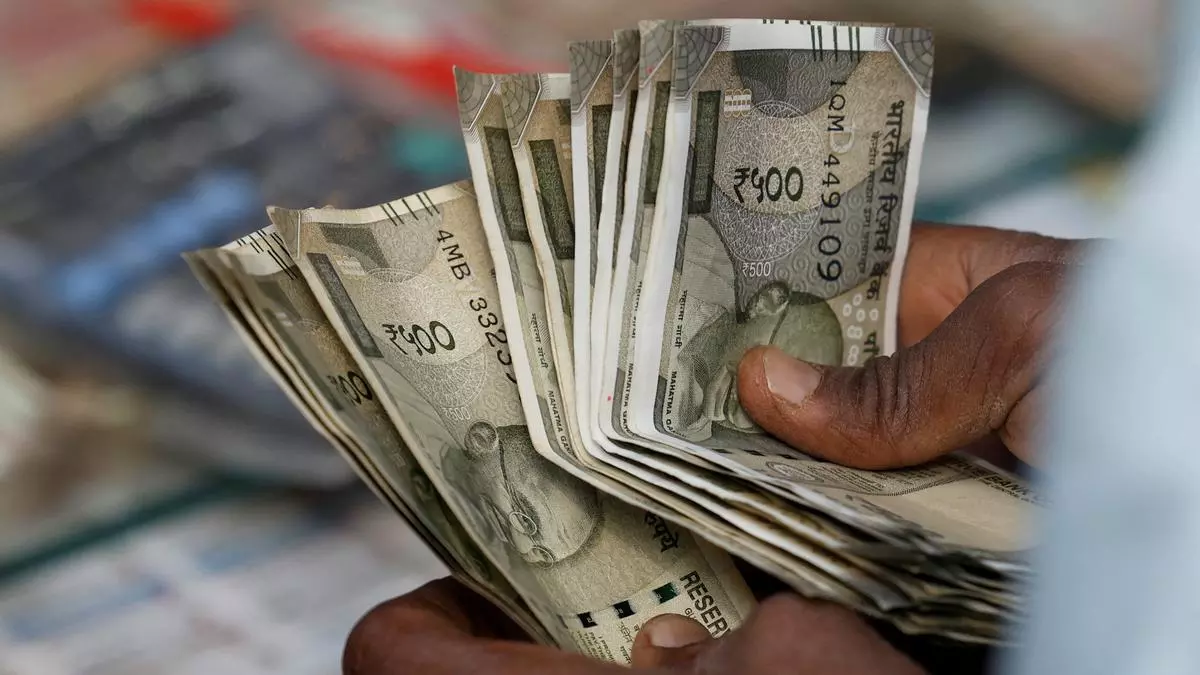
The Ministry of Labour and Employment is preparing a large clean‐up exercise within the Employees’ Provident Fund Organisation (EPFO). The plan involves automatically settling over 7.11 lakh inoperative EPF accounts and refunding balances of up to Rs 1,000 directly to members.According to a PTI report citing official sources, around Rs 30.52 crore currently lying unclaimed in these small, inactive accounts will be credited straight to subscribers’ Aadhaar‐linked bank accounts. Importantly, no paperwork, claim form submission or physical visit to an EPFO office will be required.What Has Been Decided?The proposed drive will focus on 7.11 lakh inoperative accounts where the balance is Rs 1,000 or less. These accounts together hold Rs 30.52 crore.Under the new mechanism, eligible subscribers will receive their funds automatically in their Aadhaar‐linked bank accounts. There will be no need to file a withdrawal application or undergo manual verification.“A total of Rs 30.52 crore stuck in over seven lakh inoperative accounts of the retirement fund body EPFO will soon be returned to the account holders or their legal heirs,” a Labour Ministry source was quoted as saying in the report.In cases where the original subscriber has passed away, the amount will be released to the nominee or legal heir, ensuring that rightful beneficiaries are not deprived of their dues.What Exactly Is An Inoperative EPF Account?An EPF account becomes ‘inoperative’ if no contribution is received from the employer for more than 36 months. This typically happens when employees switch jobs without transferring their EPF balance, retire, or are simply unaware that a small amount remains in an old account.Over time, these small balances accumulate across lakhs of accounts, creating administrative complexity and leaving money idle within the system.The Bigger Picture: Rs 10,903 Crore Still Lying IdleWhile the current exercise targets smaller balances, the broader issue is far larger. As per sources cited in the PTI report, nearly Rs 10,903 crore is currently lying in 31.86 lakh inoperative EPF accounts.Of these, around seven lakh accounts, the ones being addressed first, contain balances of Rs 1,000 or less, amounting to Rs 30.52 crore. Officials have indicated that this clean‐up will be conducted in phases, suggesting that larger inoperative accounts may also come under review in the future.This phased approach indicates that the initiative is not a one‐off measure but part of a systematic effort to tidy up dormant accounts.Part Of A Larger EPFO Reform AgendaThe automatic refund proposal aligns with the government’s ongoing efforts to modernise EPFO operations and reduce procedural delays. Over the past year, the organisation has introduced greater automation in claim processing, adopted risk‐based verification to minimise manual checks, held regular review meetings to improve grievance redressal, and simplified KYC and Aadhaar integration.The emphasis is clearly on digitisation, transparency and reducing dependency on physical paperwork, long considered pain points for EPF members.EPFO 3.0: A Bigger Digital Shift AheadThe clean‐up drive also comes ahead of the anticipated rollout of EPFO 3.0 from the next financial year. This ambitious digital overhaul aims to bring EPFO services under a Core Banking System (CBS)‐enabled framework.The objective is straightforward: streamline processes, unify member services on a single digital platform, cut down paperwork, accelerate claim settlements and improve grievance tracking.One of the most notable changes expected under EPFO 3.0 is the automatic processing of claims that clear risk management filters. Currently, claim settlement can take up to 20 days in certain cases. Under the proposed system, eligible claims could be settled in less than three days.If implemented effectively, this shift could significantly reduce waiting periods and improve trust in the retirement fund system.Why This Matters To YouFor many salaried Indians, EPF remains the single largest long‐term savings instrument. Yet small balances often remain unclaimed due to lack of awareness, job transitions or procedural complexity.By proactively refunding small inoperative balances, the government is signalling a more member‐centric approach. While Rs 30.52 crore may appear modest in the larger scheme of EPFO’s corpus, the message is significant: the system is moving towards proactive settlement rather than passive retention of idle funds.

#COMMODITIES
MEXCampus Launches at UNSW, Expanding MEXC Foundation's University Web3 Program
benzinga44d ago

MEXCampus Launches at UNSW, Expanding MEXC Foundation's University Web3 Program

VICTORIA, Seychelles, Feb. 24, 2026 (GLOBE NEWSWIRE) -- MEXC Foundation and UNCB (University Network for Cryptocurrency & Blockchain) today launched MEXCampus at the Roundhouse, University of New South Wales (UNSW) Campus — formally introducing MEXC as UNCB's official partner and kicking off a structured trader development program for university students across Australia.The MEXCampus Welcoming Party marks the beginning of an ongoing campus program combining community building with practical crypto ...Full story available on Benzinga.com

#CRYPTO#ECONOMY
Vietnam central bank targets stricter bank AI use
coingeek44d ago

Vietnam central bank targets stricter bank AI use

The State Bank of Vietnam tightens AI rules requiring banks & e-wallets to notify customers before using chatbot virtual assistants or automated hotlines.The post Vietnam central bank targets stricter bank AI use appeared first on CoinGeek.

#CRYPTO
Small-Cap-Funds-Set-Rebound
morningstar_com44d ago

Small-Cap-Funds-Set-Rebound

High-quality small-cap funds look relatively weak but retain long-term investment merit.

#STOCKS#COMMODITIES
Amazon’s CEO just made a scary prediction for 2026. Economists worry he’s right
fastcompany44d ago

Amazon’s CEO just made a scary prediction for 2026. Economists worry he’s right

Last year was full of talk about tariffs. Are they coming up or going down? On which products and countries? How could businesses handle all the uncertainty? But while there was a lot of discussion of these fees, paid on imported goods and raw materials, there wasn’t actually that much evidence of their price impact at stores. According to Amazon CEO Andy Jassy, that’s about to change. Tariffs had a modest impact on prices in 2025Tariffs are a tax on businesses, which means you’d expect that if tariffs go up, so do prices. But the effect of President Trump’s ever-changing but always aggressive tariff policies didn’t cause the huge price hikes and widespread economic damage many feared in 2025. Economists offer several likely explanations. One is all the exceptions and carve-outs the government made after announcing the tariffs. What Trump threatens and what ends up being charged are often very different. “The actual tariffs are much lower than what were announced, and that is one of the reasons why the effects have not been as big as feared,” Harvard economist Gita Gopinath told The New York Times.Another big reason is timing. Trump hasn’t been shy about his love of tariffs. That means many people got ahead of the new taxes by stockpiling goods before they came into effect. “Consumers and business time very-short-run purchases to try to minimize tariffs,” according to the Budget Lab at Yale University. “This can reduce the amount of imports of higher-tariffed goods and countries for a time.” But Jassy says this tactic to keep prices down may have reached its expiration date. Amazon’s CEO warns of big pricing changes to comeJassy spoke to CNBC’s Becky Quick at the World Economic Forum in Davos, Switzerland, and said that so far, Amazon has seen “some of the tariffs creep into some of the prices, some of the items.” He continued: “And you see some sellers are deciding that they’re passing on those higher costs to consumers in the form of higher prices, some are deciding that they’ll absorb it to drive demand, and some are doing something in between.” But the days of these modest impacts may soon be over. “I think you’re starting to see more of that impact,” he continued. Many sellers simply don’t have much of a choice but to pass on the cost of tariffs. “At a certain point—because retail is, as you know, a mid-single digit operating margin business—if people’s costs go up by 10%, there aren’t a lot of places to absorb it,” the Amazon CEO said. “You don’t have endless options.”No white knight is riding to consumers’ rescue No matter what you might hear coming out of the White House, realistically, those options do not somehow magically include getting foreign suppliers to shoulder the cost of tariffs. A new study by the Kiel Institute in Germany found that a whopping 96% of the costs of tariffs are passed on to U.S. importers and consumers. Nor can smaller businesses that are already squeezed keep shielding consumers indefinitely. When large retailers raised prices, smaller firms said, “we’re going to try to not raise prices, giving them a competitive edge,” Kyle Peacock, founder of Peacock Tariff Consulting, explained to Harvard’s Institute for Business in Global Society. But, he continued, “they can only absorb it for so long.”Jassy’s comments suggest that the breaking point for many sellers is fast approaching. The Amazon CEO is far from the only business luminary issuing such warnings. On a recent investor call, Nike cautioned tariffs could add about $1 billion in costs during its 2026 fiscal year. Mattel warned it may need to raise prices on toys, while Walmart likewise said it may be forced into “selective” price increases on imported goods. Add to these existing pressures Trump’s latest threats to slap further tariffs on European countries if they fail to go along with his weird neo-colonialist demand that they hand over Greenland, and the picture looks worrying. Economists fret Amazon’s CEO is rightThe Peterson Institute for International Economics worries all this could spell higher—rather than lower—inflation this year.“The pass-through of tariffs to consumer prices has been modest to date, suggesting U.S. importers have been absorbing the bulk of the tariff changes. That will change in the first half of 2026,” Lazard CEO Peter Orszag and PIIE president Adam Posen predicted.“The many reasons for the lagged pass-through include businesses pricing based on when their inventories arrived (and have since run out) and concerns around being seen as raising prices too rapidly (so they are instead gradually increasing them). This won’t last,” they continued. Of course, who knows what Trump might do in the end. His track record has, to put it mildly, been inconsistent and changeable. But if he doesn’t chicken out and change course, many economists clearly fear Amazon CEO Andy Jassy is right. Hard-pressed U.S. consumers are hoping life gets more affordable in 2026. They’re likely to face the opposite. —Jessica StillmanThis article originally appeared on Fast Company’s sister website, Inc.com. Inc. is the voice of the American entrepreneur. We inspire, inform, and document the most fascinating people in business: the risk-takers, the innovators, and the ultra-driven go-getters that represent the most dynamic force in the American economy.

#ECONOMY