
neowinhace 65d
Save 87% on a lifetime plan to Internxt Cloud Storage (10TB plan) for life
Store, share, and send your files and photos on the cloud from any device and operating system with this lifetime plan. Read more...
#TECH
Store, share, and send your files and photos on the cloud from any device and operating system with this lifetime plan. Read more...
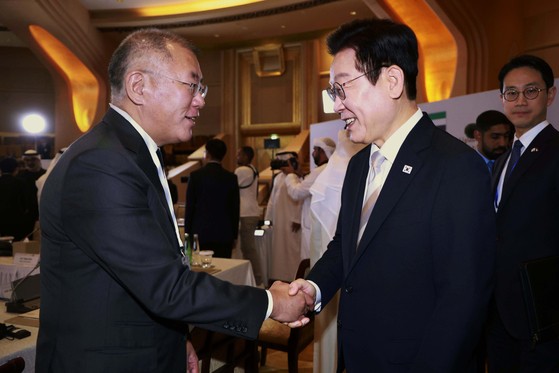
Hyundai Motor Group Executive Chair Euisun Chung, left, shakes hands with President Lee Jae Myung at a business event in Abu Dhabi, the United Arab Emirates, on Nov. 19. [YONHAP] [EXPLAINER] By incorporating offset obligations into its bid evaluation criteria, Canada effectively pulled Hyundai Motor into the deal to demand a new car factory, adding fresh pressure on an automaker already burdened by a string of massive, ongoing investments in the United States. Given the strategic weights of the two markets and the broader diplomatic calculus at play, building a new factory in Canada would be an undertaking that is, by most accounts, unrealistic given Hyundai's current capacity constraints and financial commitments. At issue is a 60 trillion won ($42 billion) defense project, but the demand arrives at a perilous moment, as the intensifying U.S.–Canada tariff conflict has rendered any large-scale manufacturing investment in Canada by the automaker deeply uncertain. Hyundai Motor Group chief Euisun Chung recently joined a Korean delegation to Canada in support of Seoul’s bid to win a submarine contract, while on the very same day, U.S. President Donald Trump hiked tariffs on Korean cars from 15 percent to 25 percent, a move expected to cost Hyundai at least 4 trillion won annually in additional expenses. The Jangbogo-III Batch-II submarine, a finalist in Canada’s Canadian Patrol Submarine Project (CPSP) [HANWHA OCEAN] What, exactly, is at stake? Korea is competing as a bidder in Canada’s project to replace its aging Victoria-class submarines, proposing the delivery of up to 12 diesel-powered, 3,000-ton submarines. As part of the bid’s industrial offset requirements — a trade element under which a seller is expected to offer industrial benefits — the Canadian government has pushed Hyundai to set up an automobile manufacturing plant in the country. While contributions from Korea’s shipbuilders Hanwha Ocean and HD Hyundai were expected, Germany’s aggressive participation intensified the competition, effectively forcing Hyundai into the process unexpectedly. As a strategic, state-level initiative, Hyundai is also under pressure by Seoul to assist, seeing the automaker as a winning bargaining chip to secure the contract. Car manufacturing remains one of the most effective engines of job creation and domestic parts production, a fact not lost on politicians. It is also why Trump has long treated auto plants as geopolitical trophies. Canada extended a similar demand to Germany, currently the most formidable rival to Korea in the procurement process, and the European country has already moved aggressively. Backed by Volkswagen and Mercedes-Benz, Berlin has proposed — and begun executing — a vertically integrated supply chain in Canada spanning mining, batteries and finished vehicles. PowerCo, a Volkswagen Group subsidiary, broke ground in June on a $7 billion EV battery plant in Ontario, the largest single investment in Canadian history. Kang Hoon-sik, left, the presidential chief of staff who also serves as a special envoy for strategic cooperation, speaks ahead of his departure for Canada at Incheon International Airport, west of Seoul, on Jan. 26, along with Industry Minister Kim Jung-kwan. [YONHAP] Why can’t Hyundai afford a factory in Canada? From Hyundai’s perspective, the economics are unforgiving. Hyundai and Kia sold roughly 260,000 cars in Canada last year, translating into a market share of just 13.7 percent — hardly enough to justify a large-scale production facility. Canada is the eighth-largest market for Hyundai in terms of sales, while the United States remains its top-selling market, claiming more than half of all sales for the automaker. Any Canadian plant would inevitably rely on exports to the United States or Mexico, yet trade relations between Washington and Ottawa have grown increasingly volatile. Currently, Canadian-made vehicles exported to the United States are subject to a 25 percent tariff. Furthermore, the Trump administration recently warned that if Canada proceeds with new export agreements involving China, U.S. tariffs on Canadian imports could soar to 100 percent. In 1989, Hyundai opened a plant in Quebec with an annual capacity of 100,000 vehicles, but closed it down only four years later amid weak U.S. sales and parts supply issues that led to low productivity. “Building a new plant in Canada is effectively an impossible option for Hyundai, considering slowing EV demand and an ongoing tariff tussle between Canada and the United States,” said Kim Pil-soo, a professor of automotive engineering at Daelim University College. “Canada is using this as leverage — an excuse to gain an auto plant and revive its manufacturing base." Instead, Hyundai is expected to limit its contribution to investments aimed at expanding the hydrogen ecosystem. "Hyundai views the hydrogen value chain as a strategic priority and is deliberating on sustainable production methods. It is likely to present this nascent system as part of its engagement in Canada," Kim added. Officials pose for a photo during a signing ceremony for multiple partnerships among Hanwha Group affiliates and Canadian firms in Toronto, Canada, on Jan. 26. [HANWHA GROUP] Investment capacity already stretched thin Even without Canada, Hyundai’s balance sheet is under strain from a cascade of large-scale investments already underway in the United States. Hyundai and Kia already operate three manufacturing facilities in Georgia and Alabama, and recently unveiled a plan to invest $26 billion in the United States by 2028. Its most recent massive Georgia EV plant, with an annual capacity of roughly 300,000 vehicles, is currently operating at just 70 percent utilization. Hyundai aims to expand capacity to 500,000 vehicles, raising the prospect of significant overcapacity unless sales rise sharply. Beyond North America, Hyundai has pledged 125 trillion won in domestic investments through 2030 and committed an additional $5 billion to India over the same period. Compounding these challenges is labor unrest at home. Hyundai’s union has repeatedly warned that expanding overseas production could hurt domestic jobs and has opposed the establishment of new foreign plants. Korean Defense Minister Ahn Gyu-back also echoed those concerns, noting that “building an automobile plant in Canada would inevitably reduce domestic employment.” BY SARAH CHEA [chea.sarah@joongang.co.kr]

Solana and Ethereum trade near critical price zones while Zero Knowledge Proof (ZKP) advances to Stage 2 with $1.7M raised. A closer look at top crypto coins and how ZKP’s 190M daily cap reshapes early positioning.

The collaboration aims to modernize technology infrastructure and infuse AI to enhance member experiences

The historic Artemis II mission will travel for nearly 10 days and one million kilometres, with a potential launch date as early as Feb. 6.
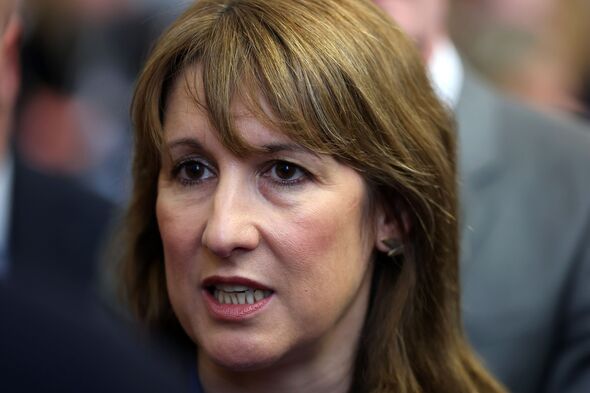
Rachel Reeves is hammering motorists who thought they were doing the right thing, Luke Chillingsworth argues.

At the UBS Asia Wealth Forum, global investors discussed why Asia Pacific is drawing renewed attention.

Franklin FTSE South Korea ETF offers strategic exposure to Korea's surging equity market. Click here to read why FLKR ETF is a Buy.

The Cabinet of Ministers, acting on a submission from the nomination committee, has appointed a new supervisory board of the National Nuclear Energy Generating Company Energoatom (NNEGC Energoatom).

Less than a week before Gov. Josh Shapiro is expected to unveil his spending proposal to kickstart the next state budget process, a group of county commissioners detailed their funding requests to support all 67 counties. Key issues introduced on...
Analysts’ price target changes for Wednesday, January 28th: American Airlines Group (NASDAQ:AAL) had its price target raised by JPMorgan Chase & Co. from $20.00 to $22.00. The firm currently has an overweight rating on the stock. AGF Management (TSE:AGF.B) had its price target raised by Scotiabank from C$17.50 to C$18.25. Scotiabank currently has a sector [...]
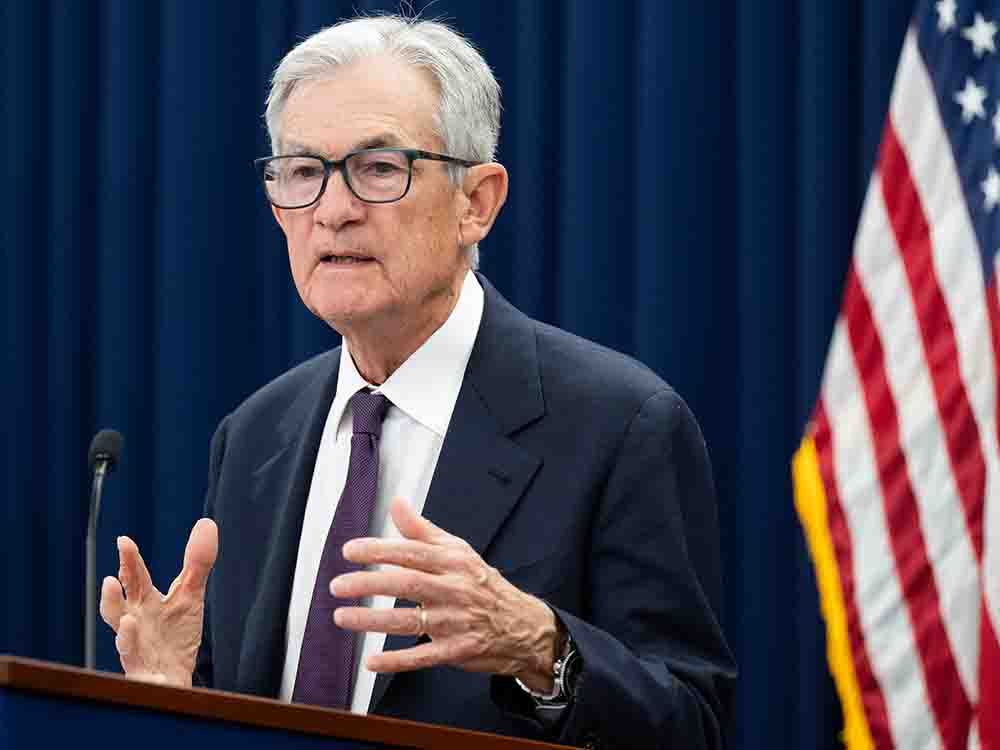
Officials voted 10-2 Wednesday to hold the benchmark federal funds rate in a range of 3.5% to 3.75%