
xda_developers45d ago
I ditched my travel router for a spare Android phone, and it actually worked
Travel routers are useful, but an old Android phone can solve many of the same problems with less cost, less bulk, and surprising reliability.
#TECH
Travel routers are useful, but an old Android phone can solve many of the same problems with less cost, less bulk, and surprising reliability.

Remarkable announced a new paper tablet today - albeit one without the advanced color screen found in its recent Paper Pro and Paper Pro Move tablets. The new Remarkable Paper Pure instead features an upgraded version of the black-and-white E Ink display foun...

Every UAP Video Released by the U.S. Governemt in 14 minutes Source: Youtube

Passengers on Frontier jet that killed person on runway describe scene on board Source: Youtube

HoganHost CEO explains how local web hosting can grow Nigeria’s GDP. Learn about industry challenges, regulations, and the need for government support. Read More: https://punchng.com/local-web-hosting-can-boost-gdp-growth-hoganhost-boss/

China wants artificial intelligence to become a new engine of growth, powering everything from factory upgrades to scientific discovery. But outside the country’s technology hubs, the economic benefits promised by AI may be harder to realise. Recent studies suggest that AI will widen regional divides. Big cities with deep pools of talent, capital and innovative firms are best placed to adopt the technology, while smaller cities and rural areas may struggle to keep up. According to analysts, the...

Bitcoin’s price recovery is not a new beginning: it is a familiar ending. That is the warning from a crypto analyst, who is of the notion that the current Bitcoin price action is playing out a bull trap the market has seen before and that the setup is pointing to a destination that sees the cryptocurrency crashing by almost 50% from current price levels. Related Reading: XRP Flashes Historic Rally Signal, Fueling $12 Price Speculation Bitcoin Mirrors Key Stepping Stones From 2022 Bear Cycle Chiefy’s analysis centers on a structural comparison between Bitcoin’s current price sequence and the step-by-step decline that defined the 2022 bear market. The framework identifies a pattern of bear cycle stepping stones, which is a series of lower highs and lower lows dressed up as recoveries on the weekly candlestick timeframe chart. This analysis is in reference to Bitcoin’s price action since it broke above $82,000 earlier in the week. Bitcoin is pressing into the 1-day 200 moving average, a zone that has already acted as resistance during a previous failed recovery attempt in January 2026. The analyst also pointed to the 1-week 200 moving average at the lower support region and the 1-month 350 moving average below it, suggesting that a breakdown could force BTC through multiple long-term trend levels before finding a stronger base. This is exactly like the 2022 bear market. In the previous bear cycle, Bitcoin did not fall in a straight line. It produced relief rallies that looked convincing enough to pull traders back in, only for the price to roll over again. Based on this view, the current rebound to the $80,000 range is not the start of a lasting breakout. It is the largest bull trap of the cycle. His projected path after the bull trap will see Bitcoin leave $82,000 and then go on a free fall to $50,000, then recover to $63,000, and finally crash to $42,000 again. Bitcoin Price Chart. Source: @0xChiefy On X Why This Rally Cannot Be Trusted The next move in the sequence, a crash to $50,000, would represent a decline of approximately 39% from current levels. The subsequent bounce to $63,000 would restore confidence briefly before the final descent to $42,000 completes the pattern. This final descent will translate to an almost 50% crash from current levels. Interestingly, CryptoQuant researchers warned that Bitcoin’s apparent demand metric, which tracks 30-day changes in estimated on-chain spot buying activity, stayed negative throughout April’s entire price rally. This shows that the late April and early May move that took Bitcoin to $80,000 was mostly due to higher perpetual futures demand, which is exactly like 2022’s bear market onset. Related Reading: Altcoins Aren’t Going Anywhere — Even After Brutal Crashes: Arthur Hayes The crash warning is also coming at a time when Bitcoin ETF flows are no longer offering a clean bullish background, as they have now posted consistent net outflows of a total of $423.15 million in the past two days. At the time of writing, Bitcoin is trading at $80,367. Featured image from Unsplash, chart from TradingView

Following Spitz’s Keynotes at RSA Conference 2026, Disruptive Futures Institute Warns That AI & Quantum Cyber Risk
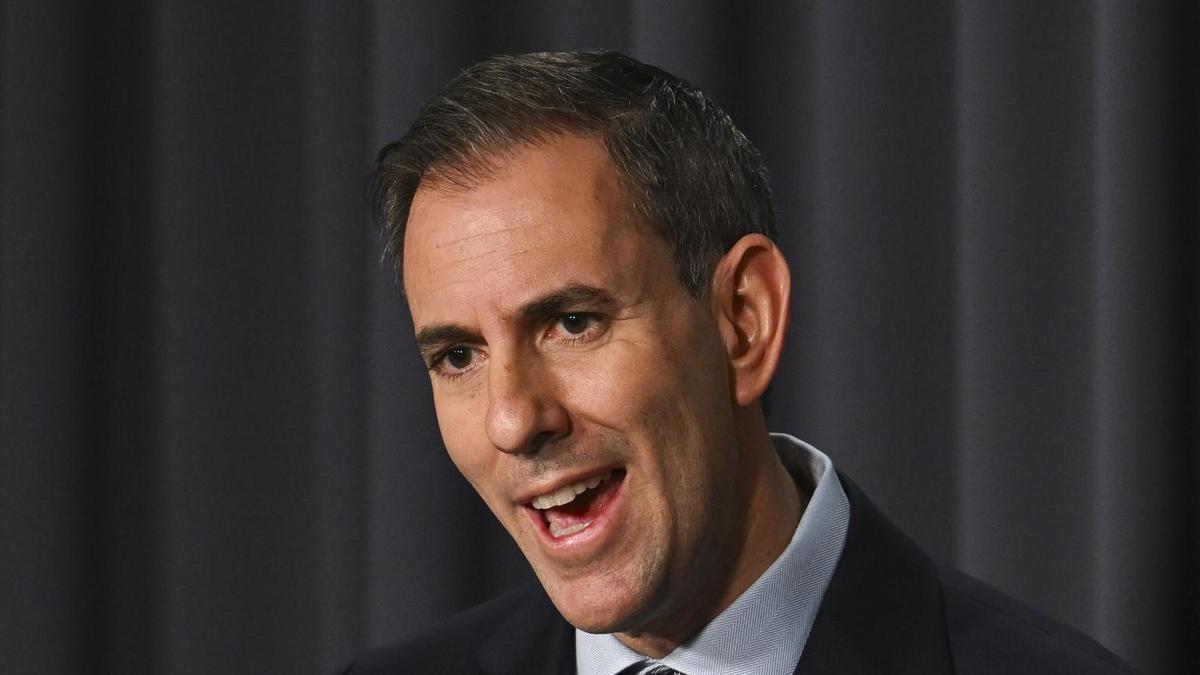
The Australian Treasurer has flagged major tax changes for workers and investors, ahead of Tuesday’s budget announcement.

The Treasurer has flagged major tax changes for workers and investors, ahead of Tuesday’s budget announcement.