Sony Cedes Control of Bravia TVs to China’s TCL Electronics
Sony Group Corp. will sell a 51% stake in its home entertainment arm, including Bravia TVs, to TCL Electronics Holdings Ltd., forming a joint venture starting April 2027.

Sony Group Corp. will sell a 51% stake in its home entertainment arm, including Bravia TVs, to TCL Electronics Holdings Ltd., forming a joint venture starting April 2027.

18 Local Training Providers selected for Phase Two of the FundAVPN developed an AI Skilling Policy Toolkit aimed at governments and policymakersAVPN is also launching an AI training content hub, AI Learning for the Future of Work, for workers to access the Fund's Local Training Providers and their AI skilling programmesSINGAPORE, Jan. 21, 2026 /PRNewswire/ -- AVPN, the largest network of social investors in Asia, today announced three initiatives that further expand the impact of the AI Opportunity Fund: Asia-Pacific, supported by Google.org and the Asian Development Bank (ADB), which started as a USD 15 million Fund. Last year, the Fund expanded with an additional USD 10 million for Phase Two, which has selected 18 local training providers across Asia-Pacific. The 18 organisations were selected based on their skills and experience in AI skilling training. AVPN will work with the local training providers to develop and deliver the most effective programme, while ensuring the autonomy and flexibility of the organisations to meet the needs of the communities they serve. Building on the strong outcomes of Phase One, AVPN aims to have curriculums that ensure workers are prepared for an AI-ready workforce and continuing to overcome systemic barriers in the region.Beneficiaries include farmers, healthcare workers, vocational school and university students, those seeking employment, domestic workers or caregivers, and Professionals, Managers, Executives and Technicians.The full list of the organisations is available here. Amongst the organisations receiving funding are:Centre for Social and Behaviour Change (India) seeks to strengthen the capabilities of self-help group women. Workers with no prior exposure to AI will acquire practical, role-specific skills they can apply immediately. Crucially, the programme aims to build lasting institutional capacity by integrating AI modules into the government's cascade training systems based on the collaboration with the AI Mission of Government of Uttar Pradesh.Manabiya Mom Inc. (Japan) creates long-term impact by building digital confidence and employability among vulnerable groups in Japan's service economy. By equipping workers in tourism, retail, and caregiving with foundational AI skills, we help them enhance productivity, improve communication, and adapt to the changing labor market. MSME employees will gain tools for business competitiveness and digital transformation, while caregivers will benefit from time-saving AI applications.Ruang Kolaborasi Perempuan (Indonesia) strives to generate a significant impact for workers across various sectors by equipping them with the ability to utilise AI as a tool that enhances their daily tasks. For those seeking employment, this translates to crafting more persuasive CVs, preparing effectively for interviews, and identifying job opportunities with greater precision. For agricultural workers and fishers, AI will facilitate weather predictions, yield assessments, and more accurate production planning. For workers in micro, small, and medium enterprises (MSMEs), AI will create avenues to boost sales, comprehend customer behaviour, and manage businesses in a digital environment. In addition, AVPN is also building an AI training ecosystem through the AI Opportunity Fund. This includes a publicly-available AI training content hub, AI Learning for the Future of Work, which provides open access to Local Training Providers and their programmes for the general public to discover and enrol in relevant courses, thus increasing the number of workers able to benefit from localised AI upskilling.On a policy infrastructure level, AVPN has also developed an AI Skilling Policy Toolkit for governments and policymakers. Built on insights from the AI For All report and engagements with policymakers across Asia-Pacific, the Toolkit defines and translates design principles for more effective AI skilling initiatives into actionable policy considerations and implementation pathways that can be undertaken through the skill development cycle.AVPN hopes to use the AI Skilling Policy Toolkit to support ongoing and deeper policy engagements in 2026, helping to strengthen ecosystem alignment and provide a common reference point for unified approaches to AI skilling across the region.Naina Subberwal Batra, CEO of AVPN, said: "Workers in Asia Pacific have an urgent need for contextually relevant, localised, digital skills and relevant upskilling that will position them well for employability, entrepreneurship and job retention. Continuing on the strong momentum and results of Phase One of the AI Opportunity Fund, Phase Two of the AI Opportunity Fund initiative expands the good work that has been and continues to be done by the selected organisations in empowering workers across the region, partnering policymakers, reaching out to workers seeking resources, forging more equitable outcomes for all."Marija Ralic, Head of Google.org APAC, said: "At Google.org, we believe that for AI to truly be a force for good, its benefits must be accessible to everyone. We are incredibly proud to see the impact and continued momentum of the Google.org AI Opportunity Fund: Asia-Pacific as it moves into this next critical chapter, focused on scaling impact. By supporting an additional 18 local providers and launching the AI Content Hub, AVPN is making localized upskilling available to the public at an unprecedented scale. This hub serves as a central gateway where anyone can search and filter for localized training by market or language, allowing workers to seamlessly discover the training they need. From upskilling self-help group workers with AI tools through the Centre for Social and Behaviour Change in India to training caregivers via Manabiya Mom Inc. in Japan, this program is a vital step toward a future-ready workforce and Google.org's vision of unlocking opportunity for everyone, everywhere."Antonio Zaballos, Director, Digital Sector Office, ADB, said: "AI skills are essential but they are not sufficient on their own. For AI to drive inclusive and sustainable growth across Asia and the Pacific, skills development must be built on strong digital and data infrastructure, robust data governance, and the protection of critical information and systems. Through the AI Opportunity Fund, ADB is supporting a holistic, AI-ready ecosystem that links workforce skilling with policy readiness and scalable investment opportunities. This approach helps countries move beyond isolated pilots toward bankable, region-wide solutions that boost productivity, strengthen MSMEs, and improve public service delivery."Phase One of the Fund has trained over 300,000 workers through its 48 selected organisations or local training providers, across Asia Pacific as of December 2025. In Phase Two, AVPN continues to build a regional infrastructure for AI training and policy development through the addition of new Local Training Providers, the launch of the AI Content Hub and the AI Skilling Policy Toolkit. Together with the AIM ASEAN programme, a dedicated track focused on supporting MSMEs in Southeast Asia and launched in collaboration with ASEAN Foundation, AVPN's initiative aims to support training for 720,000 workers across Asia Pacific and 100,000 MSMEs across the Southeast Asia region in total by 2027.About AVPN AVPN is the largest network of social investors in Asia, comprising over 700 diverse members across 43 markets. Our mission is to increase the flow and effectiveness of financial, human, and intellectual capital in Asia by enabling members to channel resources towards impact. As an ecosystem builder, AVPN enables its members to connect, learn, act, and lead social impact efforts across key pillars while improving the effectiveness of deployed capital, bringing local field needs, regional expertise, and policy insights to the forefront.About Google.orgGoogle.org applies Google's innovation, research, and resources to promote progress and expand opportunity for everyone.


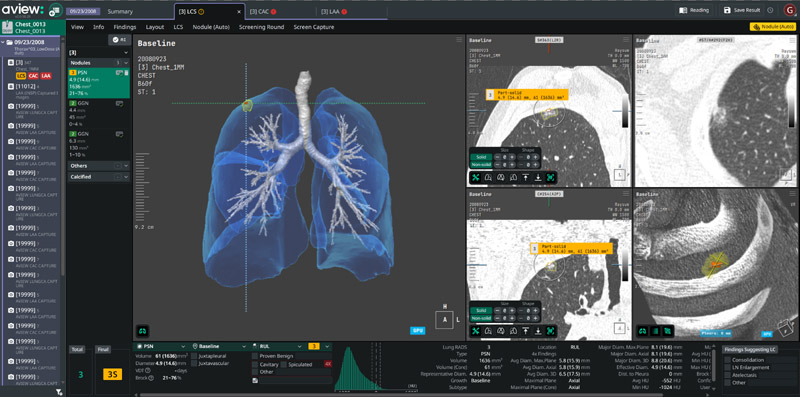
Coreline Soft has moved beyond regulatory validation to real-world clinical deployment in the U.S. radiology market, following its entry into the global top 20 ranking for FDA-approved medical AI solutions.The company announced on January 20 that it has successfully implemented a zero-click AI readi

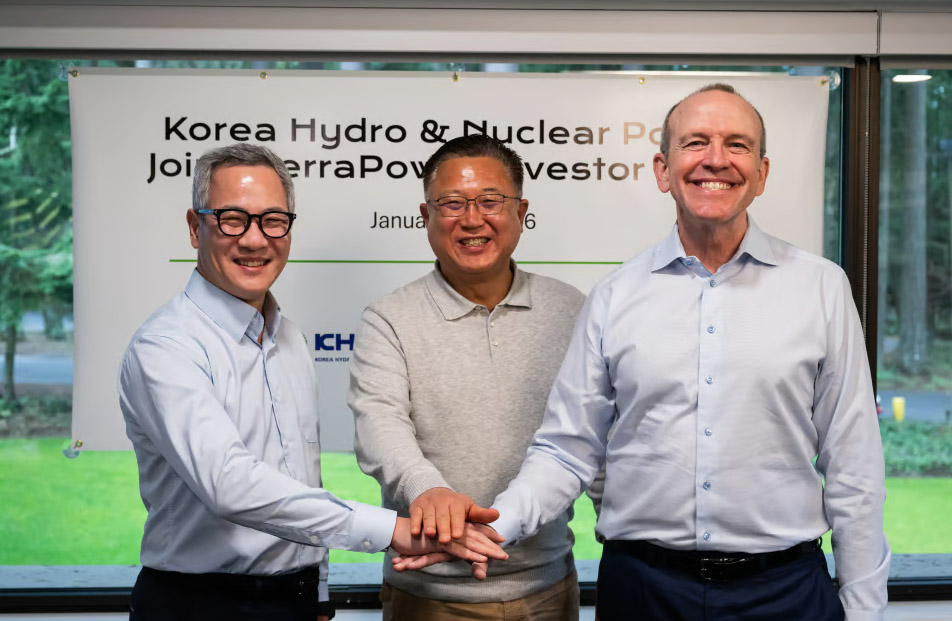
SK Innovation has sold part of its equity stake in TerraPower, a U.S.-based next-generation small modular reactor (SMR) developer, to Korea Hydro & Nuclear Power (KHNP), as the three companies move to strengthen strategic cooperation in the global SMR market.SK Innovation said on January 21 that it

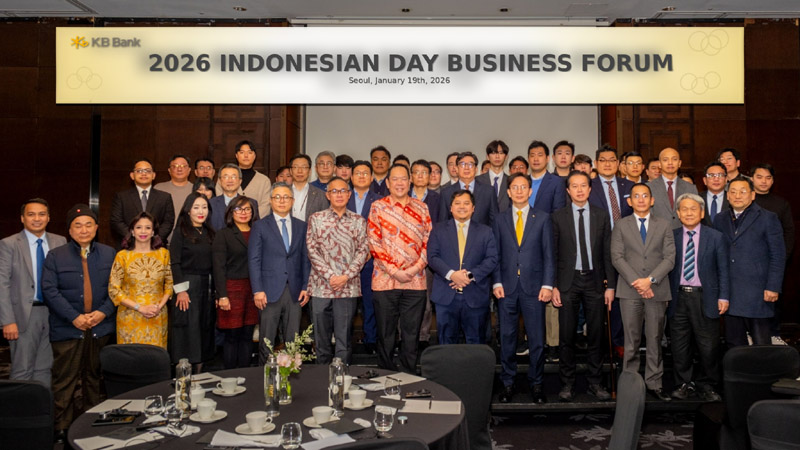
KB Bank Indonesia (PT Bank KB Indonesia Tbk, KBI), a subsidiary of KB Kookmin Bank, held the 2026 Indonesian Day Business Forum on January 19 at the Conrad Seoul Hotel in Yeouido, with the support of the Indonesian Embassy in Korea.The forum was organized to provide a platform for Indonesian governm
An xAI cofounder is stepping back after a Lyme disease diagnosis, shifting into an advisory role to "go founder mode on my health."
(MENAFN - GlobeNewsWire - Nasdaq) SYDNEY, Jan. 21, 2026 (GLOBE NEWSWIRE) -- Leading online FX and CFD broker Axi is set to participate in Money Expo Mexico 2026, taking place on February 18–19, ...
(MENAFN - GlobeNewsWire - Nasdaq) Opportunities lie in AI/ML storage, local semiconductor production, and new technological solutions for endurance limitations. The Middle East and Asia-Pacific lead ...

TR-49 is a cryptic narrative deduction game that's all about cracking codes and unraveling a political mystery.
(MENAFN - EIN Presswire) EINPresswire/ -- The global outdoor equipment market is undergoing a significant paradigm shift. As adventure tourism, professional night-work sectors, and emergency ...
Amazon CEO Andy Jassy said that retailers are running out of stockpiled goods imported before tariffs and "don't have endless options."

By the time this article appears Jamaica’s Prime Minister Dr Andrew Holness will have outlined his vision for Jamaica’s recovery at the opening night of the annual Jamaica Stock Exchange conference. This article argues that completing the alternative investment ecosystem, particularly in the areas of infrastructure and venture capital, is critical to Jamaica’s recovery. For pension funds, the current 5 per cent limit for private assets includes both private debt and private equity combined, and there is no separate carve out for real assets such as infrastructure. This is despite infrastructure being an ideal asset class for pension funds as it is typically less risky than equity investments and often has bond-type characteristics in terms of more guaranteed cash flows. Sharply increased investments in this area to combat climate change and improve our productivity will, therefore, be absolutely critical to Jamaica’s recovery. A very simple reform would be to allow 5 per cent to be invested in both the debt and equity asset class separately, plus a dedicated infrastructure bucket of between 5-10 per cent, perhaps rising over time.Sanya Goffe, a leading pension lawyer at prominent law firm Hart Muirhead Fatta and head of the Pension Fund Association of Jamaica, agrees that infrastructure should be a separate asset class under the pension fund regulations.She notes: “Increased longevity and escalating climate risks are reshaping the demands placed on pension systems and the way long-term capital must be deployed. Infrastructure investment enables pension funds to respond to both challenges by matching long-dated liabilities with real assets that generate predictable cash flows while supporting climate resilience and critical public services.“To realise this potential at scale, our investment regulations should recognise infrastructure as a distinct asset class with a dedicated carve out and differentiated limits and conditions that reflect its unique risk profile, governance requirements, and long-term nature. Such an approach would preserve strong prudential oversight while allowing pension funds to contribute more effectively to sustainable economic development and long-term retirement security.”An excellent example of the power of infrastructure investment is TransJamaican Highway Limited, which, as a toll road, was very successfully listed on the Jamaica Stock Exchange and is, therefore, able to be bought by pension funds as a listed equity. However, not all infrastructure investments will be listed, and the process was a very long one, so we need to move much faster. One of the best current examples for the transformative power of infrastructure investments is actually the Rio Cobre Water Project, as outlined below by Musson Vice-Chairman Nicholas Scott.“Pan Jamaica Group and Eppley have formed an infrastructure investment platform company called Capital Infrastructure Group (CIG). CIG has in excess of US$20 million of equity and has already made two investments. The largest investment is as the controlling shareholder of Rio Cobre Water Company Limited (Rio Cobre). Rio Cobre is itself a joint venture with French multinational Vinci. Under a public-private partnership with the Government of Jamaica, Rio Cobre will build a 15-million gallon per day water treatment plant. This will be the second largest water treatment plant in Jamaica. Rio Cobre is now under construction and at completion will sell water to the National Water Commission under a long-term contract.”Critically, the project was financed by IDB Invest, Proparco (a French Development Agency), and Sagicor. As Scott notes, the project shows that Jamaica can construct and finance critical infrastructure without absorbing fiscal space through the collaboration of local and international sources of capital.Venture CapitalAnother critical area is the need to dramatically expand our current venture capital ecosystem in which the issue of pipeline is critical, as well as update our legislation, which dates from the early 1980s.The Nobellum Accelerator, under the leadership of Canada-based Jamaican Melissa Ellis, as part of the Catalyst for Entrepreneurship and Innovation (CEI) Global Project has begun work on that most fundamental prerequisite of venture capital, meaning identifying a robust, investable pipeline of companies.Ellis observes: “Canadian accelerator Nobellum Enterprise addresses this gap by strengthening the investment pipeline and institutional readiness of founders. This approach was piloted through the 2025 CEI Jamaica project, delivered in partnership with Nobellum, the Development Bank of Jamaica (DBJ), and Jamaica’s Technology & Digital Alliance (JTDA), formerly the Jamaica Computer Society (JCS), which together supported eight high-potential Jamaican businesses, each generating over US$100,000 in annual revenue.“The companies received training to become investor-ready through targeted fractional advisory services focused on governance, financial management, and scalable business models. Research indicates that over 70 per cent of small and medium-sized businesses (SMEs) in emerging markets fail to access formal financing due to weak financial structures and governance, underscoring the urgency of such interventions.”She adds: “Leveraging its global investor network, Nobellum mobilised Canadian fund managers to Jamaica to directly engage the local innovation ecosystem, convening 35 ecosystem builders across finance, policy, and entrepreneurship. The delegation included senior leaders from the Export Development Bank of Canada and the African Union, alongside fund managers from BKR Capital, Real Venture, the Black Opportunity Fund, and the Firehood Angel Network, collectively overseeing $550 million in deployable capital.“These investors provided direct, hands-on training to the founder cohort, an experience entrepreneurs rarely access, creating real-time feedback loops between capital providers and business owners. This engagement highlighted a critical systemic gap: founders require earlier and more frequent exposure to capital pathways to build trust, refine their business models, and align with market expectations.”The project confirmed that although alternative capital financing is needed, ecosystem coordination and capital readiness are key to transitioning thousands of Jamaican small and medium-sized enterprises into investable businesses. Venture capital investments, perhaps with some de-risking, could also be part of the private equity bucket for pension funds.The plan should be to scale up the DBJ’s angel programme pilot, working along with foreign accelerators based in the metropoles in the US, UK, and Canada (such as Nobellum Enterprise). The goal should be to specifically target the Caribbean (not just Jamaican) Diaspora and thereby treat it as part of a virtual Caribbean Sea.Critical business environment reforms must be part of this agenda as one cannot pour capital, or metaphorical water, onto the sand of a poor business environment. The acceleration of the reform of the business environment will no doubt be part of the prime minister’s stock exchange speech.