Dashboard

Financial News

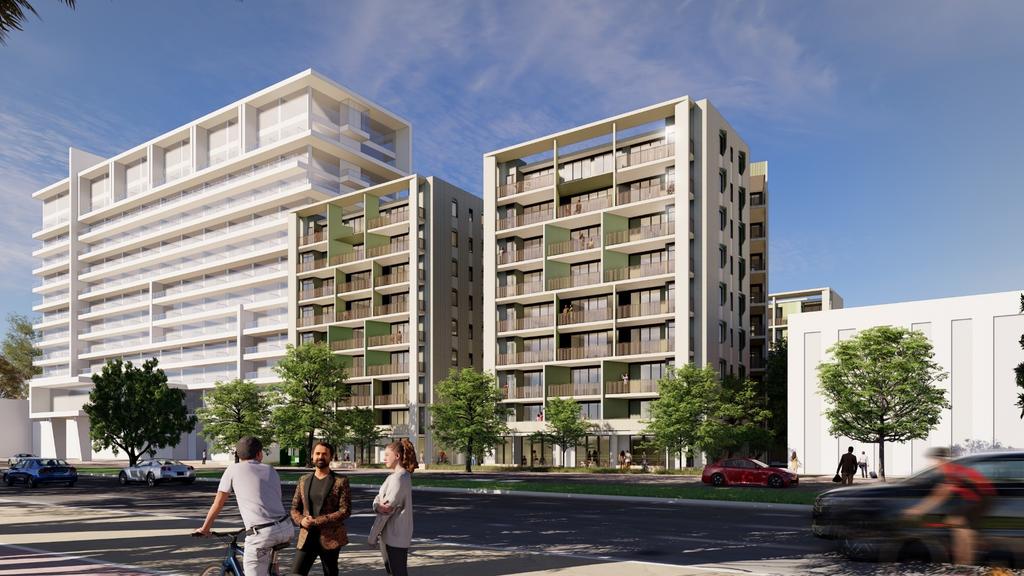
Construction starts on $85m Eastwood affordable housing development
realestate117d ago

Construction starts on $85m Eastwood affordable housing development

Construction has started on an $85 million development offering more than 150 apartments, with most dedicated to low and moderate income earners struggling in the nation’s rental crisis.The post Construction starts on $85m Eastwood affordable housing development appeared first on realestate.com.au.

#STOCKS
Dalaroo Metals Limited (ASX:DAL) Fast-Tracks 2026 Exploration at Blue Lagoon Following Standout 2025 Results
abnnewswire117d ago

Dalaroo Metals Limited (ASX:DAL) Fast-Tracks 2026 Exploration at Blue Lagoon Following Standout 2025 Results

Dalaroo Metals Limited (ASX:DAL) announced that it is preparing to launch a major 2026 exploration push at its 100%-owned Blue Lagoon Critical Minerals Project in Greenland (Figure 1*), following a standout maiden field campaign in 2025 that has rapidly elevated Blue Lagoon into a compelling district-scale critical minerals opportunity. After delivering exceptional early results during the 2025 field season, Dalaroo is moving rapidly to build on this momentum, with planning now underway to fast-track Blue Lagoon toward high-impact targets through a structured and systematic exploration program designed to define the scale and continuity of mineralisation and generate drill-ready targets. The 2025 program produced highly encouraging outcomes across the project area, confirming widespread Rare Earth Elements (REE), zirconium (Zr) and niobium (Nb) mineralisation and validating the Company's exploration model. Importantly, 100% of samples returned anomalous values, with mineralisation mapped across a 2.7km strike, demonstrating the strength and consistency of the system. Peak surface assays returned values of up to 0.81% TREO, underlining Blue Lagoon's potential to emerge as a highly significant new source of critical minerals in Greenland. Dalaroo's upcoming 2026 field season is designed to rapidly advance the Project through targeted geophysics, systematic geochemical follow-up and drilling, with the clear objective of defining coherent mineralised zones and identifying priority areas for accelerated advancement. All available technical datasets-including detailed mapping, geochemistry, grainsize analysis and mineralogical observations-will be integrated to refine targets and fast-track the highest-potential zones. The Company's objective for 2026 is clear: materially de-risk Blue Lagoon, demonstrate continuity at depth, advance metallurgical understanding and position Dalaroo to capitalise on growing global demand for secure, western-aligned critical mineral supply chains. With Greenland continuing to attract strategic attention as a conflict-free critical minerals jurisdiction, Blue Lagoon represents a high-leverage exploration opportunity for Dalaroo shareholders. Exploration Results - Maiden sampling confirmed a coherent, district-scale critical minerals system extending over approximately 2.7km of strike, with all 113 samples returning anomalous values - Very low uranium and thorium levels (maximum 25 ppm U3O8), well below Greenland's 100 ppm - Systematic increase in grades within finer grain-size fractions, indicating natural upgrading and potential for low-cost physical beneficiation - Hafnium (Hf): o Standout surface results include up to 99 ppm Hf, with multiple samples exceeding 40 ppm Hf, demonstrating strong grade continuity o Hafnium is a strategic semiconductor metal, critical for next-generation microchips due to its high di-electric constant and thermal stability - Total Rare Earth Oxides (TREO) o peak surface values up to ~8,079 ppm (0.81% TREO) from first-pass sampling o Grades compare favourably with early-stage results from globally recognised alkaline-hosted REE systems in Greenland and internationally - Heavy Rare Earth Oxides (HREO) o Multiple samples returned >600 ppm HREO, confirming a strong and laterally continuous heavy rare earth system o HREO enrichment is dominated by dysprosium (Dy2O3) and terbium (Tb4O7), critical magnet metals for EVs and renewable energy technologies - Magnet Rare Earth Oxides (MREO) o Consistently elevated MREO proportions (25-29% of TREO) recorded across multiple high-grade samples o High MREO ratios indicate a high-value REE assemblage compared to typical light-REE dominant systems o Strong enrichment in key magnet metals including Nd, Pr, Dy and Tb, essential for permanent magnet production - Light Rare Earth Oxides (LREO) o Strong LREO enrichment confirmed, with peak values including: - Neodymium (Nd) ~900 ppm - Praseodymium (Pr) surface results exceeding 250 ppm Building Exploration Plan The 2026 exploration program at Blue Lagoon is designed to systematically advance the Company's geological understanding through targeted geophysics, auger drilling and geochemical programs across priority target areas. This work is expected to generate higher-resolution datasetsto refine exploration models, prioritise follow-up targets and support ongoing project evaluation. Strategic stakeholder engagement Dalaroo will continue to engage proactively with relevant stakeholders throughout the 2026 exploration program, including the Government of Greenland, regulatory authorities, local municipalities and community representatives. Engagement activities will be undertaken to ensure exploration programs are conducted in accordance with permitting conditions, environmental requirements and local expectations. The Company will maintain transparent and regular communication regarding planned activities, timelines and outcomes, with feedback considered where appropriate to support responsible exploration and ongoing compliance. This approach is intended to support the maintenance of social licence and facilitate the efficient advancement of exploration activities. Ground Penetrating Radar (GPR) Survey Ground Penetrating Radar (GPR) is a non-invasive geophysical technique that uses high-frequency electromagnetic waves to measure subsurface features. It is used to map sediment thickness, layering and buried structures by measuring reflections from different materials beneath the surface, helping to identify geological features without drilling. GPR units have a potential to reach 20m depth dependant of the conditions and are proven geophysics technique for understanding soil profiles to the bedrock. GPR a rapid way of helping build the understanding of the Blue Lagoon beach profiles and define the size of the target area, due to the nature of the mineralisation in the lagoon beach. - Planned GPR surveys across priority shoreline and lagoonal target areas - Designed to assess sediment thickness and internal stratigraphy - Intended to identify palaeochannels and potential heavy mineral trap sites - Results will be used to refine drill targeting and program design Lagoon Depth Scanning Lagoon depth survey using side-scan sonar or similar survey techniques has the potential to provide high-resolution measurements of water depth and underlying sediment thickness in the lagoon. These surveys generate detailed bathymetric and subsurface profiles to improve understanding of basin geometry, sediment deposition process. These results help identify potentialzones of mineral concentration and support a broader geological understanding. - Systematic depth profiling of lagoonal environments - Aimed at improving understanding of basin geometry and sediment architecture - Data to support geological interpretation and depositional modelling Composite Auger Drilling Program A follow-up auger drilling program is planned across priority target areas to assess the distribution and continuity of mineralisation. Composite sampling will be undertaken to generate representative samples across defined depth intervals, with the aim of evaluating grade variability and vertical extent. - Follow-up auger drilling planned across priority target zones - Composite sampling to assess grade distribution and continuity - Program designed to test mineralisation at depth beyond the 2025 campaign Upstream Hard-Rock Sampling & In-field XRF Systematic upstream and catchment sampling will be undertaken to investigate potential primary source areas for mineralisation. Portable XRF analysis will be used in the field to provide rapid, indicative geochemical screening and assist with real-time target prioritisation. All anomalous results will be validated through laboratory assay to ensure data quality and compliance. - Planned upslope and catchment sampling to investigate potential primary source areas - Use of portable XRF for rapid field screening and target prioritisation - Results to guide further follow-up sampling programs Mineralogical Sampling Representative samples will be collected for detailed mineralogical and petrological analysis to characterise lithologies, alteration styles and mineral assemblages associated with mineralisation. This work will aim to identify ore and gangue mineral relationships, grain size distribution and textural controls on mineralisation. Results will support geological interpretation, refine the exploration model and inform future metallurgical test work programs. - Collection of representative samples for mineralogical characterisation - Petrology study and classification Metallurgical Sampling Dalaroo is in discussions with a Perth-based metallurgical consultancy to assist in designing an appropriate sampling regime aimed at informing potentialrecovery characteristics. Representative samples will be collected for preliminary metallurgical and mineralogical test work, with the program designed to identify mineral hosts, grain size distribution and liberation behaviour. This work will provide an early-stage assessment of potential processing and recovery pathways, with results used to guide future metallurgical programs and ongoing project evaluation.- Work aimed at identifying mineral hosts and liberation characteristics - Early-stage assessment of potential processing and recovery pathways - Results to inform future metallurgical test work programs Logistics of Exploration season Dalaroo is currently in discussions with suppliers in Greenland to assist with Logistics of the upcoming exploration season. Dalaroo will aim to start the season as early as feasible and last ~two weeks in the field. This would enable Dalaroo to potentially carry out follow up work within the same season. Dalaroo will look to set up either a 'fly camp' or accommodation on a vessel for accommodation. Specialized GPR work will be carried out by the contractor and will work independently of Dalaroo staff. Geological Setting The Project lies within the Paleoproterozoic rift province of South Greenland (Figure 4*), which comprisessedimentary sequences intruded by a variety of alkaline volcanic and plutonic igneous rocks. This rift setting was subsequently intruded by Mesoproterozoic Gardar-age alkaline intrusive complexes, which are recognised globally for their association with critical mineral systems. Blue Lagoon Mineral Exploration Licence - MEL 2022-07 is located within the Helene alkaline granite, forming the westernmost exposure of the Nunarsuit Complex. The Nunarsuit Complex is the largest, and among the youngest, of the Gardar-age intrusions in South Greenland and is comprised predominantly of alkaline syenitic and granitic units. The Project area is bounded to the east by extensive alkalic syenite, further reinforcing the prospectivity of the geological setting for zirconium, niobium and rare earth element enrichment. Management Commentary John Morgan, CEO of Dalaroo Metals, commented: "Blue Lagoon has quickly emerged as a genuinely exciting critical minerals opportunity for Dalaroo. Our maiden 2025 field program exceeded expectations, delivering project-scale confirmation of REE, zirconium and niobium mineralisation across a coherent system extending approximately 2.7km. These early outcomes have validated our exploration model and, importantly, demonstrated strong consistency across the Project area. "With the benefit of this strong technical foundation, we are now moving decisively into the next phase. Our 2026 program is designed to rapidly progress Blue Lagoon from first-pass surface results toward defined, drill-ready targets through targeted geophysics, systematic auger drilling and ongoing geochemical work. Importantly, the dataset also indicates natural upgrading into finer grain-size fractions, providing early encouragement that low-cost physical beneficiation pathways may exist. "We believe Blue Lagoon has the potential to become a strategically important project within a western-aligned critical minerals supply chain, and we look forward to providing shareholders with a steady stream of exploration milestones throughout the 2026 field season as we continue to unlock the scale and potential of this system." *To view tables and figures, please visit:https://abnnewswire.net/lnk/0VCFL58V John MorganT: +61 410 774 319E: jmorgan@dalaroometals.com.au

#COMMODITIES
Altcoin Season Index Plummets to 30: A Critical Shift in Cryptocurrency Market Sentiment
bitcoinworld117d ago

Altcoin Season Index Plummets to 30: A Critical Shift in Cryptocurrency Market Sentiment

BitcoinWorldAltcoin Season Index Plummets to 30: A Critical Shift in Cryptocurrency Market SentimentGlobal cryptocurrency markets witnessed a significant shift on March 15, 2025, as CoinMarketCap’s widely-tracked Altcoin Season Index fell two points to a reading of 30. This notable decline signals a substantial move away from conditions historically favorable for alternative cryptocurrencies. Consequently, market analysts now scrutinize whether this marks a temporary correction or the beginning of [...]This post Altcoin Season Index Plummets to 30: A Critical Shift in Cryptocurrency Market Sentiment first appeared on BitcoinWorld.

#CRYPTO#COMMODITIES
Indian stocks, rupee rebound as Trump remarks ease concerns over tariffs on Europe
economictimes_indiatimes117d ago

Indian stocks, rupee rebound as Trump remarks ease concerns over tariffs on Europe

Indian stocks and the rupee saw a rebound on Thursday. This recovery followed US President Donald Trump's remarks easing concerns over tariffs on Europe. The NSE Nifty and BSE Sensex closed higher, snapping a losing streak. The Indian rupee also recovered against the dollar. Geopolitical anxiety lessened, impacting gold and silver prices. Foreign portfolio investors continued to sell shares.

#COMMODITIES
Unlocking new sources of economic growth: Aurangzeb spells out key pathways
brecorder117d ago

Unlocking new sources of economic growth: Aurangzeb spells out key pathways

DAVOS: Federal Minister for Finance and Revenue, Senator Muhammad Aurangzeb, has underscored the importance of fiscal discipline, productive use of debt and export-led growth as key pathways to unlocking new sources of economic growth, while speaking at a high-level panel discussion on “How Can We Unlock New Sources of Growth? – Weight of Global Debt” held on the sidelines of the World Economic Forum in Davos.Presenting an emerging markets perspective, Senator Aurangzeb emphasized that debt, in itself, is not inherently negative, provided it is deployed productively.He noted that for countries like Pakistan, debt must be directed toward investments that generate exportable surplus rather than consumption, enabling sustainable repayment and long-term growth.READ MORE: Finance minister discusses investment, economic outlook with Saudi counterpart at WEFHe highlighted that emerging economies do not have the privilege of reserve currencies and therefore must ensure market efficiency, prudent borrowing and careful management of foreign exchange risks.The minister stressed that unsustainable debt trajectories are fundamentally a consequence of weak fiscal discipline. He shared that Pakistan has made significant progress by reducing its debt-to-GDP ratio from 75 percent to 70 percent, achieving a primary surplus and restoring fiscal balance through responsible economic management.He added that inflation in Pakistan has declined sharply from a peak of 38 percent to single digits, while the policy rate has been reduced from over 22 percent to 10.5 percent, placing the country on the favourable side of the interest rate cycle.Senator Aurangzeb highlighted ongoing debt management reforms, including liability management operations, debt buybacks and efforts to create value in domestic markets.He also announced that Pakistan is set to enter the Chinese capital market with its inaugural Panda bond, structured as a green bond, reflecting the country’s commitment to sustainable and climate-resilient financing.Addressing the issue of climate change, the Minister stated that for Pakistan and other vulnerable emerging economies, climate risks are real, recurring and economically disruptive.He noted that building fiscal buffers has enabled Pakistan to respond to recent floods through domestic resources rather than international emergency appeals, underscoring the importance of fiscal resilience in the face of exogenous shocks.He further highlighted the role of public-private partnerships and capital markets in financing adaptation and development projects, citing the successful closure of Pakistan’s largest-ever syndicated financing of approximately USD 3.6 billion for a major copper mining project.The project, he noted, is expected to generate around USD 2.8 billion in exports annually from 2028, significantly strengthening Pakistan’s export base and supporting global energy transition needs.Responding to a question from the audience on technology funding and the new economy, Senator Aurangzeb emphasized Pakistan’s strong potential in IT, freelancing and digital services, noting recent growth in IT exports and ongoing investments in skills development, blockchain and emerging technologies.He reiterated that access to funding is not the core challenge; rather, capacity building, prioritization and effective execution are critical to translating opportunities into sustainable growth.Concluding his remarks, the Minister stated that responsible fiscal management, strategic use of debt, investment in the new economy and climate resilience are central to Pakistan’s growth strategy, adding that “it is not about the availability of debt or funding, but how wisely and effectively it is steered to create long-term economic value.”The panel discussion was hosted and moderated by Joumanna Bercetche, Anchor, Bloomberg News, and featured leading global financial and investment figures, including Anne Walsh, Managing Partner and Chief Investment Officer of Guggenheim Partners; Ronald P. O’Hanley, Chairman and Chief Executive Officer of State Street; and Jennifer Johnson, Chief Executive Officer of Franklin Templeton.Copyright Business Recorder, 2026

#CRYPTO
Stablecoin & tokenisation
brecorder117d ago

Stablecoin & tokenisation

The global monetary system is entering a new phase in which digital money is no longer an experiment but an emerging infrastructure of statecraft, finance, and trade. Emerging economies are fast shaping this transition rather than merely observing from sidelines.Pakistan’s recent moves toward a dollar-backed stablecoin and the tokenisation of up to US$2 billion in sovereign assets place it at a decisive inflection point in this transformation. These decisions would determine whether Pakistan becomes a pioneer in regulated digital finance or turn out to be a cautionary case of premature technological adoption without institutional depth.The main question is not whether Pakistan can deploy blockchain technology, but whether it can build a coherent, credible, and resilient digital financial architecture that aligns with macroeconomic stability, financial integrity, and global regulatory expectations.Pakistan’s engagement with crypto has unfolded through caution, ambiguity, and incremental adjustment rather than a clearly articulated strategic vision. The State Bank of Pakistan (SBP) initially adopted a skeptical posture, highlighting risks to consumers, threats to financial stability, and the facilitation of illicit finance. In the absence of a defined legal framework, digital assets remained in a regulatory grey area—neither expressly banned nor effectively regulated.The policy shift toward engagement rather than outright restriction reflects a pragmatic recognition that digital assets are not disappearing and that informal crypto activity was already occurring within Pakistan.The gradual acceptance toward blockchain solutions for remittances, financial inclusion, and capital markets signals an attempt to harness innovation while managing risk. The challenge remains that this shift has been reactive rather than strategically planned, leaving gaps in governance, supervision, and legal clarity.The reported agreement between Pakistan and a company linked to World Liberty Financial to explore the use of its USD1 stablecoin for cross-border payments represents the most significant and controversial step in Pakistan’s crypto journey.The World Liberty Financial, launched in 2024 and linked to the Donald Trump family, is seeking to position itself within regulated payment systems through this partnership. The deal reportedly involves working with SBP to integrate USD1 into a regulated payments framework, though critical details remain undisclosed. The SC Financial Technologies, an associated entity, has not publicly clarified the governance, reserve backing, or legal standing of USD1. The fundamental issue is that USD1 currently lacks the regulatory foundation that most central banks would require for systemic integration.The New York Digital Investment Group (NYDIG) has flagged that USD1 is behind on monthly reserve reporting, with the latest publicly available report dating back to July 2025. Additionally, the forthcoming U.S. GENIUS Act, expecting full implementation by early 2027, is likely to restrict stablecoin issuance to subsidiaries of regulated banks or state-qualified entities such as certain trust companies.BitGo Technologies, the issuer behind USD1, may not fall within these categories, raising serious legal and compliance uncertainties. Pakistan’s central bank in this process must require proof of regulatory status, up-to-date reserve attestations, and clear custody arrangements before any integration. Delays in attestations and potential misalignment with future US law make USD1 a high-risk partner at this stage.The economic logic behind a dollar-backed stablecoin in Pakistan is fascinating but charged with trade-offs. Stablecoin rails could significantly reduce the cost and friction of remittances, which reached approximately US$27 billion in 2023 and are expected to reach US$41 billion in fiscal year 2026, making Pakistan the largest recipient in the Initial Coin Offering (OIC). Additionally, majority of these inflows originates from the Gulf, the United Kingdom, and North America, precisely the corridors where digital payment network could deliver efficiency gains.The cross-border fintech firms would likely enter Pakistan’s market aggressively if a regulated USD stablecoin framework emerged, competing on fees, speed, and foreign exchange distributions. The global remittance flows to low and middle income countries reached US$690 billion in 2025, greater than both foreign direct investment and official development assistance combined, highlighting the strategic importance of this market.The opportunity is clear, but so are the risks. Introduction of a widely used dollar stablecoin could deepen de-facto dollarisation within Pakistan’s economy, deteriorating monetary sovereignty. The risk of parallel currency circulation could undermine the Pakistani rupee rather than modernize payments. The key policy question is whether such a stablecoin would complement or compete with Pakistan’s existing financial system.The parallel initiative to tokenize up to US$2 billion in sovereign bonds, treasury bills, and commodity reserves through a memorandum of understanding with Binance represents a second pillar of Pakistan’s digital finance strategy.Tokenisation of real world assets aims to enhance liquidity, transparency, and international investor access. The agreement reportedly covers government-owned assets such as energy reserves, metals, and financial instruments, subject to regulatory approvals.The Federal Finance Minister, Muhammad Aurangzeb, has framed this as part of Pakistan’s reform arc and a long-term partnership. The Binance founder has described the move as a signal to the global blockchain industry. The policy logic is that tokenized securities could attract new categories of investors who prefer digital settlement, fractional ownership, and programmable compliance.The challenge is that tokenization does not eliminate underlying economic risks such as fiscal deficits, sovereign credit risk, or political instability. The digital wrapper cannot substitute for sound macroeconomic fundamentals.Experience of other jurisdictions provides important lessons for Pakistan. The European Union has introduced Markets in Crypto-Assets Regulation to establish clear licensing, consumer protection, and reserve requirements for stablecoins.The United Arab Emirates has created a structured licensing regime for virtual asset service providers, combining innovation with prudential oversight. Japan has allowed regulated stablecoin issuance only through licensed banks, trust companies, or registered money transfer agents, ensuring institutional accountability.On the contrary, Pakistan does not have a comprehensive digital assets law and instead uses limited measures like the Virtual Assets Ordinance, 2025. The Ordinance, in its present form, falls short of global best practices by failing to clearly define asset classification, investor protections, custodial standards, and inter-agency coordination. Lack of parliamentary legislation undermines its legitimacy and durability, making regulatory certainty fragile rather than robust.The core problem lies in Pakistan’s tendency to adopt instruments without building systems. The stablecoins and tokenization initiatives are being pursued as separate projects rather than as components of an integrated digital financial architecture. Payments, capital markets, and cross-border flows must be interoperable, legally aligned, and institutionally coordinated.The SBP, Securities and Exchange Commission of Pakistan, and Ministry of Finance currently operate in overlapping regulatory spaces without a single unified digital finance strategy. The absence of a national framework risks regulatory arbitrage, compliance gaps, and operational fragmentation. The digital money ecosystem should function as a single regulated stack rather than a collection of disconnected pilots.The execution gap remains the most significant obstacle to Pakistan’s digital finance ambitions. Global experience shows that most digital money strategies fail not because of technology, but because of weak implementation, institutional turf wars, and inadequate operational infrastructure. The Pakistan’s banking system remains uneven, with significant portions of the population unbanked or underbanked, particularly in rural areas.The integration of stablecoins into a fragmented financial environment could exacerbate differences rather than reduce them.Additionally, cross-border value transfer requires seamless interoperability between domestic banks, fintech firms, and international payment networks. Therefore, regulatory clarity is essential to avoid legal uncertainty that discourages institutional participation. The real test will be whether Pakistan can translate high-level agreements into functioning, secure, and compliant systems at scale.Pakistan cannot ignore FATF recommendations and its controls. The country spent years exiting the grey list, and any misstep in digital asset regulation could undo that progress. Therefore, poorly designed stablecoins can obscure beneficial ownership and enable illicit flows, while the FATF travel rule requires identifying information with every transfer, a standard, many exchanges still struggle to meet. Pakistan therefore needs strong KYC, transaction monitoring, and continuous suspicious activity reporting, supported by digital identity, blockchain analytics, and efficient law enforcement.Emerging markets are increasingly revealing the fault lines of digital money. Fragile banking systems and a heavy reliance on cash expose the vulnerabilities of private stablecoins, while standalone Central Bank Digital Currencies (CBDCs) have yet to meaningfully advance financial inclusion.Outcomes that are more resilient appear in hybrid arrangements that integrate regulated stablecoins, tokenized assets, and conventional banking—placing Pakistan’s initiative as a critical test case of state-led digital finance operating within fiscal and institutional constraints. Pakistan’s weak institutional capacity remains a concern. The future of Pakistan’s digital money experiment will be judged not by headlines, but by institutional strength, legal clarity, and real economic outcomes.Copyright Business Recorder, 2026
#CRYPTO