
analyticsinsight138d ago
Top High-Return Stocks in India for 2026
Explore high-return Indian stocks such as Midwest Gold, Force Motors, and Nippon India Silver ETF for smart investing and strong future growth
#STOCKS#COMMODITIES
Explore high-return Indian stocks such as Midwest Gold, Force Motors, and Nippon India Silver ETF for smart investing and strong future growth

Bullion has had a stunning run lately, surging 65 per cent last year

Fallout's season 2 finale has arrived – here's what happens to Lucy, Maximus, The Ghoul, Hank, Norm, and the residents of Vault 32.

Here are some tips and tricks to help you find the answer to "Wordle" #1691.Today's Wordle answer should be easy to solve if you're used to being chastised. If you just want to be told today's word, you can jump to the bottom of this article for today's Wordle solution revealed. But if you'd rather solve it yourself, keep reading for ...

The budget package secures funding for most US government agencies until the end of September, except for the Department of Homeland Security.
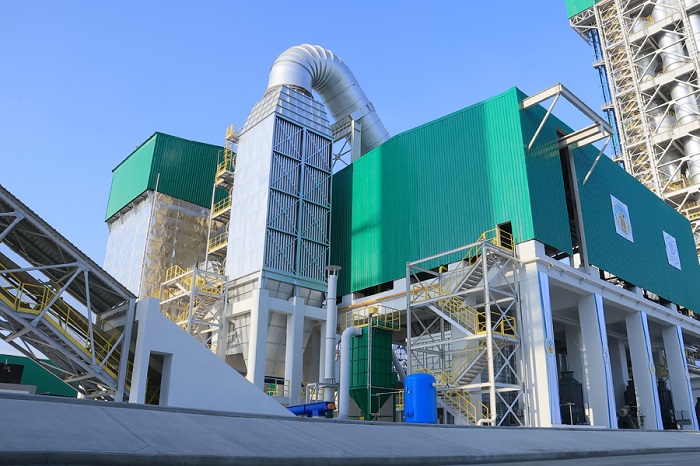
Cement production is one of the most energy-intensive and environmentally pollutive processes in the construction industry. Producing one ton of ordinary Portland cement requires vast amounts of limestone, clay, quartz sand, and iron ore. More importantly, it demands a massive amount of fuel (natural gas in Turkmenistan) and energy. During the kiln firing of the [...]The post Turkmen Scientists Implement “Green Chemistry” Principles in Cement Production: Reducing Raw Materials, Fuel, and Environmental Impact appeared first on News Central Asia (nCa).

Ryan Aytay, a longtime Salesforce exec who has led Tableau as CEO since 2023, is departing. Aytay revealed the news... Read More

Domestic gold rates, quoted based on purity and local market factors, remained close to recent levels after a period of volatility that saw prices both retreat and stabilise in the last few sessions. Check the current gold rates in major Indian cities like Delhi, Mumbai, Chennai, Hyderabad, Bengaluru, Ahmedabad, Kolkata, Srinagar, Jodhpur, Jaipur, Bhopal, Lucknow, Noida, Ghaziabad, and Gurugram.

EDITORIAL: The latest Debt Policy Statement 2026, prepared under the Fiscal Responsibility and Debt Limitation (FRDL) Act for submission to the National Assembly, once again tells the story of the country’s fiscal rulebook being treated as optional.According to the statement, in FY2024-25, public debt overshot the statutory ceiling by a staggering Rs16.8 trillion, climbing to 70.7 percent of GDP against a maximum permissible cap set by parliament of 56 percent.In other words, public debt exceeded the legal limit by a substantial 14.7 percent of GDP, demonstrating the government’s continued failure to impose fiscal discipline on itself.It goes without saying that this breach exposes a deep-seated structural flaw in Pakistan’s system of governance: spending first, borrowing more to finance that expenditure and retrofitting justifications later.Rules intended to impose fiscal discipline are routinely ignored, with Parliament usually looped in only after ceilings are crossed and the executive facing no immediate consequences for excess. It is clear that the state’s core operating model remains consumption-driven, resistant to reform, overly reliant on debt and indifferent to enhancing the economy’s productive capacity.The cumulative effect of this is that half the federal budget is now swallowed by debt servicing, shrinking space for development spending, hollowing out the PSDP (Public Sector Development Programme) and forcing ever-higher taxes on an already overburdened citizenry.Just last month, a leading think tank had highlighted the scale of Pakistan’s debt crisis: between FY2015 and FY2025 public debt ballooned by a massive 365 percent, surging from Rs17.3 trillion to Rs80.5 trillion, with debt servicing costs comfortably outpacing revenue growth during the past decade.Equally alarmingly, domestic debt servicing had emerged as the biggest driver of expenditure growth over the last three years, crowding out development outlays and starving the economy of the productive investment needed to break the debt trap. Against this bleak backdrop, the finance ministry’s assurances to Parliament ring hollow.Even as it concedes that the debt-to-GDP ratio worsened over the last fiscal year, the government maintains that it remains committed to following the FRDL Act and promises to reduce public debt to sustainable levels through fiscal consolidation, generating primary surpluses and a gradual reduction in the fiscal deficit.How this is to be achieved is far from clear as the Fiscal Policy Statement 2026 shows that the federal fiscal deficit also exceeded the parliament-set limit by 2.7 percent of GDP, underscoring that both core fiscal anchors — debt and deficit — have been breached simultaneously, leaving little credibility in claims of a near-term turnaround.Early signs this year aren’t too encouraging. The FBR has already missed its revenue target for the July-January period by Rs347 billion, even as the government leans more heavily on financial engineering to contain debt pressures.The current strategy focuses on lengthening maturities through greater issuance of medium- and long-term instruments, shifting towards fixed-rate debt, deepening the domestic market and tapping new investors at home and abroad, including through proposed Panda bonds.While these steps may ease refinancing and interest-rate risks in the short term, they leave the underlying imbalance intact: a government that continues to spend beyond its means and fails to raise sufficient revenue. Without correcting this gap, debt management will merely defer the reckoning rather than placing public finances on a sustainable footing.The reality is that until the mindset at the heart of governance changes, fiscal indiscipline will remain deeply entrenched.Departments will continue to exceed their budgets, state spending will favour consumption over productive investment, the burden of pensions will swell and the civil bureaucracy will remain bloated.The government will find itself borrowing not only to cover towering existing debt but also to finance these ongoing obligations, creating a self-perpetuating cycle that thwarts any meaningful attempt at fiscal reform.Copyright Business Recorder, 2026

SkyBridge Capital CEO and vocal cryptocurrency advocate Anthony Scaramucci advised steady accumulation rather than speculative trading for Bitcoin (CRYPTO: BTC) on Tuesday amid the apex cryptocurrency’s ongoing decline.Scaramucci Wants Investors To Buy BTC’s DipScaramucci endorsed Strategy Inc. (NASDAQ:MSTR) co-founder Michael Saylor’s HODL mantra, saying, “Accumulate, don’t speculate.”Accumulate, don't speculate. #Bitcoin https://t.co/h7Q0A25aRK— Anthony Scaramucci (@Scaramucci) February 3, 2026Scaramucci, who has 70% of his wealth tied in Bitcoin-related investments, said over the weekend that he was buying the latest dip.Scaramucci has extensively used his social reach and public platforms to promote the leading ...Full story available on Benzinga.com

Doctors in Delhi successfully conducted a live ultrasound scan on a patient in Antarctica using a remotely controlled robotic arm. This groundbreaking demonstration by AIIMS highlights the potential for delivering specialist medical care across vast distances, offering a vital solution for remote and underserved regions.

Nukes, defence, minerals: Inside Jaishankar-Rubio talks post India-US trade deal