
seekingalpha132d ago
Alamos Gold Inc. (AGI:CA) Analyst/Investor Day Transcript
Alamos Gold Inc. (AGI:CA) Analyst/Investor Day February 4, 2026 8:30 AM ESTCompany ParticipantsScott Parsons - Senior Vice President of Corporate...
#COMMODITIES#CRYPTO
Alamos Gold Inc. (AGI:CA) Analyst/Investor Day February 4, 2026 8:30 AM ESTCompany ParticipantsScott Parsons - Senior Vice President of Corporate...

Social media habits can say a lot about how people like to connect, share information and spend their time online. [...]

Samsung is solidifying its position as a leader in the foldable smartphone market, with the Galaxy Z Fold 8 emerging as a centerpiece in its premium product lineup. For the second consecutive year, the Galaxy Z Fold series is expected to outsell its clamshell-style counterpart, the Galaxy Z Flip series. This trend underscores a notable [...]The post Samsung’s Boldest Foldable Gamble Yet: Why the Z Fold 8 Ultra Changes Everything appeared first on Geeky Gadgets.

Unlock the Future of the Enterprise Identity Verification and Authentication Market: Comprehensive Global Market Report 2026-2032Global leading market research publisher QYResearch published the release of its latest report, "Enterprise Identity Verification and Authentication - Global Market Share, Ranking, Sales, and

Cameras had an interesting year in 2025, with the launch of some long-delayed models like Sony’s 61MP RX1III, wholly original cameras (the Fujifilm X Half and Sigma BF) and much anticipated updates like the Sony A7 V and Canon R6 III. All told, there were 27 new cameras launched last year that joined the 20 new models on the market from 2024.Those ranged from compacts to mirrorless to very high-end models, with every price range included. The question is, which one is right for the type of videography or photography you do? Whether you’re an aspiring action or wildlife photographer, an extreme sports junkie or a content creator, we’ll help you find the perfect camera to match your budget and requirements. Best cameras for 2026 Best mirrorless cameras Mirrorless is the largest camera category in terms of models available, so it’s the best way to go if you’re looking for something with the most advanced features. Canon and Nikon recently announced they’re discontinuing development of new DSLRs, simply because most of the advantages of that category are gone, as I detailed in a video. The biggest selling feature of a mirrorless camera is the ability to change lenses depending on the type of shooting you want to do. Best action camera or gimbal camera The most important features to look for in an action cam are image quality, stabilization and battery life. GoPro has easily been beating all rivals recently in all those areas, but DJI has taken a lot of its business with the Osmo Pocket 3 gimbal camera. Best compact camera This category has fewer cameras than it did even a few years ago and many models are older, as manufacturers focus instead on mirrorless models. However, I’m still a big believer in compact cameras. They’re a noticeable step up from smartphones quality-wise, and a lot of people will take a compact traveling or to events when they’d never bother with the hassle of a DSLR or mirrorless camera. Compacts largely have type 1-inch sensors, but a few offer larger options, particularly Fujifilm’s XF-100V. Another popular model, Sony’s XV-1, is primarily aimed at content creators looking to step up. In any case, desirable qualities include image quality, a fast lens, relatively long zoom, flip-out display, good battery life, a high quality EVF, decent video and good pocketability. What to consider before choosing a camera Smartphones might get better for video and photos every year, full cameras still have an edge in many ways. The larger sensors in mirrorless cameras let more light in, and you have a wide choice of lenses with far superior optics. Dedicated cameras are also faster for shooting things like sports or wildlife, offer superior video for content creators and create more professional results. Sensor size There are a few key things to consider to get the most out of a camera. The first is sensor size: in general, the larger the sensor, the better (and usually more expensive) the camera. Full frame is the largest sensor size for mainstream cameras, and it’s available on models like the new Panasonic S9, the Nikon Z III and Canon EOS R5 II. At a size equivalent to 35mm film (36 x 24mm), it offers the best performance in terms of image quality, low-light capability and depth of field. But it’s also very expensive and finicky. While bokeh looks incredible at an aperture of f/1.4, the depth of field is so razor thin that your subject's eyebrow might be in focus but not their eye. This can also make shooting video difficult. The next size category is APS-C (around 23.5 x 15.6mm for most models and 22.2 x 14.8mm for Canon), offered on Fujifilm's X Series lineup, the Canon R10, the Sony ZV-E10 II and the Nikon Z50. It's cheaper than full frame, both for the camera body and lenses, but still brings most of the advantages like decent bokeh, high ISOs for low-light shooting and relatively high resolution. With a sensor size the same as movie cameras, it's ideal for shooting video, and it’s easier to hold focus than with full-frame cameras. Micro Four Thirds (17.3 x 13mm), a format shared by Panasonic and Olympus, is the next step down in sensor size. It offers less bokeh and light-gathering capability than APS-C and full frame, but allows for smaller and lighter cameras and lenses. For video, you can still get reasonably tight depth of field with good prime lenses, but focus is easier to control. The other common sensor size is Type 1 (1 inch), which is actually smaller than one inch at 12.7 x 9.5mm. That's used mostly by compact models like Sony’s ZV-1 vlogging camera. Finally, action cameras like the GoPro Hero 11 and DJI’s Osmo 3 have even smaller sensors (1/1.9 and 1/1.7 inches, respectively). Autofocus For photographers, another key factor is autofocus (AF) speed and accuracy. Most modern mirrorless cameras have hybrid phase-detect AF systems that allow for rapid focus and fast burst speeds. The majority also offer AI features like eye-detect AF for people and animals, which locks in on the subject’s eyes, face or body to keep them in focus. However, some models are faster and more reactive than others. Displays The electronic viewfinder (EVF) and rear display are also crucial. The best models have the sharpest and brightest EVFs that help you judge a shot before taking it. For things like street photography, it’s best to have as bright and sharp a rear display as possible, so it’s easy to see your subject and check focus in all manner of lighting conditions. You may also want a screen that flips out rather than just tilting, too. Lenses DSLRs and mirrorless cameras let you change lenses, but you're stuck with what's built into a compact camera. While that's great for portability, a single lens means you're going to sacrifice something along the way. The Fujifilm X100V, for instance, has a fast but fixed 35mm-equivalent f/2.0 lens and no zoom. The Sony RX100 V has a 24-70mm zoom, but it's slower at the telephoto end (f/2.8) and less sharp than a fixed focal (prime) lens. When choosing a lens for a mirrorless camera, you’ll need to consider the focal or zoom length, along with the minimum aperture. Smaller numbers like f/1.4 for a prime lens or f/2.8 for a zoom are best, as they let you work in darker environments and maximize background blur to isolate your subject. However, those lenses are more complex and thus more expensive. Video recording When it comes to video, there are other factors to consider. Some cameras combine or skip over pixels (line skipping or pixel binning) for video recording, which is not ideal because it can reduce sharpness. Better cameras tend to read out the entire sensor and then “downsample” to improve video sharpness (camera manufacturers don’t often say if video is pixel binned, but will say if it’s downsampled). Another important factor is sensor speed, as slower sensors tend to have more rolling shutter that can create a “jello” effect that skews video. In addition, how’s the battery life? How do you like the handling and feel? How long can you shoot before the camera heats up or stops? Does it support 10-bit HDR video? Is there a microphone and/or a headphone jack? (If you record a lot of interviews, it's preferable to have both.) How's the video autofocus? All of these things play a part in your decision.This article originally appeared on Engadget at https://www.engadget.com/cameras/best-cameras-151524327.html?src=rss

Since the 70s, China has turned around its economy – from introducing subsidies to mining untapped talent, these are the lessons Starmer must take note ofMargaret Thatcher and Deng Xiaoping were both on a mission when they came to power within months of each other at the tail end of the 1970s. Thatcher wanted to reinvigorate capitalism in Britain, while Deng launched a programme of reform and liberalisation that he called socialism with Chinese characteristics.Since then, the economies of Britain and China have been transformed, but in different ways. China was essentially a peasant economy when Deng took control, but it has since become an industrial powerhouse, while Britain has ceased to be a major manufacturing player and instead became a country dominated by services.Larry Elliott is a Guardian columnist Continue reading...

Mahindra & Mahindra has secured its largest-ever export order for 35,000 Scorpio Pik Up vehicles to Indonesia, set for delivery in 2026. The 'Made in Nashik' vehicles will support Indonesia's national food security transformation project.
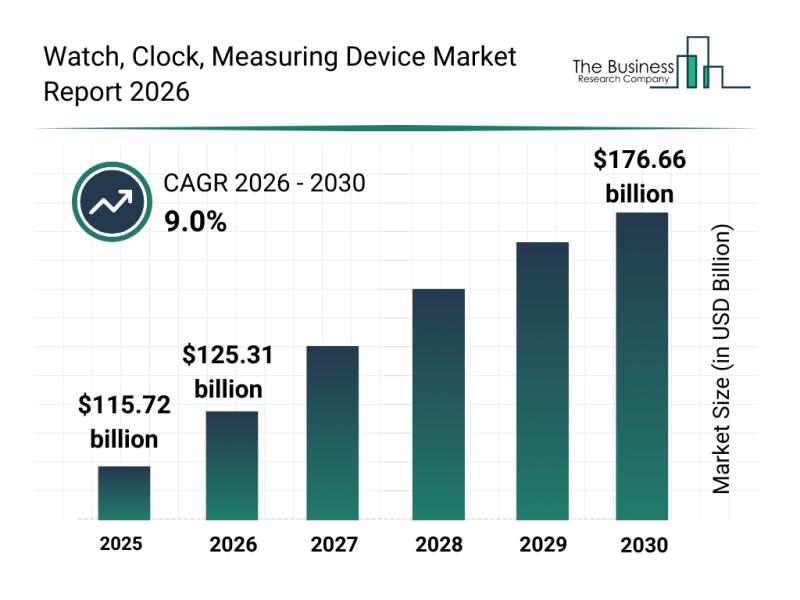
The watch, clock, and measuring device industry is set to experience significant growth as technological advancements and increasing consumer demand drive innovation and market expansion. The integration of smart technology and the rising popularity of wearable devices are particularly influential

The University of Galway has this week launched its new Medical Device Prototype Hub, supported by medical device company Medtronic. The development of the facility is part of the five-year €5 million signature innovation partnership between Medtronic and the University, announced in 2023, which focuses on three pillars: developing the MedTech ecosystem, STEM engagement and [...]

Bison Bank plans a Portuguese stablecoin in 2026, aiming to merge traditional finance with blockchain and offer new digital financial services.The post Portugal’s Bison Bank expands into crypto with stablecoin initiative appeared first on CoinGeek.

Gold and silver prices fell sharply in a broader market selloff on Thursday, as an advance in the dollar to a near two-week high and signs of easing U.S.-China trade tensions added further pressure on the precious metals. Read full story

LIMASSOL, Cyprus, Feb. 05, 2026 (GLOBE NEWSWIRE) -- B2PRIME Group, a global financial services provider for institutional and professional clients, has released a comprehensive analytical report on liquidity conditions across global financial markets. "Liquidity Pulse" offers insights into how markets are evolving amid volatility and changing trading behaviour.Delving into how institutional liquidity is formed and priced today, the report forms practical advice on how brokers and institutional traders can better assess liquidity quality and improve execution outcomes in complex markets. The report examines the structural differences across venues, asset classes, and execution models.Key liquidity insights from the report:Geopolitical risks and macroeconomic uncertainty will remain a persistent ...Full story available on Benzinga.com