queenslandcountrylife_au112d ago
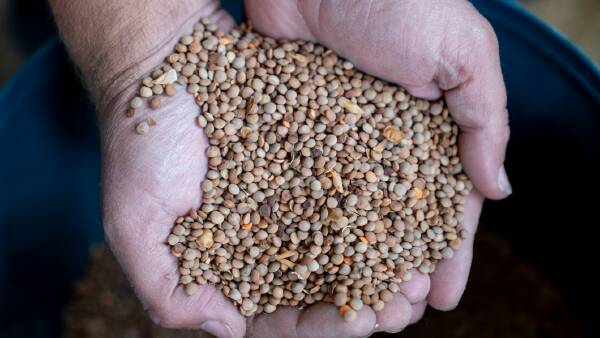
Aussie croppers have reason to love lentils, but the gold rush has a limit
Growers are flocking to lentils, but high supply could hurt prices.
#COMMODITIES
Growers are flocking to lentils, but high supply could hurt prices.

Welcome to TrendMap, your guide to the performance of different investment segments. In this edition, we present a 10-year performance tracker of various asset classes. By Sameer Bhardwaj.

Sony and Bose make exceptional headphones, but extended time with each model reveals their true strengths and weaknesses.
LONDON, Feb. 2, 2026 /PRNewswire/ -- Zevero, a global carbon management platform, today announced the acquisition of Inhabit, a UK-based sustainability solutions provider. Under the arrangement, Zevero will assume responsibility for supporting a portfolio of organisations across Europe...

Horoscope Today: Read daily horoscope predictions for February 2, 2026. Know all about the astrological events and influences that will be affecting each of the 12 zodiac signs. Our astrologer has analyzed the movements of the planets and the alignment of the stars to bring you the most accurate and up-to-date horoscope predictions for the day ahead. Get ready to discover what the stars have in store for you today.

Thanks to a big equity market rotation to kick off 2026, dividend ETFs are back in style.

In the years that the government was exiting one business after another, the Budget was a huge event. There was money to be made punting on which these sectors would be and which business would make the most of it. Tax rates were so high that hiding one’s income from the taxman was the biggest concern. We are well past the days of such drama.

The firm said the nomination of the next Federal Reserve chair came amid a dangerous period for the central bank, as inflationary pressures again posed risks.

The IoD Directors’ Economic Confidence Index, which measures business leader optimism in prospects for the UK economy, jumped to -48 in January 2026, from -66 in December 2025. Business leader confidence in their own organisations also jumped, to +14 in January from -4 in December.]]>

Are investors overestimating the risk from AI?
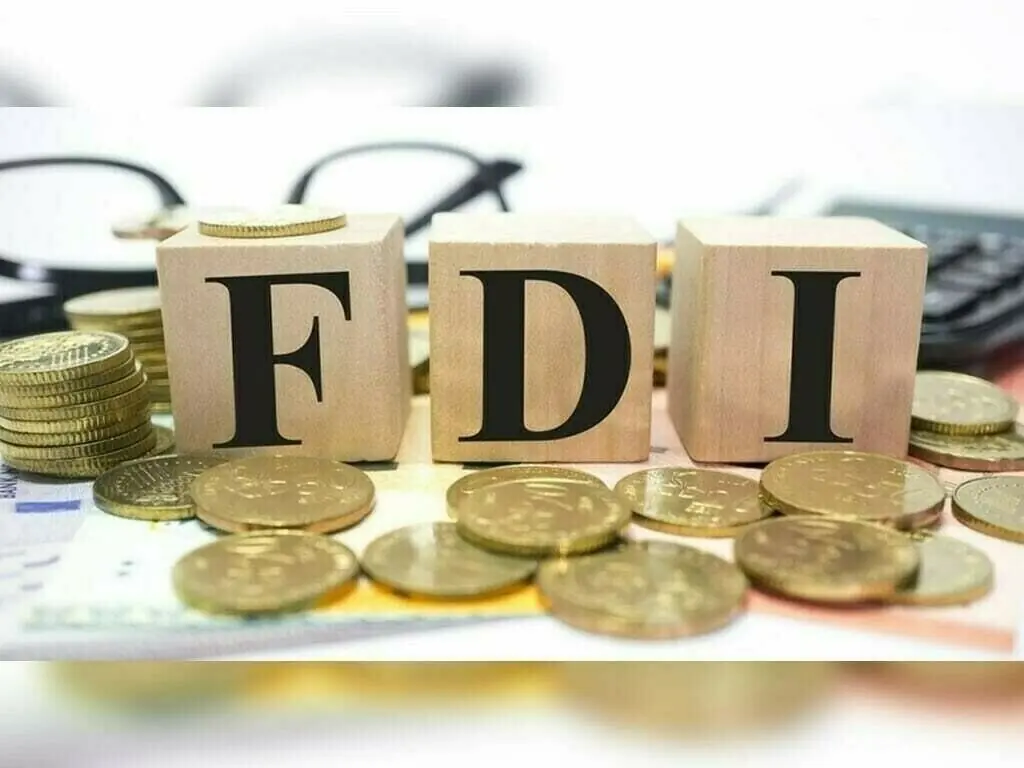
EDITORIAL: The government continues to emphasise foreign direct investment (FDI) as a cornerstone of economic revival. However, at the same time, the tax authority is extracting disproportionate revenue from the formal corporate sector to meet ambitious targets, with little focus on broadening the tax base.A recent manifestation of this approach, for example, is the judgement by the Federal Constitutional Court, which upheld the retrospective application of the super tax. This may help the FBR raise around Rs300 billion to cover this year’s shortfall without a mini-budget. However, the critical question remains: how can FDI be attracted to the formal corporate sector when the highest court in the land has held that taxes and policies can be applied/changed retroactively?This is one of the key reasons why the government continues to struggle in attracting investment despite achieving macroeconomic stability and benefiting from geopolitical tailwinds. FDI has declined by 43 percent to USD 809 million from an already low base, making it the third lowest level as a percentage of GDP over the past 20 years. The imposition of backdated levies is detrimental to investor confidence, especially when justified as an exercise of sovereign power. The government and regulators need to rethink their strategy and recognise that large formal-sector investments are the primary gateway for substantial FDI inflows.As tax rates rise, incentives to conceal sales increase. This partly explains why large business groups are expanding into retail and real estate, opening malls, and focusing on domestic markets. One of the largest textile exporters has openly stated that it has no plans to invest further in export-oriented businesses, while expanding its domestic retail footprint and exploring import-substitution ventures. Retail investments can enable partial sales concealment and cash generation, which can be moved abroad through informal channels such as hundi-hawala or crypto instruments—an emerging trend. As a result, foreign investors step back. Unsurprisingly, several multinational firms in pharmaceuticals, FMCG, and other sectors are exiting the market.It is important to note that government spokespersons often argue that this is healthy, citing mergers and acquisitions and domestic buyers stepping in. While this may partly be true, a deeper trend is visible: many acquisitions are driven by trapped liquidity—formal cash that cannot be remitted due to implicit restrictions. In some cases, sellers, however, still have legal avenues to move funds abroad. A critical priority is to provide investors with confidence to bring capital into the country, reinvest profits locally, and commit to formal businesses. This requires resolving the taxation puzzle. While the government rightly seeks fiscal consolidation and debt reduction, the focus should be on expanding the tax base rather than squeezing those already heavily taxed.Other bottlenecks include declining competitiveness due to government inefficiencies, particularly in the energy sector, and constraints on capital mobility. Whenever crises emerge, the SBP (State Bank of Pakistan) imposes restrictions on capital flows. Reversing these restrictions requires fresh inflows and reserve accumulation, yet Pakistan’s foreign exchange reserves have historically covered only three to four months of imports even in the best periods. These constraints prevent the economy from moving beyond the stability phase. Without a credible growth narrative, investment remains elusive. This explains why, despite a historic rally in the stock market, net foreign portfolio investment remains negative.It is, therefore, about time the government corrected its policies on multiple fronts. Without decisive reforms, investment will remain subdued. While the SBP is optimistic about building reserves to record levels this year, the government must address the energy sector through privatisation of DISCOs and ensure tax equity in the upcoming budget. Otherwise, the quest for a higher FDI will always remain elusive.Copyright Business Recorder, 2026

The announcement regarding the replacement of Federal Reserve Chairman Jerome Powell has now been made public. Former Fed Governor Kevin Warsh will be assuming the Fed’s responsibilities. He is regarded as experienced and traditional in his approach, which is expected to help restore stability and uphold the Federal Reserve’s independence.In other news, last week experienced significant fluctuations in the prices of gold and silver, likely experiencing one of their most turbulent sessions ever.The US Dollar took a hit after Donald Trump expressed no concern over a weaker Dollar, resulting in a drop of the USD index to a record low.The market is also closely monitoring developments in the Gulf, particularly the tensions between the US and Iran. Rising oil prices are an important factor to consider regarding this evolving situation. If conditions worsen, attention will turn to the Strait of Hormuz, the region’s primary supply route, which could also affect pricing.There is hope that all involved parties will engage in dialogue to resolve the issue, preventing conflict. Higher oil prices can disrupt economic growth, and even a prolonged situation will keep oil prices elevated, which hampers growth and triggers inflation.A de-escalation of tensions would likely lead to a decrease in oil prices. Furthermore, OPEC was scheduled to convene on February 1st.Last week, the market experienced strong volatility in the prices of gold, silver, and the USD in relation to major currencies. Silver saw a significant drop of over 25%, while gold fell by more than 15% before the recovery.While some might label this a correction, there has been no shift in the geopolitical situation, and tariffs continue to threaten economies.An increase in the US Producer Price Index (PPI) reported last week surpassing expectations indicates that tariff-related costs are contributing to rising prices.The outcome of the January FOMC meeting suggests that the Fed is in no rush to resume easing policy rates, as the economy stabilizes and the labour market is less strained than before.Overall, the FOMC’s assessment appears positive, highlighting improvements in the economy.However, the announcement of the new Fed Chairman may have provided some reassurance in the market, potentially leading to a correction, the effects of which may become clearer in the coming days or weeks. Following the extreme volatility in the financial markets, traders will likely be closely observing market sentiment and movements on Monday morning.At the time of writing this post, the status of the pending government funding bills remains uncertain, which will also be a key factor influencing market movements.In the meantime, while we have observed some extraordinary developments in the metal market, the future direction will likely become clearer in the next few days or weeks.Interestingly, my previous forecast for gold at USD 5500 by December 2026, which I shared in Business Recorder on October 13, 2025, has been reached much sooner than anticipated.Consequently, I am adjusting my target for December 2026 upward to USD 5880.So far, nothing has fundamentally changed. The geopolitical landscape remains fragile and has deteriorated further when considering ongoing global trade issues and security concerns.Trust in the US Dollar and related assets continues to decline. We can clearly see a shift in Central Bank’s investment strategies as they explore alternative options, and investors are likely to follow this trend.Central banks are expected to step in and buy at lower price points to enhance their portfolios.Ultimately, market dynamics will be driven by supply and demand. This suggests an increase in demand for metals, which will likely elevate commodity prices.Honestly, I don’t expect to see another substantial drop of 15 percent to 16 percent all at once. That decline was a historic, one-time occurrence.Gold is supported at USD 4420 and again at USD 4210. The speed of any upward movement will largely hinge on geopolitical developments, with Central Bank purchases remaining a key influence.In my view, demand for physical gold from Russia and Iran will alter market forecasts and maintain strong interest in gold. With a projected global growth rate of 3.3 percent and rising economic activity, a considerable amount of liquidity will likely shift toward gold.If funds are not reinvested in US Treasuries, options will be limited. Therefore, if gold breaks through USD 5480, we could see an additional upward movement of around USD 300 to USD 400, potentially reaching USD 5880.WEEKLY OUTLOOK — FEB 2-6GOLD @ USD 4892— Gold is set for another highly volatile week, with trading anticipated to fluctuate significantly. While gold could experience further declines, as renewed buying interest is likely to aid its recovery. Key support levels are at USD 4760 and USD 4640, with potential break risks at USD 4519. On the upside, if it breaks through USD 5090, it could rise towards USD 5180 and beyond. I wouldn’t be surprised to see buying interest emerge during price dips.EURO @ 1.1848— Euro has support at 1.1740. As long as it remains above this level, it is expected to trend higher. It will need to surpass 1.1970 to potentially reach the 1.2050 levels.GBP @ 1.3682— Pound Sterling needs to hold 1.3570 levels. Otherwise, it could drop further to around 1.3490. On the other hand, if it breaks through 1.3780, it could rise to 1.3850.JPY @ 154.75— The $/Yen pair needs to break past 156.20 to touch 157.60. If it doesn’t, it may weaken. However, a decline below 153.70 poses a risk to drop to 153.10.Copyright Business Recorder, 2026