Dashboard

Financial News

Rupee gains signal growing market confidence
dailytimes_pk72d ago

Rupee gains signal growing market confidence

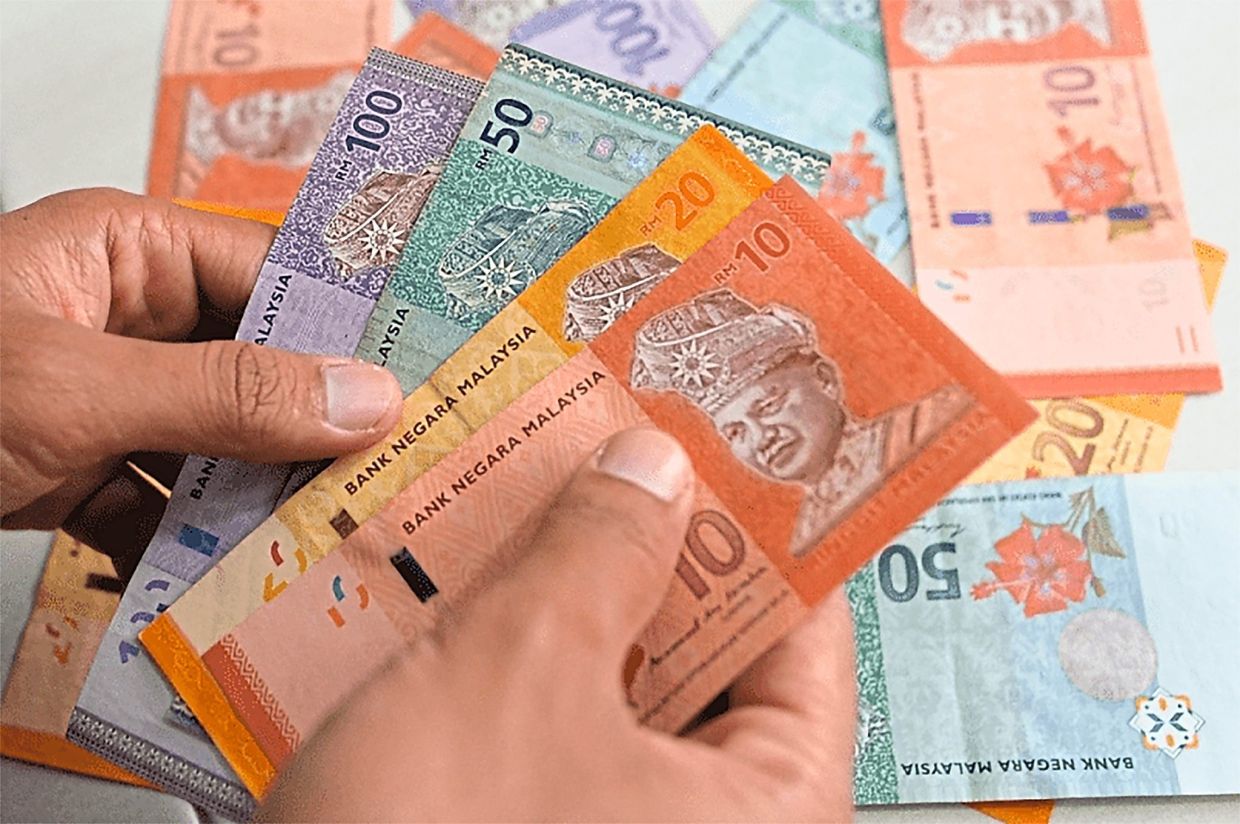
The Pakistani rupee continued to strengthen against the US dollar, closing at 279.90 in the interbank market as improved dollar supply supported the local currency. Moreover, the greenback briefly slipped to 279.66 during trading before rising slightly because of fresh import demand later in the session. This steady performance shows that market balance is improving [...]

#FOREX
benzinga72d ago

Record low December new home sales in the GTA capped off 2025 as the worst year on record

Toronto, Jan. 22, 2026 (GLOBE NEWSWIRE) -- Greater Toronto Area, January 22, 2026 – December sales capped off 2025 as the worst year on record for new home sales in the GTA, the Building Industry and Land Development Association (BILD) said today, raising serious concerns about job losses, future housing supply, and the region's economic outlook.There were just 240 new home sales in December, which was down 24 per cent from December 2024 and 82 per cent below the 10-year average, according to Altus Group*, BILD's official source for new home market intelligence. Historically, new home sales for a typical December in the GTA would be 1,327 units based on the previous 10-year average. As December 2024 set a record-breaking low for new home sales, this December's year-over-year numbers are now being measured against what was already one of the weakest months on record."GTA new home sales in December 2025 reached an all-time low, bringing a fitting close to 2025. Never in the 45 years that new home sales data have been collected for the GTA have we seen just 5,300 sales for an entire year," said Edward Jegg, Research Manager at Altus Group. "Meanwhile, 2026 is likely to see geopolitical concerns linger, prices remain elevated and the Bank of ...Full story available on Benzinga.com

#ECONOMY
Crypto won’t fix America’s affordability crisis
fastcompany72d ago

Crypto won’t fix America’s affordability crisis

Economists increasingly describe today’s economy as “K-shaped”: Households with higher incomes and assets are pulling ahead, while many middle- and lower-income families struggle to keep up. Prices for housing, healthcare, and everyday necessities have risen faster than paychecks, leaving millions of Americans feeling squeezed, exposed, and uncertain about the future. For many families, affordability is not an abstract concern, it is the daily challenge of covering essentials while trying to stay afloat. You would expect that reality to shape what Congress prioritizes in response to economic anxiety. Instead, “affordability” is being invoked to justify making crypto market structure—the rules governing how digital assets are regulated and integrated into the broader financial system—a legislative priority, rather than addressing the more pressing sources of financial strain facing most families. Crypto offers a story about upside and progress, but it does not answer the underlying problems of unstable incomes, fragile savings, and rising exposure to risk. Affordability is not about access to new financial products. It is about whether households can reliably pay for basics, absorb shocks, and plan for the future without taking on more volatility. Supporters argue that regulation can turn risky markets into engines of opportunity, especially for communities long excluded from traditional finance. But while regulation may promise harm reduction, it cannot turn speculation into a vehicle for broad-based wealth-building. Congress’s focus on conferring legitimacy on crypto reflects a troubling substitution of financial speculation for the harder work of rebuilding the real economy. Wealth that lastsThe reason becomes clearer when you start with what wealth-building actually requires. Wealth that lasts is built on stability, not volatility. It looks like a paycheck that covers the mortgage, a retirement account that compounds quietly over decades, and savings that remain after a medical bill or a layoff. For most households, it’s accumulated gradually through retirement savings, pensions, and home equity. These systems are deeply imperfect, and trust in them has eroded for good reason. While wages rose after the pandemic, the cost of housing, healthcare, and other necessities rose faster, leaving many households feeling less secure. But the failure of existing systems does not make volatility a solution. It makes stability more, not less, important. Falling shortMeasured against those standards, crypto falls short. Crypto markets are organized around speculation rather than value creation. Tokens do not generate cash flows like businesses or bonds; their prices move on hype and momentum rather than economic fundamentals. An economy that already feels precarious does not need more ways for households to absorb financial risk. That speculative structure tends to reward those who can enter early and exit first. When crypto prices surge, new investors rush in—often drawn by recent gains—while larger, better-positioned holders are more likely to sell into the rally. Many ordinary households arrive later, buying at elevated prices amid extreme volatility. Research shows that lower-income investors in particular tend to enter later and at worse price points. Over time, this dynamic functions less as a wealth-building system and more as a wealth transfer from late-arriving households to earlier and more sophisticated participants—reinforcing the same uneven gains that already define today’s K-shaped economy. The limits of regulationRegulation is often presented as the solution, but not all regulation reduces risk. Strong guardrails can in principle reduce fraud, limit spillovers, and protect the broader financial system. The problem is not regulation itself, but how it’s being pursued. Much of the current market structure debate is defined less by nonnegotiable safeguards than by pressure to reach a deal quickly, even if key protections are weakened, deferred, or left unresolved. Even strong regulation has limits. It does not change what crypto is or transform speculative assets into a reliable vehicle for long-term wealth-building. Even a well-regulated casino is still a casino. Rules can make gambling safer; they do not make it a retirement strategy. That distinction matters beyond individual investors. When volatile assets are granted legitimacy without firm safeguards, risk migrates into retirement systems, financial institutions, and local economies. And when those risks spread, they do not fall evenly. Communities of color are especially exposed to systemic shocks because they have far less generational wealth to fall back on when credit tightens or savings are hit. Losses are harder to absorb and recovery takes longer, even for households that never touch crypto. At the same time, these communities are often targeted directly by financial marketers and intermediaries promoting high-risk products. We have seen this pattern of predatory inclusion before. In the years leading up to the financial crisis, risky mortgage products were sold to Black and Latino households as pathways to opportunity, only to shift disproportionate risk onto families least able to absorb losses. Today, similar language surrounds crypto. “Access” is framed as empowerment, but access to volatility is not affordability, and exposure to risk is not safe wealth-building. Stablecoins are the point where these risks become policy. Congress’s recent handling of stablecoins offers a case study in prioritizing crypto expansion over the real economy. Less than two weeks after passing sweeping legislation that cut healthcare, food assistance, and student aid, lawmakers moved quickly to advance stablecoin legislation framed as a consumer protection measure. In practice, it prioritized industry growth and speed over downstream consequences for credit, banking, and communities, leaving key safeguards weakened or unresolved. Real consequencesThose legislative choices have real economic consequences. If deposits migrate out of banks and into stablecoins, some economists estimate the shift could translate into roughly $250 billion less lending across the economy. If stablecoins function as yield-bearing substitutes for bank deposits, potential credit losses could rise sharply, possibly into the trillions of dollars. Those losses would hit community banks first, along with the small businesses, rural areas, and communities of color that rely on relationship-based lending. Congress should not confuse legislative movement with economic progress. In an economy already split between those who are gaining ground and those struggling to stay afloat, lawmakers should be clear-eyed about what this legislation actually does. It does not make wealth more accessible or everyday life more affordable. It does not make families safer. It normalizes dangerous financial risk while leaving the real economy’s wealth-building failures unaddressed—at a moment when ordinary Americans can least afford to lose.

#ECONOMY
Japan Bond Shock Sparks Fears: India Flags ‘Huge Mountain Of Debt’ In Developed World
abplive72d ago

Japan Bond Shock Sparks Fears: India Flags ‘Huge Mountain Of Debt’ In Developed World

As policymakers and business leaders gathered at the World Economic Forum in Davos, one message from India cut through the usual optimism: the biggest threat to global stability may not come from emerging markets, but from the advanced economies themselves.Union Minister for Railways, Information & Broadcasting, and Electronics & Information Technology, Ashwini Vaishnaw, said the Indian government is increasingly concerned about what he described as a “huge mountain of debt” in developed nations and the danger of a disorderly unravelling. His remarks came against the backdrop of a sharp spike in long-term Japanese bond yields, a move that sent ripples across global financial markets, reported Business Standard."What's really a matter of concern in the government’s mind is the huge global debt in the rich world and how that will unravel. We saw a run on bonds in Japan on Tuesday. If it happens on a large scale, what will be the impact on our country is a matter of concern,” Vaishnaw said during a session titled ‘Can India Become the Third-Largest Economy in the World?’.Japan’s Bond Jolt and Why It Matters to IndiaThe immediate trigger for Vaishnaw’s warning was a sharp move in Japan’s sovereign debt market. Japan’s 40-year bond yield crossed 4 per cent, hitting its highest level since the instrument was introduced in 2007. More strikingly, it marked the first time in over three decades that any maturity of Japanese government debt breached the 4 per cent threshold.Investors were rattled by plans for tax cuts and large pre-election spending announced by Prime Minister Sanae Takaichi, with no clear funding roadmap. For India, the implications are not academic. When yields rise sharply in traditionally “safe” markets such as Japan, global investors often rebalance portfolios away from riskier assets. That typically means reduced appetite for bonds and equities in emerging markets and a higher probability of foreign portfolio investor outflows during volatile periods.How Global Debt Can Spill Into Emerging MarketsHigher yields in advanced economies increase the relative attractiveness of developed-market assets, draining capital from countries like India. This can weaken local currencies, tighten domestic financial conditions, and make borrowing more expensive for both governments and companies.Vaishnaw’s warning reflects a broader concern in New Delhi: that turbulence in rich economies could derail growth momentum in emerging markets, even if domestic fundamentals remain strong.India’s Growth Ambition: 6-8 Per Cent and BeyondDespite these global risks, Vaishnaw struck an optimistic note about India’s medium-term prospects. He said India could sustain 6-8 per cent growth over the next five years and emerge as the world’s third-largest economy, driven by a reform strategy anchored on four pillars: public investment, inclusive growth, manufacturing and innovation, and simplification.“All this, combined with the technology base we have put in place, allows us to clearly say India will grow at 6-8 per cent real growth, with moderate inflation of 2-4 per cent, and nominal growth of 10-13 per cent, with a 95 per cent confidence interval over the next five years,” he said.Per Capita Incomes, Not Rankings, Are the Real TestHarvard professor Gita Gopinath offered a sobering counterpoint. Becoming the world’s third-largest economy, she argued, is not India’s hardest task. “The real challenge for India is raising per capita incomes and maintaining the pace of reforms to achieve the Viksit Bharat goal by 2047,” she said, adding that India could reach the third-largest position by 2028 or earlier.Gopinath flagged land acquisition hurdles, unclear land titles, and the absence of judicial reforms as structural obstacles that continue to slow investment and project execution.Pollution: A Bigger Threat Than TariffsPerhaps Gopinath’s strongest warning concerned pollution. She said its economic and social costs far outweigh the impact of tariffs imposed on India so far. Citing a World Bank study, she noted that around 1.7 million people die every year in India due to pollution, accounting for 18 per cent of all deaths.“That’s 18 per cent of deaths in India. From an international investor’s perspective, if you’re thinking of coming in and setting up operations in India but have to live in an environment that affects your health, it becomes a deterrent. Addressing this on a war footing is critical. This has to be a top mission for India,” she said.Competition, Standards and India’s Own PathBusiness leaders at the panel also highlighted longer-term challenges. Sunil Bharti Mittal, chairman of Bharti Enterprises, said rising global competition means India cannot replicate China’s export-led path.“The US was a massive market for China, which it used over 20-30 years to build factories, move into deeptech, and generate enormous wealth. That opportunity does not exist for India. We will have to chart our own path. Thankfully, we have a large domestic market,” he said.Meanwhile, Juvencio Maeztu, CEO and president of Ingka Group, urged India to align more closely with global standards. “We welcome the new legislation on quality control orders. Raising quality standards will help India export globally. Implementation, however, needs to support supply as well,” he said.

#ECONOMY
India to remain fastest-growing major economy in 2025-26: RBI
orissapost72d ago

India to remain fastest-growing major economy in 2025-26: RBI

New Delhi: Amid global uncertainties, the current state of the economy provides ground for optimism going forward, and the GDP growth estimates for 2025-26 indicate that India will remain the fastest-growing major economy in the world, according to the Reserve Bank of India (RBI). India has made significant efforts to diversify and strengthen its exports, [...]

#ECONOMY