
investing_in18d ago
Emirates Global Aluminum faces lawsuit over Oklahoma smelter
Emirates Global Aluminum faces lawsuit over Oklahoma smelter
#COMMODITIES
Emirates Global Aluminum faces lawsuit over Oklahoma smelter

Ziff Davis director W. Brian Kretzmer sells $87,595 in stock

Veteran commodity strategist and Bloomberg analyst Mike McGlone says Bitcoin (CRYPTO: BTC ) and broader crypto markets may still be far from a true bottom, warning that excessive speculation and stretched risk markets could trigger a deeper reset. Bitcoin in “Purge Mode “ Speaking in a CoinTelegraph interview on June 2, McGlone argued Bitcoin remains stuck in a broader "purge mode," with the next major support zone likely around $50,000 before potentially falling toward $10,000 longer term. He said Bitcoin is unlikely to hold above its 200-day moving average and warned that meme assets like Dogecoin Full story available on Benzinga.com

TASHKENT, June 3 (Xinhua) -- International credit rating agency Fitch Ratings on Wednesday revised the outlook on Uzbekistan's Long-Term Issuer Default Ratings (IDRs) to "positive" from "stable," while affirming the country's speculative-grade "BB" rating. The revision reflects Uzbekistan's substantial progress in implementing structural economic reforms, strengthening macroeconomic stability, and improving key

Iren stock holds Outperform rating at Macquarie on Australia site

BitcoinWorld Japanese Yen: Limited Downside Against US Dollar as BoJ Signals Further Hikes, Says MUFG The Japanese yen is expected to face limited downside pressure against the US dollar, according to a new analysis from MUFG Bank, as the Bank of Japan (BoJ) continues to signal its readiness to raise interest rates further. The assessment comes amid a shifting global monetary policy landscape, where the divergence between the BoJ’s tightening [...] This post Japanese Yen: Limited Downside Against US Dollar as BoJ Signals Further Hikes, Says MUFG first appeared on BitcoinWorld .

João Fonseca’s breakthrough performance at the French Open was just what tennis needs more of. The 19-year-old brought a new level of buzz to the sport with his vocal Brazilian fans, blistering forehands and a comeback victory for the ages...

Colorado-based MSP replaces legacy VPN infrastructure with Zero Trust architecture after client breach, delivering enterprise-grade protection to law firms MILPITAS, Calif., June 3, 2026 /PRNewswire/ -- SonicWall today announced that XimpleIT, a Colorado-based managed service provider...
THE Southeast Asian Regional Center for Graduate Study and Research in Agriculture (Searca) and the University of the Philippines Visayas (UPV) created a new chapter in their 40-year relationship through a virtual signing of an agreement expanding their cooperation. Signed on May 29, 2026, the agreement establishes a framework for cooperation in academic, educational, and research initiatives to drive sustainable innovation in agriculture and fisheries across Southeast Asia. The agreement outlines joint research projects, scholarships, training programs, and the exchange of information and scientific materials. It aligns the partnership with Searca’s 12th Five-Year Development Plan, Sustainable Transformation of Agricultural Systems through Innovation in Southeast Asia (Sustain Southeast Asia). Searca said the alignment reflects a shared focus on linking science to practical solutions for farmers, fishers, and communities. Searca Center Director Mercedita Sombilla and UPV Chancellor Clement Camposano signed the agreement, with Searca Deputy Director for Administration Rico Ancog and UPV Graduate School Dean Rodelio Subade joining the ceremony. Subade said the partnership grew from recent academic exchanges and benchmarking discussions that showed opportunities for mutual learning and sustained cooperation. He expressed optimism that the MOU would lead to joint initiatives and knowledge-sharing. Camposano emphasized the role of institutional partnerships in addressing sustainability challenges. The UPV chancellor said advancing sustainability requires long-term, research-driven efforts, and the capacity of institutions to generate knowledge and translate it into action. Camposano also said the collaboration’s relevance to UPV’s strategic direction in fisheries and the blue economy. Complementary strengths Sombilla described the agreement as a reaffirmation of Searca and UPV’s 40-year relationship. She highlighted their complementary strengths: Searca’s regional mandate in agriculture, and UPV’s leadership in fisheries, marine science, and coastal management. These strengths, she said, provide a foundation for interdisciplinary work that bridges land and sea systems. She stressed the importance of linking science, policy, and practice to deliver evidence-based solutions for Southeast Asian communities. Sombilla cited climate change, declining fish stocks, and environmental degradation as challenges shaping the partnership’s direction. Regional context and ongoing work The agreement builds on Searca and UPV’s existing collaboration under the Asean Partnership for Sustainable Aquaculture (AquAsean), led by the French Agricultural Research Centre for International Development. Through AquAsean, both institutions already cooperate on aquaculture and fisheries while supporting graduate training and research exchange. The new agreement is expected to expand regional cooperation, research, scholarships, and innovation initiatives. The stated goal is to translate science into practical solutions that reach farmers, fishers, and communities in the Philippines and across Southeast Asia. Ancog said the agreement marks the start of a deeper, more dynamic collaboration. He expressed confidence that it will create opportunities for students, researchers, and practitioners while strengthening regional cooperation and delivering tangible impact.

Bitcoin’s latest pullback has prompted renewed speculation about whether the market is witnessing a period of institutional accumulation rather than a fundamental shift in sentiment. While prices have trended lower in recent weeks, some analysts argue that the decline may be creating an attractive entry point for larger investors looking to build positions before the next major catalyst emerges. How Large Investors Typically Approach Bitcoin Volatile Markets Bitcoin’s recent weakness may be part of a broader accumulation phase rather than a sign of deteriorating long-term fundamentals. An analyst known as Ash Crypto on X stated that institutions are intentionally pushing the price lower to accumulate at a lower price before the Clarity Act is signed into law. Related Reading: Bitcoin Moves Into Accumulation Zone That Will Send It On Next All-Time High Run To $250,000 This perspective draws a similar pattern. In August 2022, BlackRock filed for a private BTC trust, and the BTC price later dropped by roughly 36% before forming a bottom. Less than a year ago, in June 2023, BlackRock filed for the first Spot BTC ETF, an event that preceded a powerful 95% rally. By January 2024, when spot ETFs were officially approved, BTC hit a new high of $126,000. While there is no public evidence proving that institutions are intentionally driving prices lower, the narrative highlights growing expectations that institutions are repeating the same strategy with the Clarity Act. BlackRock’s aggressive selling of Bitcoin highlights exactly what is happening behind the scenes in the market right now. Crypto trader and investor EliZ has noted that this is another demonstration of how the market is often driven by liquidity rather than investor sentiment. If the selling pressure were to continue, the market could simply be experiencing a distribution phase aimed at pushing the price downward, raising cash, and creating fear in the market. These types of cycles are not new; they are dynamics that have played out before. According to EliZ, when market sentiment reaches an extreme bottom, and most traders have lost confidence, that is when big money returns to accumulate, driving the market towards new highs. For now, patience and disciplined risk management remain essential during these periods. Rather than rushing to anticipate every move, understanding that the broader market moves in phases, and this could be one of many. What Negative ETF Flows Could Mean For BTC’s Next Move May marked a notable shift in Bitcoin outflows from ETFs. Analyst Darkfost revealed this trend after examining the chart that compares the number of BTC held by ETFs between the beginning and end of the year, showing a sharp decline in net holdings growth. Related Reading: Bitcoin Is Still Following This Descending Channel Pattern And The Endgame Shows The Bottom Within a single month, net ETF holdings reportedly moved from more than 57,000 BTC earlier in the year to less than 6,940 BTC, pushing the metric back into negative territory compared to the start of the year. Currently, a correlation with the price can be observed, but ETF flow dynamics this year are starting to diverge from those of 2024 and 2025. Featured image from Getty Images, chart from Tradingview.com

Organizations running OpenNebula-managed AI Factories can now offer engineers managed fine-tuning, model serving, and per-token inference without having to build it in-house.
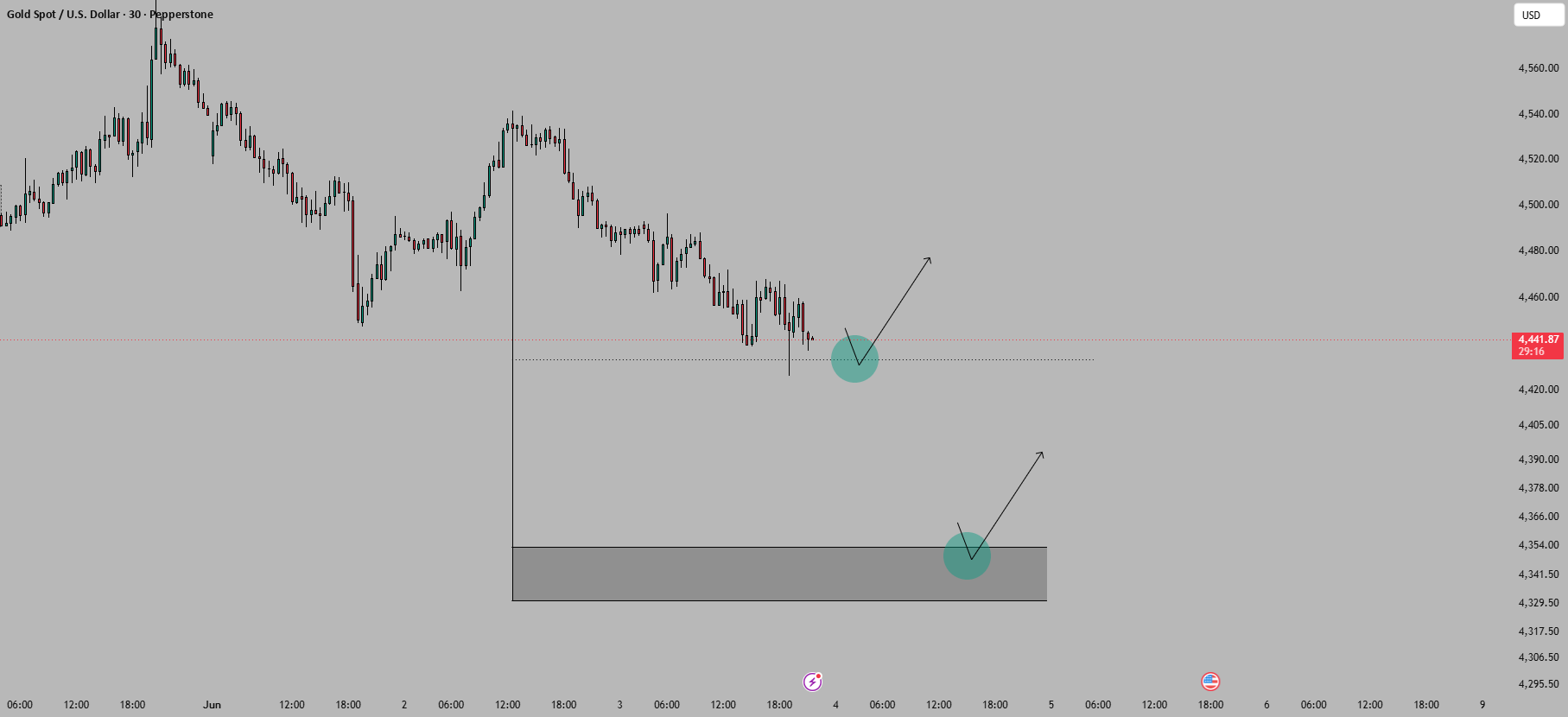
⚠️ XAUUSD Update ⚠️ The market may face rejection from this Reversal Area / Central Reversal Area. 👀 Key Focus: • Central Reversal Zone reaction • Reversal Zone reaction • Rejection confirmation candles Trade safe & wait for confirmation ✅