
thewest65d ago
Kia EV4: Very modest sales target set for new Tesla rival
Kia Australia isn't setting the volume bar high for its new EV4 electric sedan, projecting fewer than 100 sales per month.
#TECH
Kia Australia isn't setting the volume bar high for its new EV4 electric sedan, projecting fewer than 100 sales per month.
India’s private sector remains hesitant to invest in R&D. This is understandable, as the domestic market often fails to reward differentiated technologies adequately.

And Why Bank 78 Is Quietly Becoming the Bank of the Creative Economy Lagos has never lacked talent. Anyone whoread more How Payaza and HATRICKS by Tolani Alli Redefined Lagos

(MENAFN - IANS) Anand, Jan 30 (IANS) Gujarat Chief Minister Bhupendra Patel on Friday laid foundation stones and inaugurated 49 public welfare development projects worth Rs 234.01 crore in Khambhat, ...

SINGAPORE - Media OutReach Newswire - 30 January 2026 - Digital transformation has become an increasingly common priority among small and medium-sized enterprises (SMEs in Singapore), according to observations shared by Adverdize following a series of interviews with local businesses...

Kia's local executives have quashed hopes of the K4 Sportswagon coming to Australia, citing NVES pressures and niche sales.

For many in Southeast Asia, visa paperwork is a huge barrier. SpunSPUN is using AI to make the process faster and more predictable.

This year, Huawei South Africa is celebrating 25 years of being part of the country’s technology journey. Over the past quarter of a century, Huawei South Africa has grown alongside the digital landscape, supporting how people connect, work, create and live through technology. From building the networks that keep our country connected to designing consumer [...]The post Huawei marks 25 years of innovation, connection and everyday tech in South Africa appeared first on Hypertext.

On today’s edition of Techpoint Digest, we discuss a ₦7.7bn telco hack that landed six suspects in police custody, Atsur’s push for African art to outlive its first buyer, and Moniepoint’s ₦1tn bet on small businesses.
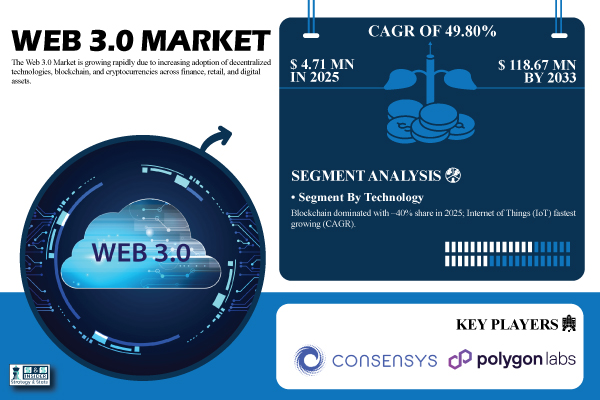
Global Web 3.0 Market Size, Share, Revenue Trends & Segmentation By Type, By Application, By End Use, By Technology, By Region, And Forecast 2026-2033

Berlin's Real Estate Market: Socialism On The Rise Submitted by Thomas KolbeGermany’s debt crisis continues to tighten the political leeway of the Federal Republic. The latest push by Berlin’s SPD for stricter real estate regulation clearly signals the direction ahead: Parties at the brink are choosing state-controlled economics over a market-driven turnaround.The German capital, Berlin, functions as a political testing ground and as ground zero for the united left of the Federal Republic. Like a magnifying glass, Berlin’s state politics reveal the broader response patterns of German politics to current social and economic challenges. The city’s real estate market now demonstrates trends likely to define the political character of the years to come.Faced with dramatic housing shortages, steadily rising rents, and exploding property prices, policymakers respond with even stronger regulation and rent controls. This is a policy of artificial scarcity, as investors systematically retreat from the market due to declining expected returns. The SPD’s recent move confirmed that the course remains steady: increasing regulation and direct control over investors (Apollo News reported).Overview of Regulatory Measures The SPD’s legislative initiative includes: severely restricting short-term tourist rentals to relieve the regular housing market; limiting potential rent surcharges for furnished apartments, preventing landlords from adjusting rents to reflect past investment in quality or amenities; capping index rents; and restricting modernization charges for property upkeep within narrow legal boundaries.Investment incentives and expected returns are thus significantly curtailed. The government is executing a consistent departure from economic fundamentals, addressing a self-created scarcity with measures that further exacerbate it. Without prospects of refinancing, investors are increasingly withdrawing from the market, putting further strain on housing availability.An additional measure is the introduction of a digital rental register—a sort of digital public ledger designed to enforce transparency and regulatory compliance. Larger landlords will be required to allocate a portion of their apartments to households with housing vouchers or the homeless. The state thus dictates down to the contractual level who may enter rental agreements.The SPD initiative marks the next stage of a fundamentally socialist market design. One can easily imagine how such rules impact potential developers, private investors, and larger investment groups. At its core, this policy is likely to further damage an already pressured real estate market, at least in Berlin’s current conditions.One development leads to another. In recent years, the construction sector has increasingly become a pawn of climate policy. Regulations are transposed into rental and building law without regard for economic consequences, inflating costs and freezing the status quo of building stock.Ultimately, tenants bear the brunt, as investors face mounting pressure and withdraw. Lengthy permitting processes, economically unrealistic energy standards, retrofit obligations, and increasingly visible government interventions in rental and contract law make many projects unattractive. The result is a slowdown in new construction and systematically rising housing costs. Climate policy thus directly multiplies the existing housing shortage.Reasons Behind the Property Price Explosion Property prices in Germany have surged for multiple reasons: First, over a decade of massive migration acted as a demand turbo. In urban centers like Berlin, Hamburg, or Frankfurt, the so-called “flow rate”—the part of the housing market ensuring mobility for tenants changing jobs or starting families—is completely blocked by the policy of perpetually open borders. Second, real estate has increasingly served as protection against systematic monetary depreciation, which follows rising public debt. The ECB expands the money supply through bond purchases while keeping interest rates low, steadily pushing property prices and rents higher to maintain profitability.But that’s not all: the next political assault on real estate came through climate regulation, high investment requirements tied to the green transition, insulation mandates, enforced heating technologies, and construction rules. These act as massive barriers to market entry for new capital. In effect, the state artificially restricts housing supply on three levels: regulation, control, and building mandates.Germany’s political refusal, for ideological and intellectual reasons, to rationally address migration and economic necessities has dramatic consequences. Last year, Berlin’s central planners set a nationwide housing target of 400,000 units. Yet massive regulatory interventions led to only around 205,000 completions—a decline of over 20% from the previous year. Similar numbers apply in Berlin, where massive migration requires roughly 20,000 new units annually. With only around 14,000 completed, the capital falls short despite state support and public housing. The market tightens, and the government responds with the same medicine—ultimately, those paying the price are tenants earning their own rent and not yet dependent on the growing social safety net.The question remains how Berlin’s politics will react grosso modo to this massive encroachment on market freedom. The city’s leftist bloc will likely push to further tighten regulations, while Berlin’s CDU, as seen in the inheritance tax debate, quickly falls in line with the SPD. When it comes to increasing the tax burden on the middle class and holding them accountable for the reckless transformation into a green-socialist society, the Merz-CDU stands ready.Strategic decisions in Germany today will economically burden future generations. The bloated debt state engages in a perverse game of wealth redistribution from the private sector to the bureaucracy. Rising taxes and contributions systematically disperse reform pressure on migration, welfare, or economic regulation. Credit is available; the middle class pays. Germany faces social redistribution battles artificially fueled by the SPD’s rental law.* * * About the author: Thomas Kolbe, a German graduate economist, has worked for over 25 years, he has worked as a journalist and media producer for clients from various industries and business associations. As a publicist, he focuses on economic processes and observes geopolitical events from the perspective of the capital markets. His publications follow a philosophy that focuses on the individual and their right to self-determination. Tyler DurdenFri, 01/30/2026 - 02:00

Company Management Explores Public Listing in the U.S. and Highlights Launch of New Biomarker Tech Integration TAIPEI, Jan. 30, 2026 /PRNewswire/ -- World Gym Corporation (2762.TW) ("World Gym " or the "Company"), the owner of the iconic World Gym brand with over 280 locations worldwide,...