Dashboard

Financial News

benzinga113d ago

Financial Industry Leader TruStage® to Issue Stablecoin for Credit Unions

TruStage Stablecoin (TSDA) issuer, TruStage, has relationships with 93% of credit unions nationwide1Offering aims to modernize digital payment infrastructure for an industry holding trillions in assetsMADISON, Wis., Feb. 24, 2026 (GLOBE NEWSWIRE) -- TruStage®, a leading insurance and financial services provider, today announced the planned launch of TruStage Stablecoin (TSDA), a fully reserved U.S. dollar stablecoin solution from one of the most storied names within the credit union ecosystem. At its core, TSDA is designed to broaden access to digital payment infrastructure for community-based financial institutions.A trusted partner of credit unions for more than 90 years, TruStage currently works with more than 93 percent of 4,300+ credit unions nationwide2, which collectively hold more than $2 trillion in assets3. TruStage Stablecoin will be among the very first stablecoins specific to community-based financial institutions and is supported by decades of industry relationships, financial strength, and operational excellence."In my career working with credit unions, I've never witnessed the level of engagement surrounding any technology advancement similar to what I'm seeing with stablecoin solutions right now," said Brian Kaas, President and Managing Director of TruStage Ventures, the venture capital arm of TruStage. "The regulatory clarity of the GENIUS Act created a buzz among these institutions, who increasingly recognize stablecoins as a powerful payment rail for financial institutions rather than speculative crypto assets. We are working toward a collaborative stablecoin model where credit unions can thrive."Strategic partnership with Block Time FinancialTruStage Stablecoin is the product of a strategic collaboration between TruStage and Block Time Financial, a provider of blockchain solutions incorporating regulatory compliance into ...Full story available on Benzinga.com

#CRYPTO
Falling coffee costs don’t fix cafe economics
thepost_nz113d ago

Falling coffee costs don’t fix cafe economics

OPINION: Coffee commodity prices are easing, but café costs aren’t. Wages, rent and utilities have risen far faster than the price of a flat white — and that gap is reshaping hospitality.

#STOCKS
Lemonade stock has tumbled: is this an irrational sell-off?
invezz113d ago

Lemonade stock has tumbled: is this an irrational sell-off?

Lemonade stock price has suffered a strong reversal in the past few months, moving from a high of $99.55 in December to the current $50. It has slumped in the last five consecutive weeks, reaching its lowest level since October last year. Why Lemonade stock price has crashed The LMND stock prices have been in a strong downward trend in the past few weeks as investors continued worrying about the impact of artificial intelligence on key industries. These concerns have escalated as some companies like Anthropic and Insurify have launched several products targeting the insurance and other industries. This explains why top software companies like Adobe, ServiceNow, and Intuit have crashed. However, as we have covered before, most of these...

#STOCKS
Youth jobs disappear as structural challenges deepen
koreajoongangdaily_joins113d ago

Youth jobs disappear as structural challenges deepen

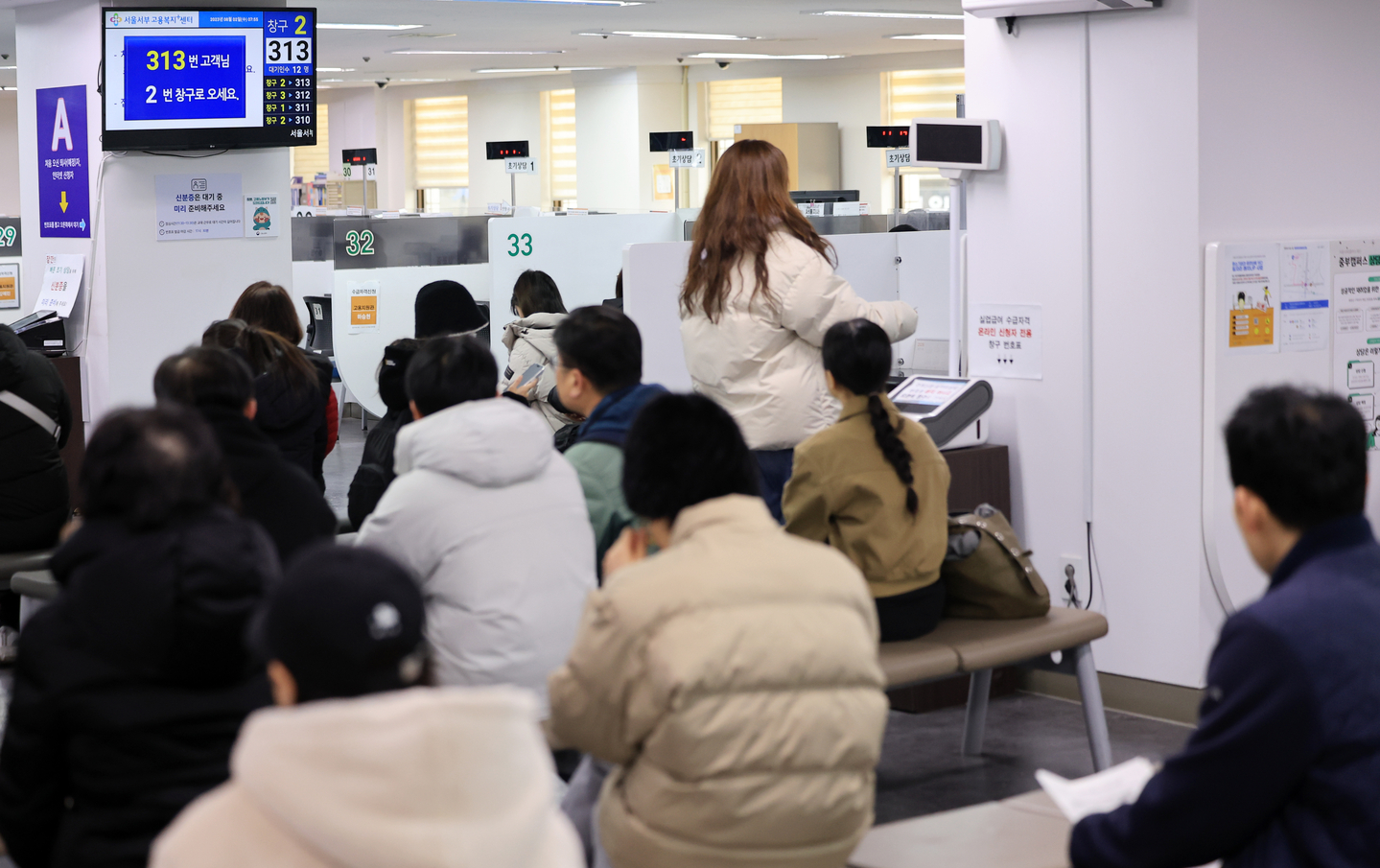
People wait at the Seoul West Employment and Welfare Plus Center in Mapo District, western Seoul, on the same day. [NEWS1] Stock markets are booming and exports continue to set monthly records. Yet beneath the economic momentum, one key indicator is moving in the opposite direction: youth employment. According to data released by the Ministry of Data and Statistics on Tuesday, the number of jobs held by workers in their 20s and younger fell by 127,000 in the third quarter of last year compared with the same period a year earlier. This contrasts with an overall increase of 139,000 jobs across the economy. Youth employment has declined for 12 consecutive quarters. Other indicators point to the same trend. While the overall employment rate for those aged 15 and older reached a record 61 percent in January, the rate for young people aged 15 to 29 stood at just 43.6 percent, the lowest level since 2021, when the economy was still affected by the Covid-19 shock. Job losses among young workers are also outpacing demographic decline. The population in their 20s fell 3.5 percent from a year earlier, but the number of wage earners in that age group dropped 5.5 percent. The decline was even sharper for regular positions, often considered more stable employment, which fell 7.9 percent. At this point, the deterioration in youth employment appears more structural than cyclical. Companies have steadily moved away from large-scale open recruitment toward rolling hiring and experienced workers. This shift reflects rising labor costs within a rigid employment system as well as a widening gap between industrial demand and the skills produced by the education system. Related ArticleKorea adds 108,000 jobs in January, smallest growth in 13 monthsKorea Inc. pledges 270 trillion won as Lee calls for youth hiring, regional investmentOlder adults drive up employment rate as youth languish in job marketYouth employment in Korea declines for 19th month as joblessness rises among 30-somethings The rapid spread of AI is adding further pressure, with early-career and entry-level positions particularly vulnerable to automation. As job prospects weaken, the number of young people classified as neither working nor seeking employment has exceeded 700,000. Some observers warn of the emergence of a Korean version of a “lost generation.” If the problem is structural, the response must be structural as well. Calling in major business leaders and urging them to expand hiring is unlikely to produce lasting results. More fundamental policy changes may be needed to improve labor market flexibility and reduce regulatory burdens that discourage job creation. President Lee Jae Myung has acknowledged the dilemma, saying that while job security is important, improving overall job quality also requires alternative approaches that increase labor flexibility. The key issue is already well understood. What matters now is the speed of policy response. Even as the broader economy shows signs of strength, employment opportunities for young people continue to disappear. This article was originally written in Korean and translated by a bilingual reporter with the help of generative AI tools. It was then edited by a native English-speaking editor. All AI-assisted translations are reviewed and refined by our newsroom.

#STOCKS
Foreign media warn of Korea stock risks as debt-fueled trading grows
koreajoongangdaily_joins113d ago

Foreign media warn of Korea stock risks as debt-fueled trading grows

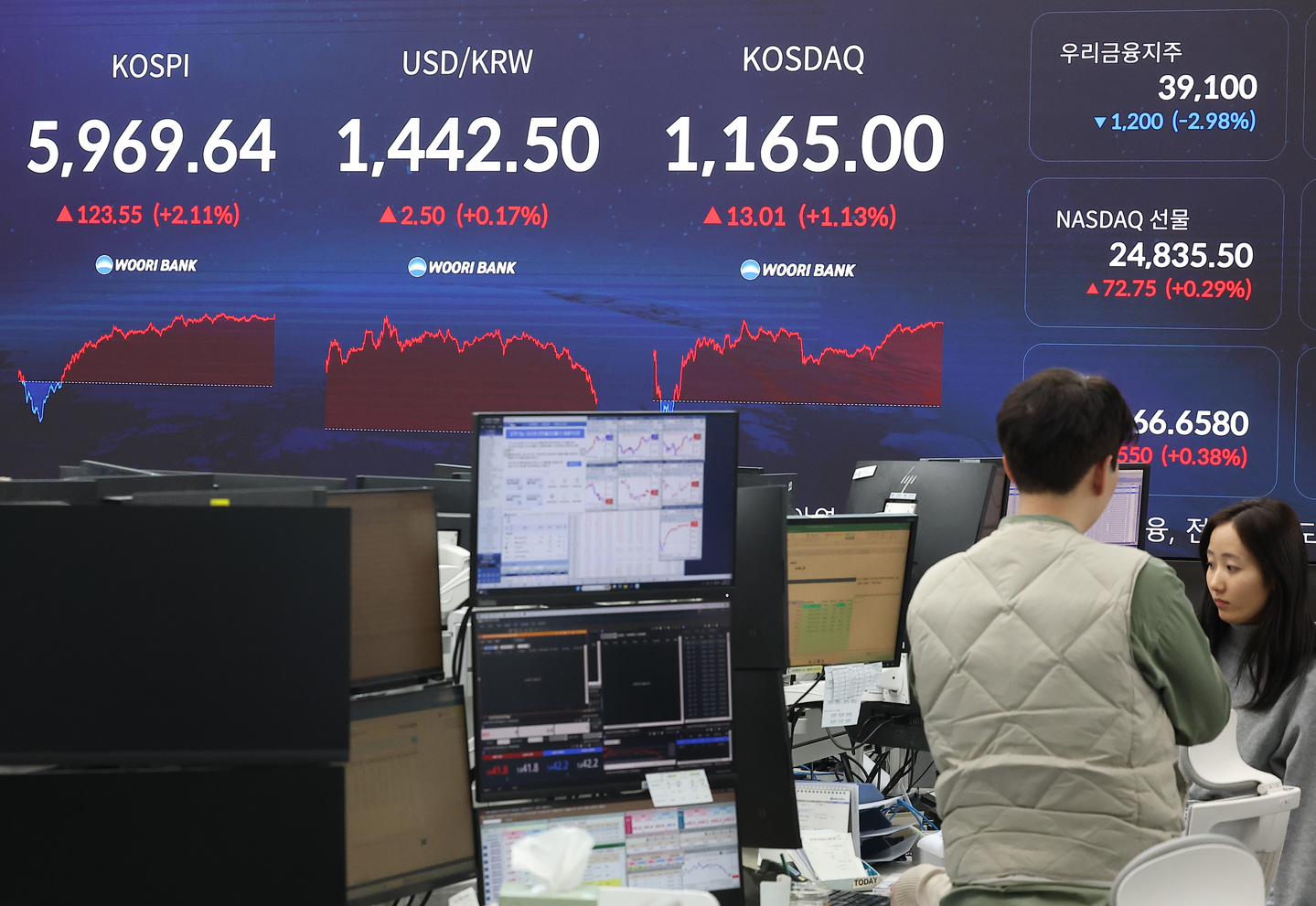
The Kospi, won-dollar exchange rate and Kosdaq index are displayed on a screen at the dealing room of Woori Bank’s headquarters in central Seoul on the afternoon of Feb. 24. The Kospi closed at 5,969.64, up 123.55 points (2.11 percent) from the previous session, while the Kosdaq ended at 1,165.00, gaining 13.01 points (1.13 percent). [YONHAP] Korea’s stock market is heating up at a dizzying pace. The Kospi index, which has surged 148 percent over the past 14 months, rose another 2.11 percent to close at 5,969.64 on Feb. 24. The benchmark now appears poised to break through the 6,000 mark, but the rapid ascent is also heightening concerns about potential volatility. Warnings about risks in the Korean market are growing, including from overseas media. The Financial Times reported that retail investors, commonly known as “ants,” are pouring into equities as the fear of missing out, or FOMO, spreads. The Bank of Korea, which rarely comments directly on stock valuations, also sounded a cautious note during a parliamentary briefing, saying investors should be mindful of the possibility of increased volatility stemming from uncertainty over U.S. tariffs and monetary policy. Bloomberg similarly warned in November that rising leveraged purchases by retail investors were contributing to greater market swings. These concerns do not necessarily signal an imminent downturn. The central bank added that the likelihood of a sustained decline remains limited, citing government policy support and expectations of strong semiconductor industry performance. The Financial Times also stopped short of predicting a reversal, noting that ample global liquidity and a semiconductor upcycle are supporting equities. The greater risk lies in the growing reliance on borrowed money. According to foreign media reports, the number of securities accounts has climbed to 100 million, roughly double the population. Margin lending has reached about 31 trillion won ($21.5 billion), while investor deposits have surpassed a record 110 trillion won. As volatility increases, even large-cap stocks have recently seen daily swings of 4 to 5 percent. Related ArticleKospi breaks new ground, soaring past the 5,900 mark for first timeKorea's stock loans surge as market outperforms global peers Korean stock markets face violent swings on outsized chipmaker capsKorea's pension service to boost domestic stock investments as local currency's weakness continues Another concern is that government policy appears to be primarily focused on supporting stock prices. Efforts to boost shareholder value and encourage domestic investment are positive in principle, but measures such as raising the National Pension Service’s domestic equity allocation, requiring companies to cancel newly acquired treasury shares within one year, and offering tax incentives through repatriation investment accounts are being implemented amid a surge in debt-driven trading. The overheating has become evident enough that some securities firms, constrained by lending capacity, have begun suspending investment-related loans. If authorities remain preoccupied with sustaining market momentum while overlooking the expansion of leveraged speculation, systemic risks could increase. The rapid rise in equity prices may reflect improving fundamentals, but debt-fueled participation can amplify losses when sentiment shifts. The government should not ignore the warning signals emerging from the market. This article was originally written in Korean and translated by a bilingual reporter with the help of generative AI tools. It was then edited by a native English-speaking editor. All AI-assisted translations are reviewed and refined by our newsroom.

#STOCKS
globenewswire113d ago

JLT Mobile Computers revised Nomination committee 2026

Växjö, Sweden, February 24, 2026* * * JLT Mobile Computers, a leading developer and supplier of reliable computers for demanding environments, today announced that the company’s major shareholders/shareholder groups, in accordance with the established principle for appointing the nomination committee of JLT Mobile Computers, have appointed a revised Nomination Committee with Josef Weidman as convener. The revision is prompted by significant changes in ownership during the interim period.

#STOCKS