
afr118d ago
Inside GQG’s team of ex-journos that turned the tide on tech
A team of six former investigative journalists played a crucial role in Rajiv Jain’s high-stakes bet against the AI trade.
#TECH
A team of six former investigative journalists played a crucial role in Rajiv Jain’s high-stakes bet against the AI trade.
[263Chat] Minister of Foreign Affairs and International Trade, Amon Murwira, has urged local manufacturing firm Treger Products to accelerate its expansion into regional markets, saying the country's industries must move beyond serving domestic demand and compete across Africa.

By Kizito CUDJOE The recent 28.63 percent reduction in producer price for cocoa has reignited debate over the country’s ability to shield its key revenue earners from market shocks, with the Co-Chair of Ghana Extractive Industries Transparency Initiative (GHEITI) Dr. Steve Manteaw, warning that the economy remains dangerously exposed without a functioning price stabilisation mechanism. [...]The post Absence of price stabilisation fund leaves cocoa and gold exposed appeared first on The Business & Financial Times.

Indian stock market today: Nifty 50 and Sensex eye a firm start on February 26, 2026, as GIFT Nifty signals gains. Key support, resistance levels, Bank Nifty outlook, and GDP data in focus.

Since the 1960s, global GDP has been rapidly rising and living standards have reached record highs. But something else has been rocketing up too – carbon emissions. For years, scientists and economists have been asking: is it possible to grow without heating and polluting the Earth? And as the climate becomes more unstable, the issue is only becoming more urgent. Madeleine Finlay hears from two economists arguing for a change in how we measure a country’s success. Nick Stern is professor of economics and government at the London School of Economics and an advocate of green growth, an approach to growth that prioritises green industry. Jason Hickel is a political economist and professor at the Autonomous University of Barcelona who advocates degrowth, shrinking parts of the economy that do not advance our social and ecological goals.Catch up with all the pieces in the Beyond Growth seriesSupport the Guardian: theguardian.com/sciencepod Continue reading...
Profits are set to recover this year, but a focus on large, high-margin vehicles could create a gap for Chinese rivals to exploit
[263Chat] Vice President Constantino Chiwenga has called on Southern African nations to accelerate investment in clean energy, warning that the region must move beyond policy discussions and deliver concrete results to unlock economic growth.
Silicon Valley rivals in spending blitz for control of Congress and state capitols

Bitcoin continues to struggle to push decisively above the $66,000 level as persistent selling pressure weighs on sentiment across the crypto market. Despite intermittent rebound attempts, momentum remains weak, with buyers showing limited conviction while volatility stays elevated. The broader environment — shaped by cautious liquidity conditions, macro uncertainty, and restrained risk appetite — has kept Bitcoin locked in a consolidation phase rather than a sustained recovery trend. Related Reading: Why XRP’s 0.16 Leverage Floor Ends The Era Of The Flash Crash – And the Hope for a Quick Recovery Increasingly, Bitcoin is not behaving like “digital gold,” a narrative that dominated market discourse for years. Instead of acting as a defensive asset during periods of economic stress, Bitcoin has recently traded in closer alignment with equity markets, particularly technology stocks. This correlation suggests that capital is treating Bitcoin more as a high-beta risk asset than as a store of value comparable to precious metals. This shift challenges a long-standing thesis within the crypto ecosystem. While the digital gold narrative remains influential, current price behavior indicates that liquidity cycles, institutional positioning, and broader macro risk dynamics are exerting stronger short-term influence. Whether Bitcoin eventually reclaims its perceived safe-haven role or continues behaving like a risk asset will likely depend on evolving macro conditions and investor positioning. Correlation With Nasdaq Highlights Structural Shift According to On-Chain Mind, Bitcoin’s correlation with the Nasdaq has structurally tightened since 2020, marking a significant shift in how capital allocates to the asset. While earlier cycles showed more episodic alignment, recent data reveals that BTC now frequently trades in tandem with technology equities. Notably, the sharpest correlation spikes have tended to coincide with broader market drawdowns, particularly during bear market phases. This pattern is critical. In theory, an asset positioned as “digital gold” would be expected to decorrelate from risk assets during periods of stress. Instead, the data suggests the opposite: when liquidity contracts and equities sell off, Bitcoin often follows. These synchronized declines indicate that institutional capital increasingly treats BTC as part of the broader risk complex rather than as an independent hedge. Whether this development aligns with ideological expectations is secondary. The reality is that capital flows, portfolio construction frameworks, and macro-driven positioning now play a dominant role in Bitcoin’s price formation. Large allocators appear to manage BTC exposure alongside growth equities, responding to the same liquidity signals, rate expectations, and volatility regimes. Until correlation regimes shift meaningfully, Bitcoin’s behavior is likely to remain closely tied to macro risk cycles rather than to traditional safe-haven dynamics. Related Reading: The $33 Billion Drain: Bitcoin Realized Cap Craters as Capital Abandons the Network for a Second Month Bitcoin Price Structure Shows Persistent Downtrend Pressure Bitcoin continues to trade under clear technical pressure, with price action struggling to reclaim the $66,000–$67,000 zone after a sharp corrective move from late-2025 highs. The weekly chart shows a decisive break below the 50-week moving average, followed by rejection near that level, which now acts as dynamic resistance rather than support. This shift typically reflects weakening medium-term momentum. Price is currently hovering just above the 200-week moving average, a level historically associated with major cycle support. While this area often attracts strategic buyers, repeated tests without strong rebounds can weaken its effectiveness. Volume spikes during recent downside moves suggest distribution rather than accumulation, although confirmation would require sustained follow-through. Related Reading: The Saylor Discount: Why Bitcoin Trading Below Strategy’s Realized Price is a Gift for Late-Cycle Allocators Market structure also shows a sequence of lower highs since the peak near the $120K region, indicating that bullish continuation has stalled. Until Bitcoin reclaims the mid-$70K range and stabilizes above key moving averages, rallies may remain corrective rather than trend-reversing. That said, proximity to long-term support means volatility could increase. Either a structural rebound or a deeper capitulation phase remains possible, depending largely on liquidity conditions, macro sentiment, and institutional positioning in the coming weeks. Featured image from ChatGPT, chart from TradingView.com
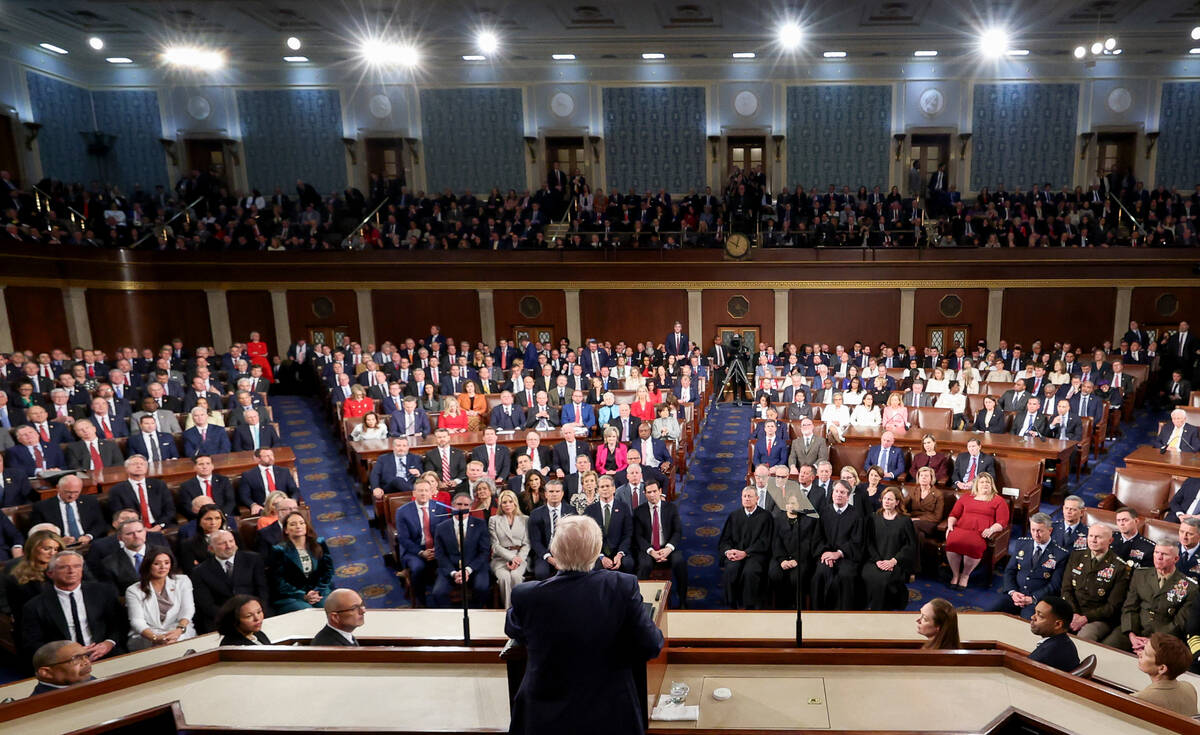
Speech lasts nearly two hours.

As China is about to enter the 2026 Two Sessions period, the outside world is paying more attention to various consumption data during the Spring Festival, hoping to get a glimpse of where China will lead this 1.4-billion-population country during the 15th Five-Year Plan period. Instead of focusing on whether the total Spring Festival consumption [...]The post What China’s Spring Festival spending really tells us about its economy appeared first on Modern Diplomacy.

Voters might need reminding that the candidate who promised to “run the country like a business” forgot one detail: privately owned businesses benefit — not necessarily our country.