businessworld115d ago
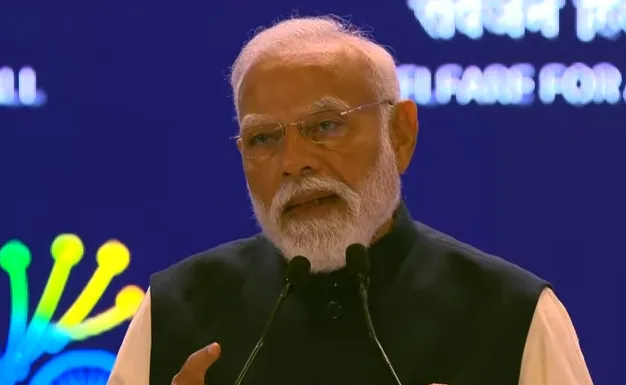
PM Modi To Inaugurate Micron Chip Packaging Plant In Gujarat Today
The agreement comes hours after US President Donald Trump ordered federal agencies to halt all use of rival Anthropic
#TECH
The agreement comes hours after US President Donald Trump ordered federal agencies to halt all use of rival Anthropic


Once one of South America’s poorest countries, Guyana is now ranked among the world’s richest because of the vast petroleum wealth contained in its territorial waters. A swath of major oil discoveries in the offshore Stabroek Block by operator ExxonMobil, with partners Chevron and CNOOC, saw Guyana emerge as a major oil producer and exporter. There is considerable production growth ahead which will boost the economy and global oil supply. U.S. intervention in Venezuela, with President Nicolas Maduro captured during a daring night raid,...

S&P Global Ratings has raised its long-term rating on the government of Guam’s general obligation debt one notch to ‘BB’ from ‘BB-’, a clear and objective signal from financial experts that Guam’s fiscal position has strengthened, the Office of the...

India's economy expanded by 7.8 percent in the December quarter. Manufacturing output saw a significant increase. Festive season consumption also remained strong. New government numbers show a revised GDP series. Full-year growth for FY26 is now projected at 7.6 percent. Consumption and investment are expected to be key growth drivers.

Cheap subscriptions from local resellers offer users easy access but legal and regulatory gaps put customers at risk.

Verified Bitcoin backing and real-time price data position CBTC as institutional-grade collateral across Canton’s lending and trading platforms. Canton Network is expanding its institutional infrastructure with the launch of CBTC, its first Bitcoin-backed token. Issued by BitSafe, CBTC integrates Chainlink Proof of Reserve and Data Streams to provide verified backing and real-time BTC pricing. The [...]

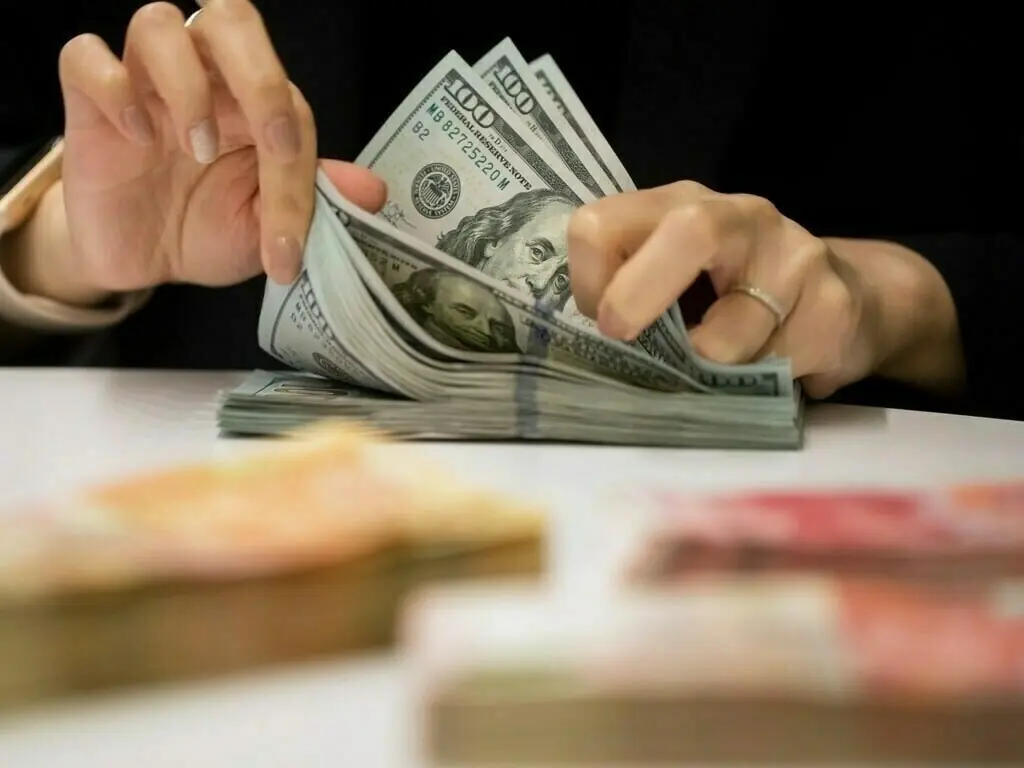
ISLAMABAD: Pakistan’s external account pressures intensified in the first seven months of fiscal year 2026 as a 5.5 percent contraction in exports coupled with a 9.8 percent surge in imports significantly widened the trade deficit, pushing the current account into a USD1.1 billion deficit despite an 11.3 percent increase in workers’ remittancesThis was revealed in Finance Division’s ‘Monthly Economic Update and Outlook February 2026’ released on Friday.In January 2026, the current account recorded a surplus of USD121.0 million, bringing the aggregate position during July-January 2026 to a deficit of USD1.1 billion, compared to a surplus of USD0.6 billion recorded last year.READ MORE: Pakistan posts $121mn current account surplus in JanuaryGoods & services export recorded at USD23.9 billion compared to USD24.1billion last year, of which goods export stoodat USD18.3 billion. Goods & services import recorded at USD44.4billion compared to USD40.0 billion last year, where goods imports were USD36.7 billion.Trade deficit of goods & services increased to USD20.5 billion from USD15.9 billion last year.Finance Division data noted that the FDI totalled USD517.4 million during July–January fiscal year 2026, down from USD1.483 billion in the corresponding period of fiscal year 2025. However, improvement was witnessed in January 2026 as it increased to USD310 million against USD140.6 million in January 2025.Main sources of net inflows were from China (USD495.5 million) and Hong Kong (USD188.4 million). Sector-wise, power (USD541.8 million) and financial services (USD462.0 million) attracted the most FDI. Private and public FPI recorded net outflows of USD287.6 million and USD176.4 million, respectively. As of February 13, 2026, foreign exchange reserves stood at USD21.3 billion, including USD16.2 billion with the SBP.Finance Division noted that portfolio investment remained in the negative territory (-463.9 million USD against - 177 million USD in the same period last year) while Pakistan’s Stock Market index rose by a whopping 48.3 percent, market capitalisation by 35.4 percent and incorporation of companies by 26 percent.The outlook also noted that downside risks persist, particularly from geopolitical uncertainties and global commodity price volatility.Inflation is expected to remain within the range of 6.0-7.0 percent in February, it added.Remittances were up 11.3 percent to USD23.2 billion, led by inflows from Saudi Arabia (23.5% share) and UAE (20.6%). Monthly inflows for January reached USD3.5 billion, up 5.3 percent when compared to USD3 billion during the same month of last year.CPI inflation recorded at 5.8 percent on YoY basis in January 2026 as compared to an increase of 5.6 percent in the previous month and 2.4 percent in January 2025. On average during Jul-Jan FY2026, it stood at 5.2 percent as against 6.5 percent during the same period last year.Large-Scale Manufacturing (LSM) registered a growth of 4.8 percent during Jul-Dec FY2026 against the contraction of 1.8 percent last year. During December 2025, LSM grew by 0.4 percent on year-on-year (YoY) basis and by a substantial growth of 9.3 percent on month-on-month (MoM) basis.Goods & services export recorded at USD23.9 billion compared to USD24.1 billion last year, of which goods export stood at USD18.3 billion. Services export were primarily driven by IT services that increased by 19.8 percent to USD2.6 billion. Goods & services import recorded at USD44.4 billion compared to USD40.0 billion last year, where goods imports were USD36.7 billion. Trade deficit of goods & services increased to USD20.5 billion from USD15.9 billion last year.Cumulative cement dispatches grew by 10.6 percent in Jul-Jan fiscal year 2026 and reached 30.6 million tonnes. During the Rabi season 2025-26, wheat has been sown on an area of around 23.1 million acres, compared to the target of 23.8 million acres, with targeted production at 29.7 million tonnes.Credit flow to the private sector registered Rs638.2 billion during 1st July to 13th February fiscal year 2026 against Rs770.8 billion) during 1st July to 14th February fiscal year 2025.The government’s strategy to optimize revenue collection and improve expenditure management is reflected in the overall fiscal position during Jul-Dec FY2026. Total revenue increased by 9.4 percent and reached Rs. 10,683.6 billion, which was contributed by growth in both tax and nontax revenues by 10.9 percent and 7.0 percent, respectively.Total expenditure declined by 10.3 percent to Rs.10,141.7 billion. This contraction was mainly driven by curtailment of current expenditure,which fell by 5.2 percent on account of 30.7 percent decline in markup expenditure. Development expenditure, on the other hand, increased by 43.2 percent, largely contributed by provincial development spending.Overall fiscal balance recorded a surplus of 0.4 percent of GDP (Rs. 541.9 billion) during Jul-Dec FY2026 as compared to a deficit of 1.3 percent of GDP (Rs. 1,537.9 billion) during the corresponding period last year.Primary surplus was recorded at Rs. 4,105.5 billion (3.2% of GDP) as compared to Rs. 3,603.7 billion (3.2% of GDP) last year.During Jul-Jan FY2026, the FBR’s tax collection grew by 10.5 percent and reached Rs. 7,176.9 billion. This growth was broadbased, driven by both direct and indirect taxes, which grew by 11.1 percent and 9.8 percent, respectively. Within indirect taxes, sales tax, customs duties, and federal excise duty increased by 10.3 percent, 5.4 percent and 15.2 percent, respectively.During 1st Jul–30th Jan FY2026, money supply (M2) show growth of 2.3 percent compared to a contraction of 1.0 percent during the same period last year. Within M2, Net Foreign Assets (NFA) of the banking system increased by Rs. 473.5 billion as compared an increase of Rs. 744.0 billion last year.On the other hand, Net Domestic Assets (NDA) of the banking sector increased by Rs. 459.8 billion as compared a decrease of Rs. 1,115.2 billion last year.Under the borrowing for budgetary support, the government borrowed Rs. 158.9 billion against the retirement of Rs. 1,105.7 billion last year. Private sector borrowed Rs. 711.4 billion as compared to borrowing of Rs. 1,017.8 billion in last year.In January 2026, the Bureau of Emigration & Overseas Employment registered 75,663 workers, a 19.0 percent increase from 63,559 in January, 2025.The Pakistan Poverty Alleviation Fund, in partnership with 26 organizations, disbursed 10,321 interest-free loans worth Rs. 630.0 million during January 2026. Since 2019, a total of Rs. 123.4 billion have been provided to the borrowers. During Jul-Dec FY2026, Rs. 328.7 billion was disbursed under the BISP.The data further noted that foreign direct investment (FDI) declined by approximately 65 percent during July–January fiscal year 2026 compared to the same period in fiscal year 2025.Copyright Business Recorder, 2026
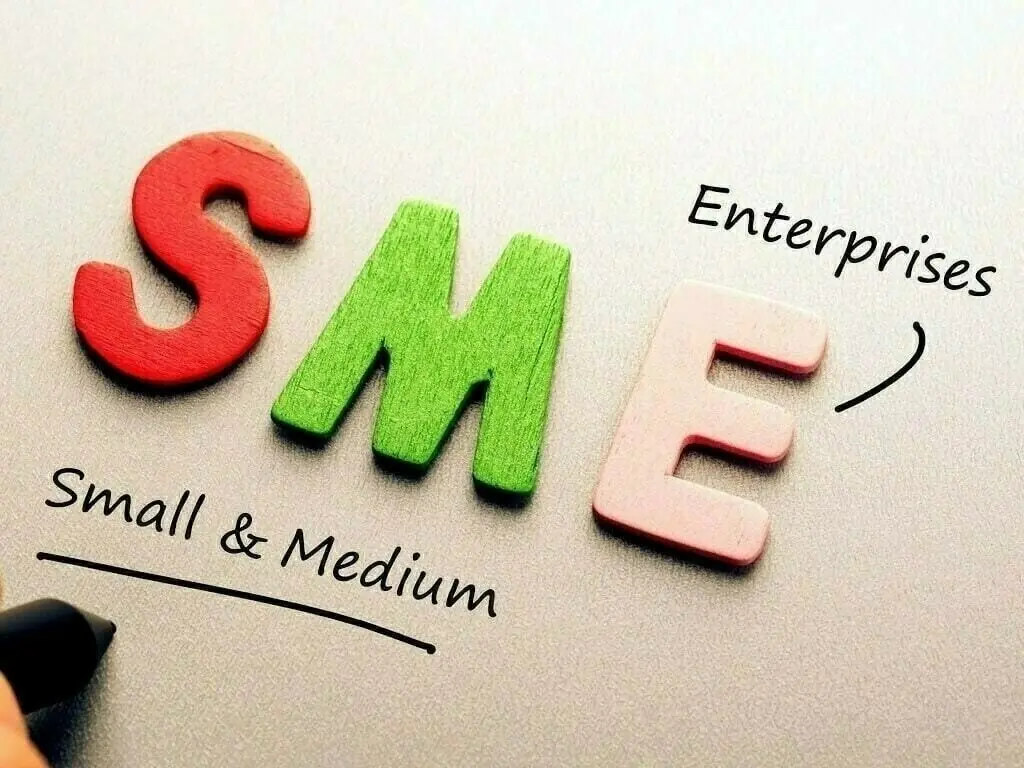
ISLAMABAD: The National Coordination Committee (NCC) meeting on Small and Medium Enterprises (SME) Development on Friday was informed that the banking sector has provided Rs.882.4 billion financing to 302,922 borrowers up to 31 December 2025.The NCC meeting on SME development was held here under the chairmanship of the Special Assistant to the Prime Minister (SAPM) on Industries and Production, Haroon Akhtar Khan which was also attended by Secretary Ministry of Industries and Production Saif Anjum, Chief Executive Officer (CEO) of Small and Medium Enterprises Development Authority (SMEDA), representatives of provincial ministries, and officials from the banking sector.Briefing the committee, the officials informed that the banking sector has provided SME financing amounting to Rs.882.4 billion to 302,922 borrowers as of December 31, 2025, reflecting an increase of 36 percent year-on-year basis, while the number of SMEs facilitated reached approximately 303,000, marking a 65 percent year-on-year growth.READ MORE: SMEDA offers 70pc matching grant under SME Certification ProgrammeUnder the SAAF Scheme, Rs.60 billion in clean lending was extended, benefiting 12,500 SMEs, similarly, under the Prime Minister Youth Business and Agriculture Loan Scheme, financing of Rs221 billion was disbursed, facilitating 461,795 SMEs and beneficiaries.The first agenda item focused on revising the definition of SMEs by enhancing the annual sales turnover threshold. It was proposed that micro enterprises be defined as businesses with annual sales up to Rs30 million, small enterprises from Rs30 million to Rs400 million, and medium enterprises from Rs400 million to Rs2 billion.Haroon Akhtar Khan stated that revising the definition and scope of SMEs is the need of the hour and emphasized that federal and provincial institutions would adopt the updated framework. He added that SMEs are the backbone of the economy and that, under the leadership of Prime Minister Shehbaz Sharif, the government is undertaking comprehensive measures to promote and strengthen the sector.He further noted that there is complete consensus between the federation and provinces regarding the revision of the SME definition and scope. The second key agenda item was the implementation of the National SME Policy 2021.The committee emphasized that effective implementation of the policy across Pakistan would empower MSMEs and enhance their contribution to economic growth. SMEDA and provincial authorities were directed to ensure regular follow-up and progress reporting. Highlighting access to finance as a key driver for SME growth, Haroon Akhtar Khan stated that all banks are on board to facilitate credit access for SMEs from Gilgit-Baltistan to Azad Jammu & Kashmir and Balochistan.He added that the Industrial Policy also focuses on ease of access to credit and tax relief measures to further support the sector. The Special Assistant also termed Skill Development Bonds and Artificial Intelligence (AI) training initiatives for SMEs as encouraging steps. He described SMEDA’s efforts to equip SMEs with modern skills and AI-based training as a significant advancement toward enhancing competitiveness and innovation in the sector.Copyright Business Recorder, 2026
If nations had horoscopes, Pakistan’s for 2026–2031 would not be written in the stars. It would be written in debt ledgers, inflation charts and poverty lines. The planetary alignment is already visible: slow growth circling a fragile fiscal core, inflation eroding household gravity, a widening poverty belt pulling millions toward economic vulnerability.There is no mystery in the forecast. The variables are measurable. The risks are documented. The consequences are predictable. Over the next five years, Pakistan will either stabilize and reform — or drift into managed decline.The International Monetary Fund (IMF) can steady the ship temporarily and enforce macro-stability and the State Bank of Pakistan can tighten or ease liquidity. They cannot generate growth.Stabilisation programmes buy time; they do not create prosperity.Neither can manufacture productivity, political will or institutional coherence. That responsibility rests squarely with the state.This five-year cycle will test whether Pakistan can escape its chronic pattern: crisis, bailout, temporary calm — and relapse.If reforms deepen, poverty can plateau and gradually recede. If they stall, poverty will not merely rise; it will harden. And when poverty hardens, societies fracture quietly before they fracture visibly. The horoscope is blunt: delay is no longer neutral. It is expensive.By 2031, Pakistan will either have confronted its structural weaknesses — tax narrowness, energy inefficiency, governance fragmentation and elite capture — or it will face a more brittle economy with thinner social cohesion. This is not prophecy. It is arithmetic.The starting line is a strained economy. Pakistan enters this five-year stretch burdened by low growth, high debt servicing, negligible foreign direct investment, fragile foreign exchange buffers and a narrow tax base. Inflation may moderate intermittently, but structural price pressures—energy tariffs, currency weakness and indirect taxation—will remain.If reforms remain half-hearted Pakistan’s average annual GDP growth could hover around 2–3 percent over the next five years—barely above population growth. In per capita terms, that means stagnation. Stagnation, in a young country with budding youths, is combustible.Over the past few years, poverty has crept upward—not always visible in official numbers, but evident in shrinking household purchasing power, rising indebtedness and underemployment. The working poor—those with jobs but declining real incomes—are expanding faster than the safety nets designed to protect them, whereas government non-productive expenditure exploded and remained reckless.Programmes like the Benazir Income Support Programme provide essential relief. But cash transfers cannot substitute for productive employment.If inflation-adjusted incomes do not recover meaningfully by 2027–28, poverty levels could entrench at higher structural levels rather than decline cyclically. That shift would alter Pakistan’s social contract.Pakistan adds millions to its labour force every year. The next five years will test whether this demographic trend becomes a dividend or a destabilizer.Without significant export expansion and industrial diversification, job creation will remain concentrated in informal services and low-productivity retail.Manufacturing growth remains energy-intensive and vulnerable to input shocks. Agriculture faces climate volatility and water stress.If employment remains fragile, outward migration will accelerate. Remittances may temporarily cushion the economy, but brain drain will quietly hollow out domestic capacity.The question is stark: can Pakistan generate skilled jobs at scale? If not, it will export its youth—and import frustration.The state’s core failure over decades has not been the absence of policy ideas. It has been the absence of political will to expand the tax net and reduce elite capture.If tax-to-GDP remains structurally low while debt servicing consumes a dominant share of revenues, development spending will stay constrained. Health, education and infrastructure will continue to operate below transformative thresholds.Without reform of revenue administration and rationalization of untargeted subsidies, fiscal space will remain perpetually tight. Each external shock—oil price spikes, climate disasters, geopolitical tensions—will push the system back toward emergency financing. A country in permanent stabilization cannot pursue sustainable growth.Energy remains both an economic and political fault line. Circular debt, capacity payments and imported fuel dependency inflate industrial costs.If Pakistan does not aggressively expand renewable integration, rationalise tariffs and renegotiate inefficient contracts, energy will continue to tax growth.Competitiveness is not only about electricity.Provincial-level digitization remains uneven, leaving businesses exposed to discretion, delay and corruption. Without a transparent, technology-driven administrative framework, investment will stay cautious.If Pakistan uses the next two years to undertake structural tax reform, digitize revenue collection, rationalize energy pricing and prioritize export-oriented sectors, growth could gradually recover to 4–5 percent by 2029–30.Strategic investments in IT services, value-added agriculture, pharmaceuticals and light engineering could expand export resilience. Strengthening trade ties with regional markets would diversify risk.Reforms in state-owned enterprises, coupled with transparent privatization or restructuring, could reduce fiscal hemorrhage.Under this scenario, poverty could decline modestly by 2031. Not dramatically—but enough to restore confidence.If reforms stall and political cycles override economic discipline, Pakistan may remain locked in managed decline.Growth oscillating around 2 percent, inflation periodically spiking, repeated recourse to external lenders, rising dependency on remittances; expanding informal economy and slow erosion of institutional credibility.In this scenario, poverty does not explode—but it does not recede either. It becomes normalized.Normalization of poverty is more dangerous than crisis. It breeds quiet despair rather than urgent reform.Ultimately, the five-year outlook hinges less on global conditions and more on governance coherence.The horoscope of nations is not written in the stars. It is written in budgets, policies and political courage. Five years from now, the verdict will be clear. Either Pakistan confronted its structural weaknesses—or it allowed poverty to redefine its future.Copyright Business Recorder, 2026
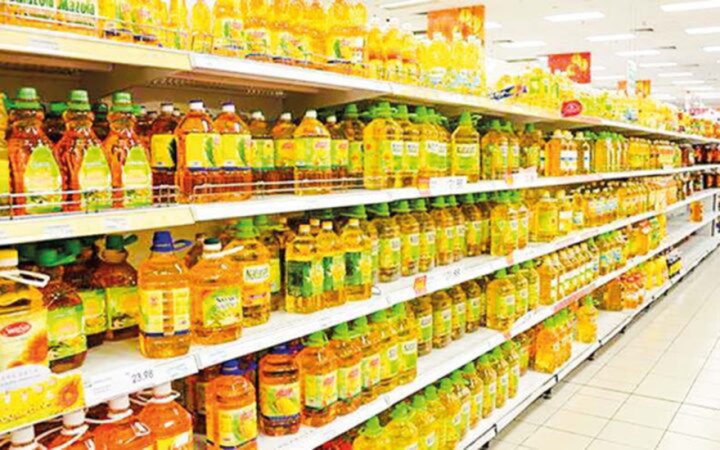
The wholesale reference rate of palm oil for the Yangon market is set a bit higher at K6,400 per viss [...]