Dashboard

Financial News

Week in review: Cisco SD-WAN 0-day exploited, Patch Tuesday forecast
helpnetsecurity15d ago

Week in review: Cisco SD-WAN 0-day exploited, Patch Tuesday forecast

Here’s an overview of some of last week’s most interesting news, articles, interviews and videos: OWASP Agent Memory Guard: Stop AI agents from being weaponized through their own memory Agent Memory Guard is an open-source runtime defense layer that sits between an agent and its memory store, screening every read and write through a pipeline of detectors and a YAML policy. The project is the OWASP reference implementation for ASI06, Memory Poisoning, one entry in ... More → The post Week in review: Cisco SD-WAN 0-day exploited, Patch Tuesday forecast appeared first on Help Net Security .

#TECH
Bitcoin’s June Bloodbath Explained: Causes, Market Impact, And Outlook
newsbtc15d ago

Bitcoin’s June Bloodbath Explained: Causes, Market Impact, And Outlook

Bitcoin’s price action in June has been marked by heavy selling pressure, with the leading cryptocurrency suffering one of its sharpest declines of the year. In the first five days of the month, Bitcoin has triggered more than $1.28 billion in long liquidations as prices plunged toward the critical $60,000 region. According to the renowned analyst, Bitcoin’s struggles are part of a broader market-wide risk-off move in the US financial markets. In an X post on June 6, Adler Jr. explained that the Bitcoin market turmoil began following the release of stronger-than-expected US labor market data. The US economy reportedly added 172,000 jobs in May, significantly above forecasts of 88,000. Generally, rising employment is viewed as a positive economic signal. However, with inflationary pressures remaining elevated and energy prices still relatively high, investors interpreted the report differently. According to Adler Jr., the stronger labor market reinforced expectations that the US Federal Reserve is likely to adopt a restrictive monetary policy. Therefore, expectations for future rate hikes rose from 40% to 57%. The impact was felt across multiple asset classes. In the trading session on June 5, approximately $2.5 trillion was reportedly erased from major financial markets, including the S&P 500 ($1.14 trillion), Nasdaq ($1.11 trillion), gold ($1 trillion), silver ($280 billion), and Bitcoin ($80 billion). Related Reading: Bitcoin Testing A Critical Support After Sharp Market-Wide Selloff Bitcoin Remains In Danger Of Excessive Leverage Despite Decline Beyond macroeconomic factors, Adler Jr. also highlighted the excessive leverage in the Bitcoin market. Notably, funding rates have remained positive throughout the decline, indicating that traders continued paying premiums to maintain long positions even as prices moved lower. Such conditions often signal excessive bullish positioning but pose a serious risk of forced liquidations if the decline persists. At the same time, Bitcoin open interest remained elevated, as the 30-day open interest change peaked at 14.1% on June 3, then eased slightly to 8.4% by June 6. The market expert explains that such movement indicates that leverage had accumulated rapidly during the decline before being forced out. In other layers of the market, US Bitcoin spot ETFs recorded approximately $1.40 billion in weekly net outflows, removing an important source of demand to become part of the selling pressure. Meanwhile, Adler Jr. highlights an increase in exchange inflows as Bitcoin’s seven-day exchange netflow average climbed to 10,200 BTC on June 2, then retraced to around 6,200 BTC. Historically, rising exchange balances are often associated with increased sell-side activity. Related Reading: Ethereum Breakdown Warning: This Key Level Could Trigger More Downtrend Bitcoin Outlook Hinges On Vital $60,000 Support At press time, Bitcoin trades at $61,593, reflecting a 1.95% gain in the past day. According to Adler Jr., the key market level is $60,000, representing the current cycle low. The market analyst states it’s important that several market segments, i.e., ETF outflows, exchange inflows, and the futures market cool down before a price break occurs below $60,000, to avoid another cascading effect. Featured image from Shutterstock, chart from Tradingview

#COMMODITIES#TECH
Budget 2026-27: Federal proposals weigh tax net expansion, exporter relief, and major tariff reforms
dailythepatriot15d ago

Budget 2026-27: Federal proposals weigh tax net expansion, exporter relief, and major tariff reforms

The federal government is considering a comprehensive layout of fiscal measures for the upcoming budget 2026–27, balancing an aggressive expansion of the domestic tax net with targeted documentation rules and strategic import liberalisation, official sources revealed on Saturday. The upcoming fiscal plan is expected to place a heavy emphasis on broadening the tax base and [...] The post Budget 2026-27: Federal proposals weigh tax net expansion, exporter relief, and major tariff reforms appeared first on Daily The Patriot .

#ECONOMY
Attention planners—10TB of Internxt Cloud Storage is just $269.97 today only
macworld15d ago

Attention planners—10TB of Internxt Cloud Storage is just $269.97 today only

Macworld TL;DR: Internxt gives you 10TB of encrypted cloud storage for life for $269.97 (reg. $2,900) through today only. At a certain point, cloud storage subscriptions start feeling less like “technology” and more like a utility bill you forgot you agreed to years ago. A few bucks here for photos. More for backups. Another upgrade because your laptop is full again. Suddenly you’re renting digital closet space forever. That’s why Internxt’s 10TB lifetime storage plan feels oddly satisfying . For a one-time $269.97 today only (reg. $2,900), you get 10TB of zero-knowledge encrypted cloud storage for life — meaning one payment, no recurring fees, and enough space to store years of photos, videos, work files, creative projects, backups, and general digital clutter without constantly deleting things to free up room. Files are encrypted before they even leave your device, and even Internxt itself can’t view your data . The platform is open-source, independently audited, GDPR compliant, and built around post-quantum encryption, designed to protect against future security threats. It also works across Windows, Mac, Linux, iPhone, Android, and web browsers. Paying just once instead of dealing with endless monthly charges feels pretty darn smart. Get lifetime access to 10TB of Internxt Cloud Storage for a one-time $269.97 (reg. $2,900) through June 7 at 11:59 p.m. PT. Internxt Cloud Storage Lifetime Subscription: 10TB Plan See Deal StackSocial prices subject to change.

#TECH
How authoritarian governments twist AI safety to coerce tech companies to comply
fastcompany15d ago

How authoritarian governments twist AI safety to coerce tech companies to comply

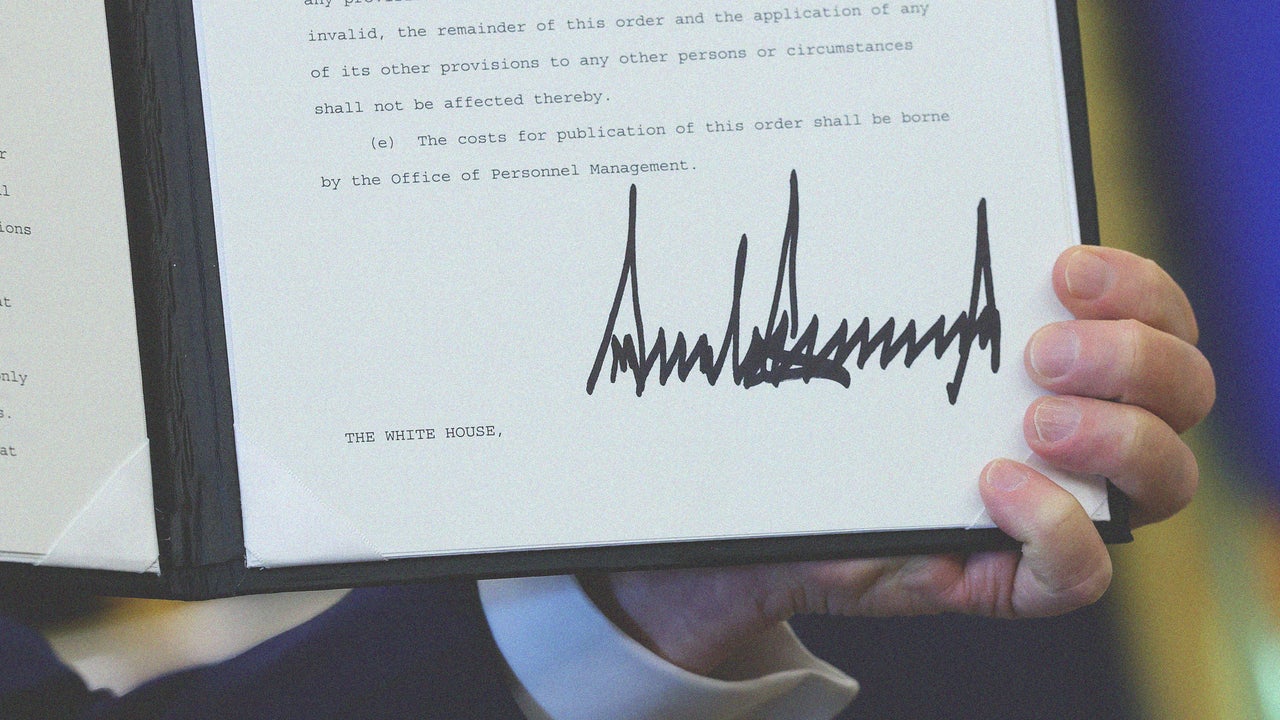
When researchers founded Anthropic in 2021, they said the race to build powerful AI was moving too recklessly. They inserted detailed safety measures into their products and marketed their commitment to safety as the corporate quality that distinguished them from competitors—notably OpenAI , the rival company they had left. In March 2026 that reputation was tested when the Trump administration declared that Anthropic was a supply chain risk. The company had refused to remove built-in safeguards that prohibited domestic surveillance and autonomous weapons from products it had supplied to the Pentagon. President Donald Trump ordered the federal government to stop using Anthropic and its large language model, Claude, labeling the company a national security risk. Within hours, OpenAI made a deal to be the Pentagon’s supplier instead. Despite Anthropic’s apparent stand, during its clash with Trump, the company quietly scrapped the binding principles in its main safety policy. Several weeks earlier, Anthropic’s head of safeguards research had resigned, warning that “ the world is in peril .” And a week after the Pentagon officially banned Claude, the U.S. military was still using the technology to select and target sites to bomb in Iran. As a philosopher studying the rule of law and democracy , I’ve found that authoritarian governance of technology often does not involve direct censorship. Instead, it delegitimizes the intended protections, poisoning any external regulation and even voluntary self-regulation that deviates from the regime’s goals or values. The Trump administration, which follows the authoritarian playbook , has argued that AI safety standards and user restrictions are ideological impositions rather than sound engineering decisions. The ”Preventing Woke AI” executive order of July 23, 2025, didn’t change what companies are allowed to do with their products. By attaching the “woke” label to basic ethics protections, the administration made those protections politically costly to maintain . The Brennan Center, a legal policy and advocacy organization, has documented how AI ethics is being redefined through contract negotiations . In these cases, the government weaponizes terms such as biased to disqualify companies that maintain civil rights protections from competing for federal contracts. The prisoner’s dilemma A single U.S. Defense Department AI contract can be worth billions of dollars. It can also provide access to data no private company could otherwise have and unlock further government work. Companies that maintain the ethics guardrails risk ceding ground to competitors that don’t. When OpenAI moved in to take the Pentagon work, CEO Sam Altman told his board of directors the move looked “opportunistic and sloppy.” But he said the company took it anyway, because admitting that an action looks bad is different from being willing to fall behind. This situation reflects the classic prisoner’s dilemma . If Anthropic maintains safety provisions and OpenAI strips them away, OpenAI gets the contracts and the future advantage. If both companies maintain the provisions, digital protections might survive. But because neither company can be certain the other will hold the line—and because being left behind is not a good option—the rational choice is to discard safety measures. These circumstances differ from a standard market race to the bottom in one key respect: The trap of having to strip away guardrails isn’t an accident of competition; it’s being maintained by the government through incentives . Palantir didn’t wait to be caught in this trap. The data analytics company was founded by Peter Thiel and run by Alex Karp, who spent years denouncing “woke” Silicon Valley . Palantir built its business model around government surveillance and military data infrastructure. While Palantir has said it is committed to privacy and civil liberties , critics contend that the company is dismantling those protections . The company’s stock has surged under the Trump administration, its contracts have expanded, and it now has a front-row seat where AI policy is being written. Palantir solved the prisoner’s dilemma by defecting first. It’s important to note that the dissolution of safety teams across the industry , such as OpenAI’s Superalignment team and Microsoft’s ethics unit, isn’t the result of anyone deciding to abandon safety. What I see in analyzing the different companies’ actions is a pattern: an accumulation of collective, incremental compromises that quietly reorient the definition of safety away from the public and toward the state. The resulting harm and risks fall on everyone whose lives are shaped by AI systems. Redefining safety to serve the government Across government contracts and policy documents, I have also observed that the original definition of AI-related safety has shifted from protecting the public toward making systems controllable for the state . The “anti-woke” framing accelerates this shift: Once ethics requirements are characterized as ideological rather than technical, removing them can be framed not as a safety reduction but as a correction. This shift does not require bad faith from the companies. Safety teams are still doing rigorous work. The companies are not lying when they describe their safety commitments. Those commitments are now simply oriented toward the government rather than the public. The case for stronger AI regulation assumes that a government constrains commercial entities on behalf of the public. But blacklisting a company for maintaining civil rights protections, and then banning the military deployment of its AI hours later, shows that the federal government in this instance enables the harm that regulation is meant to prevent. Expanding regulatory authority over AI companies does not necessarily protect citizens. Safety regulations— intended to constrain corporate power —in authoritarian regimes become tools to coerce compliance. Michael Gregory is an assistant professor of philosophy at Clemson University . This article is republished from The Conversation under a Creative Commons license. Read the original article .

#TECH
June 14 is the cutoff to get Windows 11 Pro and Microsoft Office for life for $35
pcworld_us15d ago

June 14 is the cutoff to get Windows 11 Pro and Microsoft Office for life for $35

TL;DR : Until June 14 at 11:59 p.m. PT, you can get Microsoft Office and Windows 11 Pro for life for $35. Microsoft 365 is almost $100/year, every year. Windows 10 hasn’t received a security update since October 2025. If you’re running both, then you may be interested in this bundle that gives you a Microsoft Office lifetime license and Windows 11 Pro for $35 (reg. $418.99). The first half of this bundle is the Microsoft Office Pro license. That gives you Word, Excel, PowerPoint, Outlook, Teams, OneNote, Publisher, and Access installed permanently on one PC with no recurring fees and no renewal. Publisher support ends after October 2026, so keep that in mind if you rely on it. Windows 11 Pro is a comprehensive upgrade, giving you security tools like BitLocker to keep your data locked down, Remote Desktop for accessing your machine from anywhere, Hyper-V for running virtual machines, and Snap Layouts for multitasking across a monitor. Copilot handles quick actions from the taskbar like changing settings, summarizing pages, and launching apps without hunting through menus. Both of these licenses connect to one PC and are tied to your device instead of your Microsoft account. Updates are included for free. Through June 14 at 11:59 p.m. PT, it’s only $34.97 to get Microsoft Office and Windows 11 Pro . The Ultimate Microsoft Office Professional 2021 for Windows: Lifetime License + Windows 11 Pro Bundle See Deal StackSocial prices subject to change.

#TECH