Dashboard

Financial News

FIFA rights secured, ZEE charts long-term course with football and emerging sports
afaqs14d ago

FIFA rights secured, ZEE charts long-term course with football and emerging sports

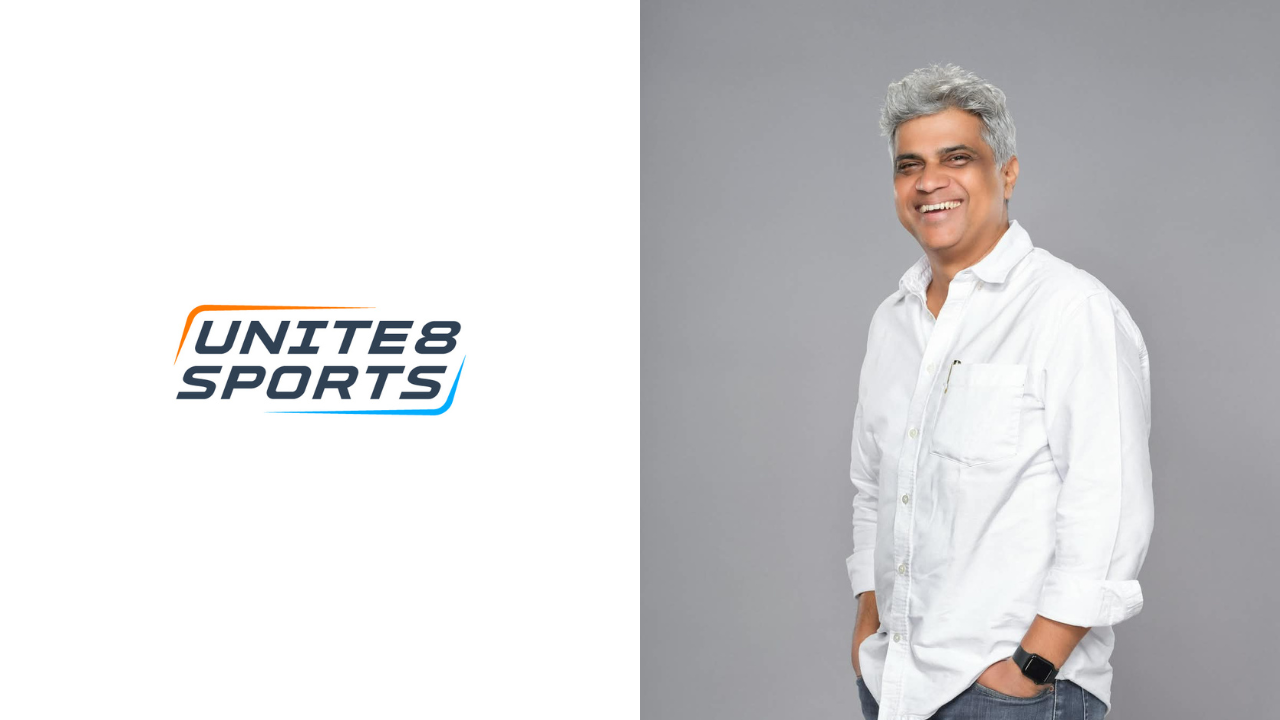
As audiences splinter across streaming platforms and traditional television struggles to retain mass viewership, live sports has emerged among the few categories capable of delivering scale, engagement and advertiser interest in real time. Zee Entertainment Enterprises ( ZEE ) is betting that this shift creates an opening beyond cricket. Just days before the FIFA World Cup 2026 , the broadcaster secured rights to 39 FIFA events through 2034 and launched a dedicated sports network under the Unite8 Sports brand, marking its most ambitious sports push in more than a decade. The portfolio includes the FIFA World Cups in 2026 and 2030; the FIFA Women's World Cup in 2027; youth tournaments; and several other FIFA properties over the next eight years. The events will be broadcast across Unite8 Sports 1, Unite8 Sports 1 HD, Unite8 Sports 2 and Unite8 Sports 2 HD and streamed on Zee5. Media reports peg the value of the FIFA deal at around $35 million, though ZEE has not disclosed financial details. For the company, however, the FIFA acquisition is only the starting point. The larger ambition is to build a diversified sports business spanning international rights, regional leagues, grassroots development, sports IPs and long-term advertiser partnerships. "We see a clear inflection point in the market," says Bavesh Janavlekar, chief business officer – Unite8 Sports, Zee Entertainment Enterprises. "Sports gives us an opportunity to bring new audiences to the network while also attracting a different set of advertisers." Looking beyond cricket ZEE exited sports broadcasting in 2017 when it sold its sports channel Ten Sports to Sony Pictures Network India (SPNI). Its return to sports comes at a time when broadcasters globally are placing greater emphasis on live programming as audiences fragment across platforms. According to Janavlekar, sports remains one of the few categories capable of creating appointment viewing at scale. "As content options continue to multiply, the value of live experiences will only grow, and sports is uniquely positioned to benefit from that trend," he says. While cricket continues to dominate India's sports economy, Janavlekar believes the opportunity outside cricket is significantly underappreciated. "The sports broadcasting landscape is heavily skewed towards cricket, but even the remaining share of the market is substantial in absolute terms and remains relatively underserved," he adds. He points to the FIFA World Cup as evidence that Indian audiences are willing to engage deeply with sporting properties even without direct national participation. "Many global sporting events attract massive audiences despite having little or no Indian participation. The FIFA World Cup is a great example of that." Beyond football, ZEE is evaluating opportunities across hockey, kabaddi, wrestling, boxing, kho-kho, combat sports and badminton, where Janavlekar believes India is steadily producing globally competitive athletes and growing fan communities. "Every successful sports broadcasting business ultimately needs heroes. While cricket continues to have iconic stars, other sports are now creating their own heroes and fan communities. The challenge is not the absence of heroes; it's building an ecosystem that consistently celebrates and amplifies them." The company is also closely watching emerging categories such as pickleball and padel, which are witnessing rapid growth at the participation level. "Our approach across all sports is guided by a long-term perspective. We are interested in sports where we can help build a sustainable ecosystem, develop strong IPs and grow alongside the sport itself." Building sports IPs, not just buying rights Unlike many broadcasters that focus primarily on acquiring media rights, ZEE wants to play a larger role in building sports properties. Janavlekar notes that creating and co-owning sports IPs will be a core pillar of the company's strategy. "Over the years, we've seen numerous sports leagues launch in India. While some have succeeded, many have struggled to sustain momentum because the interests of stakeholders were not aligned," he says. For a sports league to succeed, he argues, every stakeholder must participate in the value creation process. "The economics have to be realistic, valuations have to be sensible, and all stakeholders need to see a clear path to growth. When those fundamentals are in place, the probability of creating a successful and enduring sports property increases significantly." The company will evaluate opportunities in cricket as well, though Janavlekar stressed that financial discipline will remain central to every rights decision. "We are not interested in acquiring rights simply for the sake of acquiring rights." For ZEE, the sports strategy extends beyond broadcasting. "Our objective is threefold: to show sports, to encourage participation in sports, and ultimately to help grow sports." Winning over advertisers A key part of the strategy is attracting brands that may not traditionally be heavy spenders on entertainment programming. According to Janavlekar, sports offers advertisers something increasingly difficult to find elsewhere: emotionally invested audiences. "Sports naturally attract brands that align with energy, passion, performance, and lived experiences," he says. The company has already begun advertiser outreach around the FIFA World Cup, and it says it is seeing strong interest from categories including automotive, beverages, energy drinks, and FMCG. Rather than treating sponsorships as short-term transactions, ZEE wants to build long-term partnerships around sports properties. "Sports fandom creates a deep emotional bond. Our objective is to create partnerships where brands grow alongside the properties they support." Building a 'United Sports' ecosystem View this post on Instagram A post shared by Unite8 Sports Official (@unite8sportsofficial) Janavlekar says the idea behind the Unite8 Sports brand—pronounced "United Sports"—is to bring global and domestic sports together under a single platform. "On one level, it represents the coming together of international sporting properties and homegrown sports. On another, it reflects India's diversity." Regionalisation will be a key pillar of that strategy. For the FIFA World Cup, ZEE will offer Malayalam and Bengali commentary feeds across television and Zee5, targeting some of India's strongest football markets. The broadcaster is also in discussions to acquire rights to state-level and regional leagues and plans to leverage its extensive regional entertainment network to expand sports audiences. Over the longer term, Janavlekar says ZEE is evaluating dedicated regional sports channels in markets such as Tamil Nadu, Karnataka and the Telugu-speaking states. Currently its channels are available in English and Hindi. "Developing regional IPs and building local sports ecosystems will be critical to our sports strategy." Why FIFA matters The FIFA World Cup has historically served as a launch pad for media platforms in India. Viacom18 used the 2022 tournament to accelerate adoption of JioCinema, while the 2002 edition was among the first major events carried by Ten Sports. Janavlekar believes football's appeal in India remains underestimated. "Despite India not participating, the country remains among the top 10 markets globally for FIFA World Cup viewership." According to him, around 60 million Indians watched the 2022 World Cup, while nearly 30 million follow football regularly. Football already enjoys strong followings in Kerala, West Bengal, Goa, Maharashtra and Karnataka, and ZEE hopes its long-term FIFA partnership will help deepen engagement with the sport. "Our relationship with FIFA is not centred solely around the 2026 World Cup. We have entered into a long-term partnership focused on helping develop and strengthen the football ecosystem in India." View this post on Instagram A post shared by Unite8 Sports Official (@unite8sportsofficial) Turning a challenge into an opportunity One concern around the 2026 FIFA World Cup (June 11 to July 19) is scheduling. The tournament's hosting across the United States, Canada, and Mexico will result in several matches falling outside traditional prime-time viewing hours in India. Janavlekar, however, believes the challenge is overstated. He estimates that 60–70% of the matches, including many marquee fixtures, will be available during relatively accessible viewing times for Indian audiences. "The schedule is more viewer-friendly than many assume." He also believes the prospect of what could be the final World Cup appearances of Lionel Messi, Cristiano Ronaldo and Neymar adds a compelling narrative layer. "This could potentially be the last World Cup for three of football's biggest icons. That alone creates tremendous anticipation." For ZEE, the FIFA deal is ultimately less about a single tournament and more about securing a long-term foothold in India's evolving sports ecosystem. "We're not looking at sports as a short-term play," Janavlekar says. "Our focus is on building fandom, developing sports ecosystems and creating enduring value for audiences, athletes and advertisers."


#ECONOMY
Beyond petroleum, beyond politics
nst14d ago

Beyond petroleum, beyond politics

ALBERTA accounts for roughly four-fifths of Canada’s oil production and possesses one of the world’s largest proven petroleum reserves.

#ECONOMY
Security, jobs and hope: Why Okigwe must choose capacity over politics as usual
sunnewsonline14d ago

Security, jobs and hope: Why Okigwe must choose capacity over politics as usual

As preparations for the 2027 elections gradually gather momentum, the people of Okigwe Senatorial District are once again confronted with a crucial question: what kind of future do we desire for our communities, our youths, and generations yet unborn? This question goes beyond political parties, campaign slogans and electoral calculations. It goes to the very heart of development, leadership and destiny. The post Security, jobs and hope: Why Okigwe must choose capacity over politics as usual appeared first on The Sun Nigeria .

#ECONOMY
UAE sees robust African investments despite Gulf crisis – Zeyoudi
punchng14d ago

UAE sees robust African investments despite Gulf crisis – Zeyoudi

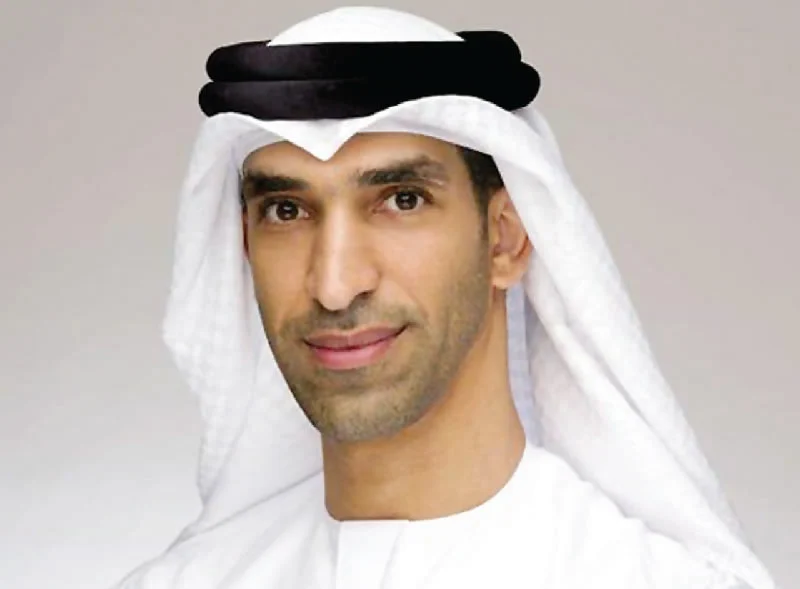
Despite Gulf tensions, UAE Minister Dr. Thani bin Ahmed Al Zeyoudi confirms robust UAE Africa investment, with $110bn invested across the continent since 2 Read More: https://punchng.com/uae-sees-robust-african-investments-despite-gulf-crisis-zeyoudi/

#ECONOMY
649-Mile 2023 Aston Martin DB11 V8 Coupe
bringatrailer14d ago

649-Mile 2023 Aston Martin DB11 V8 Coupe

This 2023 Aston Martin DB11 coupe was specified with Satin Lunar White paintwork, an $11k option, and it is powered by a 4.0-liter V8 paired with an eight-speed automatic transaxle. Onyx Black Haircell leather covers the heated and ventilated front seats, and the car is further equipped with a limited-slip differential, the Dark Chrome Jewelry Pack, 20" 10-spoke directional wheels, an Adaptive Damping System, a painted gloss black roof panel, a deployable rear spoiler, LED lighting, parking sensors, a 360-degree camera, an Aston Martin Premium Audio system, dual-zone automatic climate control, and COMAND infotainment with navigation. Acquired by the selling dealer in 2026, this DB11 Coupe has 649 miles and is now offered with a window sticker, the owner's manual, a clean Carfax report, and a clean North Carolina title.

#TECH
Bitcoin Supply In Loss Crosses Critical Threshold — Bullish Reversal Next?
newsbtc14d ago

Bitcoin Supply In Loss Crosses Critical Threshold — Bullish Reversal Next?

After days of steep downward movement, the price of Bitcoin appears to have found a somewhat reliable anchor around the $60,000 region. However, recent on-chain data suggests that the premier cryptocurrency might not be down for long, with a bullish reversal seemingly on the cards. Is BTC Price Bottom Already Forming? In a June 7th post on the X platform, crypto analyst Ali Martinez revealed that the price of Bitcoin might have just reached a major bottom in this cycle. This evaluation is based on changes in the Bitcoin Supply In Loss metric, which measures the amount of BTC in circulation that was last moved at a price above the current market value. Related Reading: Bitcoin Price Plunges To $59K, Sparking Fears Of Deeper Decline This on-chain metric provides insight into how much pressure investors are under (or how deeply underwater they are) as they hold their Bitcoin at an unrealized loss. Hence, the Supply In Loss indicator, near unprecedented levels, is a signal of systemic fear and an impending shift in Bitcoin market dynamics. Martinez noted that the flagship cryptocurrency formed major cycle bottoms in the past when more than 10 million BTC were held at a loss. According to Glassnode data highlighted by the analyst, Bitcoin has breached this threshold, with 10.46 million coins (more than half of the circulating supply) underwater. As observed in the chart above, the Bitcoin price saw a bullish reversal in late 2018, as the supply in loss crossed this 10 million threshold. A similar pattern could be seen for BTC’s price when its Supply In Loss climbed to this mark around 2022. Martinez explained: I believe this is an important signal because selling pressure often begins to fade as fewer investors are willing to realize losses, increasing the probability of a market bottom forming. Based strictly on historical context and patterns, there is a high likelihood that a price bottom is forming for BTC at current levels. However, an important factor to discount is that the Bitcoin circulating supply was markedly lower in both periods (around 17.4 million and 19.2 million towards the end of 2018 and 2022, respectively). Lower circulating supply could mean the Supply In Loss might edge slightly higher this time, suggesting the BTC price could see further downside. This was evident in 2015 (when the circulating supply was much lower), when the Supply In Loss didn’t reach the 10 million threshold before a bullish reversal. Bitcoin Price At A Glance As of this writing, the price of BTC stands at around $62,746, reflecting a 2.5% jump in the past 24 hours. Related Reading: Ethereum Breakdown Warning: This Key Level Could Trigger More Downtrend Featured image from iStock, chart from TradingView

#TECH
Exploring Your Wireless Options: 4 Tips to Pick the Right Provider
katytimes14d ago

Exploring Your Wireless Options: 4 Tips to Pick the Right Provider

(Feature Impact) When balancing factors like nationwide network reliability and data performance needs against pricing, device compatibility and member benefits, finding the right wireless provider for your needs and lifestyle can help simplify your daily routine while unlocking additional savings and experiences.

#TECH
25,000 graduates every year, but only 13% feature in J&K’s workforce
greaterkashmir14d ago

25,000 graduates every year, but only 13% feature in J&K’s workforce

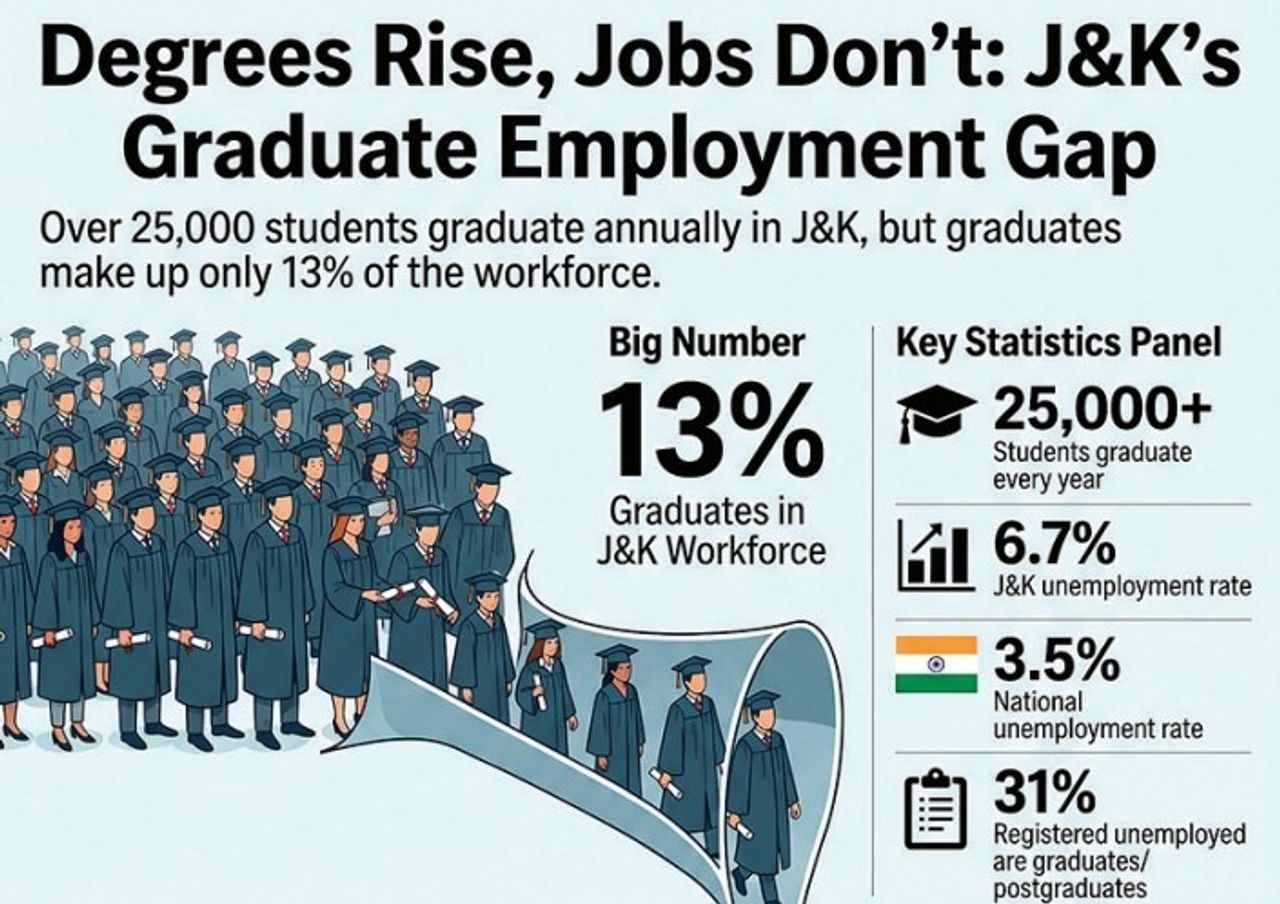
Srinagar, Jun 7: Jammu and Kashmir is producing thousands of graduates every year, but a significant proportion of them are struggling to find suitable employment, exposing a widening disconnect between educational attainment and workforce participation. According to the Periodic Labour Force Survey (PLFS) 2023-24, graduates constitute only 13 per cent of J&K’s workforce, underscoring the challenges faced by educated youth in securing gainful employment. The figures come at a time when the Union Territory’s unemployment rate stands at 6.7 per cent, nearly double the national average of 3.5 per cent. While unemployment affects all sections of society, its impact is particularly pronounced among educated young people. Data insights recently shared by DataForIndia show that the low representation of graduates in the workforce is part of a broader national trend. However, experts say the problem is more acute in Jammu and Kashmir due to limited industrialisation, a small organised private sector and persistent mismatches between educational qualifications and market requirements. Official data shows that more than 25,000 students graduate annually from colleges and universities across J&K. Thousands more complete postgraduate, professional and technical courses each year. Yet the modest 13 per cent share of graduates in the workforce suggests that many degree holders are either unemployed, underemployed or engaged in jobs that do not require higher education qualifications. The challenge of creating employment opportunities has become increasingly critical as the number of educated youth entering the job market continues to rise. The PLFS data also reveals that between 58 and 67 per cent of workers in J&K are self-employed, largely engaged in agriculture, family-run enterprises, small retail establishments and services. The dominance of self-employment reflects the limited availability of formal salaried jobs in the economy. Nationally, around 57 per cent of graduate workers are employed in salaried positions, compared to only 6 per cent among illiterate workers. Although similar disaggregated data is not available for J&K, official records indicate that nearly 31 per cent of the Union Territory’s registered unemployed are graduates and postgraduates. The employment challenge is even more severe for women. According to survey estimates, unemployment among women in the 15-29 age group ranges between 46 and 53 per cent in J&K. Many educated women remain outside formal employment and are engaged in unpaid family work or subsistence self-employment due to limited opportunities and social constraints. Female unemployment in urban areas is estimated between 20 and 28 per cent, substantially higher than the male unemployment rate of 4.6 per cent. Sector-wise employment patterns further highlight the structural challenges facing the economy. Agriculture continues to employ more than 80 per cent of rural workers, while construction accounts for around 23 per cent of employment across rural and urban areas. Manufacturing, a key driver of quality jobs in many economies, employs less than 7 per cent of J&K’s youth. The organised private sector remains particularly weak, accounting for less than 3 per cent of total employment, limiting opportunities for skilled and educated workers. The pressure on government employment remains intense as a result. Last week, the Jammu and Kashmir Government informed the Legislative Assembly that around 77,000 gazetted and non-gazetted posts are lying vacant across departments. Of these, 6,409 are gazetted posts, 24,451 fall in the non-gazetted category, while 5,573 Multi-Tasking Staff (MTS) posts are under the promotion quota. The government has stated that the vacancies will be filled in a time-bound manner. Economists say the figures highlight the urgent need for faster industrial growth, greater private investment and stronger alignment between education and market requirements. Without significant expansion in employment-generating sectors, they warn, the gap between rising educational attainment and workforce absorption is likely to widen further in the coming years.

#ECONOMY
Strive Authorizes $5.15B in At-The-Market Offerings
stockwatch14d ago

Strive Authorizes $5.15B in At-The-Market Offerings

Strive, Inc. has authorized new "at the market" offerings totaling up to $5.15 billion. This includes up to $2.55 billion of Class A common stock and up to $2.6 billion of Variable Rate Series A Perpetual Preferred Stock (SATA Stock). The company also increased the number of authorized shares of its SATA Stock to 40,000,000 to facilitate these offerings, effective June 5 and June 15, 2026. These offerings will be conducted through various sales agents, including Cantor Fitzgerald & Co.

#STOCKS