
fool110d ago
Another Credit Crash Coming? This Stress Indicator Is Hitting Financial Crisis Levels.
Credit card delinquency rates are hitting levels not seen in 15 years. A crash in the credit markets may be an inevitable outcome.
#STOCKS#ECONOMY
Credit card delinquency rates are hitting levels not seen in 15 years. A crash in the credit markets may be an inevitable outcome.

/CNW/ -- Silver's formal addition to the U.S. Critical Minerals List truly triggered a structural reassessment of how markets value the metal, placing it...
ASX-listed Rincon Resources has entered into a binding agreement to dispose of its Laverton assets in the Eastern Goldfields of Western Australia.The transaction would allow the company to redirect existing funding towards the Telfer South gold/copper project in the Paterson region and the Crackerbox gold assets in the Murchison Goldfields.

The economic and societal gains from AI will likely exceed the web and mobile eras combined, writes Google Canada’s Sabrina Geremia
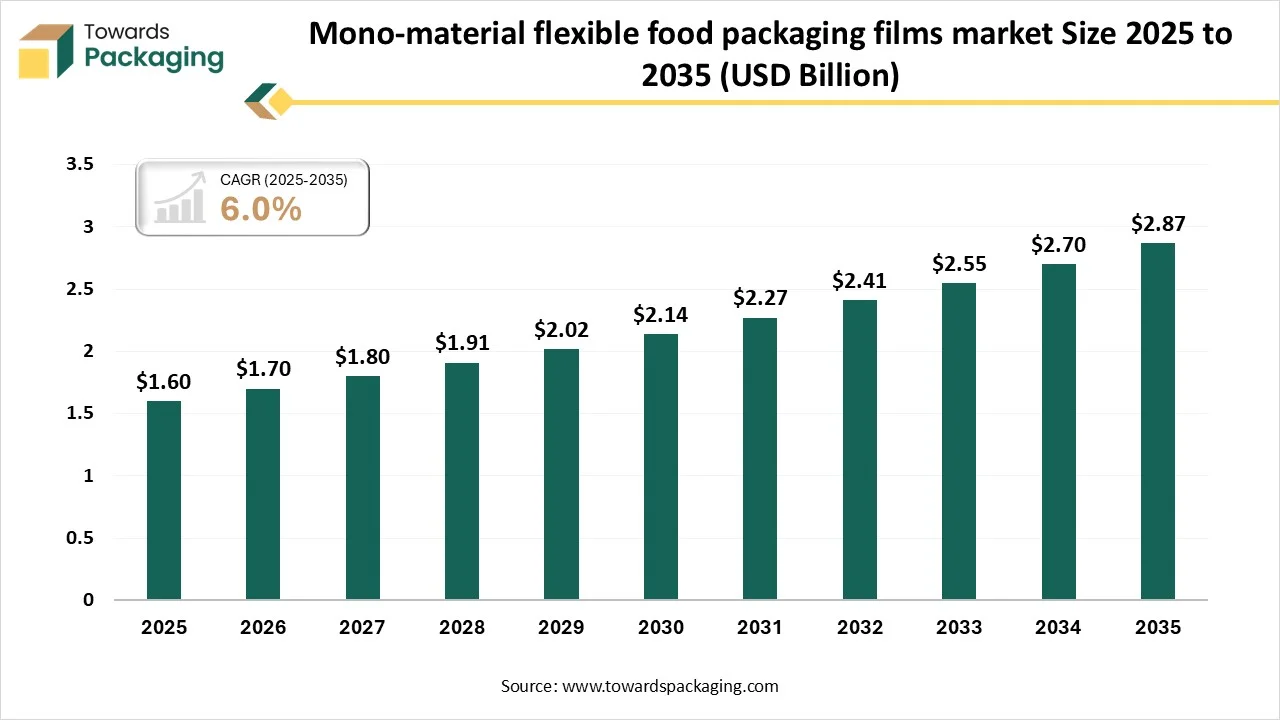
According to Towards Packaging consultants, the global mono-material flexible food packaging films market is projected to reach approximately USD 2.87 billion by 2035, increasing from USD 1.6 billion in 2025, at a CAGR of 6.0% during the forecast period 2026 to 2035. According to Towards Packaging consultants, the global mono-material flexible food packaging films market is projected to reach approximately USD 2.87 billion by 2035, increasing from USD 1.6 billion in 2025, at a CAGR of 6.0% during the forecast period 2026 to 2035.

The 56th annual World Economic Forum in Davos, Switzerland was held this past January 19-23. It was attended by 60+ heads of state and over 800 CEOs from around the world. In front of this assembled body, President Donald Trump gave a disjointed, incoherent, and largely antagonistic 70-minute speech. In it, he threatened our allies in Europe and elsewhere with economic harm and possible military action. He sounded deranged. It was not at all well received by leaders of the "Free World".

Americans are feeling financially stretched: 92% cut back on spending last year, including curbing essentials like healthcare and groceries. Is this really the time for Target to be focused on trendy throw pillows, luxury beauty products, and premium sodas?At Target’s investor day on Tuesday, CEO Michael Fiddelke tried to convince Wall Street that the retailer is about to undergo a massive turnaround, after years of declining comparable sales, most recently in this last quarter. His reinvention plan is anchored in stylish design, differentiation from other retailers, and delighting the customer in-store. But none of these strategies seemed built for the economic moment we’re currently in.The plan, as laid out by Fiddelke, chief merchandising officer Cara Sylvester, and CFO Jim Lee, involves $1 billion in new investment, 130-plus store remodels, 3,000 new items in the beauty aisle, and a deliberate push to reclaim Target’s identity as the cool, affordable alternative to boring big-box retail. It is, in many respects, a story Target has told before—and that’s the problem.“I’ve seen Target at our best, I’ve seen us when we’re not at our best,” Fiddelke said in response to an analyst who noted that many elements of the current plan looked remarkably similar to what Target attempted a decade ago. “The ingredients that have always fueled us at our best are when we’re design-led, when we’re winning with differentiation, and when our experience is top-notch.”But what worked for Target in the past is unlikely to work now. It’s not just that the retail landscape has evolved, with competitors like Walmart encroaching on Target’s territory with more stylish products. The U.S. is now in the midst of a full-blown affordability crisis, and consumers of all social classes are all looking for cheaper options that will stretch their dollar. In a trade-down economy, Target’s focus on premium products and exciting in-store experiences doesn’t seem like what shoppers need right now.A Target children’s clothing section, ca. 2017. [Photo: Education Images/Universal Images Group/Getty Images]A Playbook Built for Another EraTarget’s pitch to investors is rooted in a very specific vision of its customer: Someone who grabs a Starbucks cappuccino on the way in, wanders the aisles in search of something new, and feels good when the product is cheaper than what they saw at Nordstrom. “We want that smile to get bigger when you flip over the price tag and see the value that’s there,” Fiddelke said, describing the aspirational shopping experience that has long defined Target’s brand identity.The problem is that this customer—the one who shops for pleasure, who browses, who reaches for the new—is under enormous financial pressure right now. As U.S. involvement in the Iran conflict sends energy prices climbing and reignites fears of a fresh inflation wave, American consumers are cutting back broadly.According to the 2026 Cost-of-Living Crunch Report, only 12% of workers say their wages have kept pace with inflation, and just 17% feel financially secure enough to save money after spending on essentials. Many Americans are struggling to afford their essentials, with 65% saying these expenses cause stress, and 49% dipping into savings to buy what they need. The notion that these same consumers will resume discretionary spending through refreshed home and apparel aisles—however stylishly merchandised—may be wishful thinking.Yet Target’s turnaround plan leans heavily into exactly those categories. Fiddelke spoke enthusiastically about the profit potential of clothing and home goods, describing them as “high-margin categories” that, when they are “humming on the top line,” generate substantial profit. Sylvester offered the brand’s own-label story as evidence of the value equation at work: “Cat & Jack—phenomenal kids’ clothing brand. We design the leggings with reinforced knees, they’re $5, oh and by the way, you can return it. That is the value equation that we expect of all of our own brands.” (The line generates upwards of $3 billion a year for Target.)On the one hand, it makes sense for Target to spruce up its apparel lines. According to Coresight Research data, Target’s apparel sales fell almost 5% in 2025, when the rest of the market grew 4.8%. Target’s beauty sales were flat, when the total market grew 5%. “Target needs to act to stem its loss of market share,” says John Mercer, head of global research at Coresight Research.But on the other, fashion-forward clothing is a discretionary purchase. And families feeling the financial pinch may be less inclined to buy their kids a wardrobe full of trendy new outfits. They might opt, instead, to buy basics from budget retailers like TJ Maxx or buying secondhand from ThredUp.Target pride merch on display, ca. 2016. [Photo: Christopher Dilts/Bloomberg/Getty Images]The Trade-Down Economy Is Real, and Target Is Late to ItWhile Target has spent years navigating several simultaneous crises—including a boycott because it reneged on its DEI policies, and complaints about messy stores and long check-out line—a different cohort of retailers has been quietly gaining ground.Walmart has posted consistent comparable sales growth by doubling down on everyday value, grocery, and online sales. Ulta Beauty, once written off as a niche player, has grown explosively by understanding that customers are trading down from luxury but still want occasional indulgences.The trade-down economy does not mean Americans stop spending. It means they spend more carefully and more deliberately. Value-focused retailers are winning because they are consistently focused on low prices and helping the customer stretch their dollar through promotions and discounts.Target’s proposition, by contrast, has grown murky. The company is trying to be many things simultaneously: a design destination, a grocery stop, a beauty authority, a tech-enabled convenience play. Fiddelke argues that this allows it to differentiate itself from other retailers, which presumably includes its biggest competitor, Walmart. But this seems misguided. Budget-focused retailers have been growing in recent quarters. It might make better sense for Target to take a page from their playbook.A Team of VeteransFiddelke, who began his career at Target in 2023 as an intern, was named CEO last year. Throughout the call, he argued that his institutional knowledge is a strength. “I feel more aligned as a leadership team and as a company on what our unique path is to win than I’ve probably ever felt in my 23 years,” he said.Nostalgia is a powerful force inside a corporate culture. But a leadership team that has spent decades inside Target—and has absorbed its mythology—might be poorly positioned to reckon honestly with what it needs to become. When investors pressed on whether Fiddelke’s plan was truly different from past attempts, the answers kept circling back to the same touchstones: design, differentiation, delightful experience. These are real strengths. They built a genuinely beloved brand. But they are also a rearview mirror—a map of a landscape that has already changed.The centerpiece of Target’s investment plan is the physical store. Hundreds of millions in added payroll, 130-plus full remodels, expansion into new markets. “The delight when we bring a new Target to a new market,” Fiddelke said, invoking the emotional resonance that a store opening can generate in a community. Lee added that the “bulk” of the $1 billion investment would go toward guest-facing store improvements. The company plans to touch all 2,000 locations with new assortment—more newness, Fiddelke said, “than we’ve seen in any year in the last decade.”Analysts aren’t sure this is the right move. “As a general principle, we are wary of consumer staples retailers pouring money into store remodels when they are losing share to highly price-competitive retailers,” says Mercer of Coresight Research. “It’s an approach that generally hasn’t tended to work well in the past.”Across Target’s existing footprint, the biggest challenge is not aesthetics. It is whether the value proposition—the reason to drive to a Target rather than click to Amazon or swing through Walmart—is compelling enough at a moment when the consumer isn’t looking for indulgence. In the trade-down economy, delight is a luxury. And Target has not yet made the case that it understands this new reality.

CoreWeave (NASDAQ:CRWV) is adding another high-profile name to its customer roster. Perplexity, the AI-powered search company, has signed a multi-year partnership to run AI inference workloads on CoreWeave’s cloud infrastructure, with CRWV shares rising approximately 5.7% in pre-market trading on the news. Under the agreement, Perplexity will power next-generation inference workloads on CoreWeave’s platform using ... CoreWeave Lands Perplexity in New AI Cloud Deal, Stock Jumps 5.7% Pre-MarketThe post CoreWeave Lands Perplexity in New AI Cloud Deal, Stock Jumps 5.7% Pre-Market appeared first on 24/7 Wall St..
Amid rising geopolitical tension, the market witnessed sharp plunge. If you have invested in the National Pension system (NPS), should you tweak your portfolio for long term planning? Read on to know

Teachers Retirement System of The State of Kentucky lessened its stake in Cadence Bank (NYSE:CADE – Free Report) by 8.3% in the 3rd quarter, according to its most recent disclosure with the Securities & Exchange Commission. The firm owned 157,278 shares of the company’s stock after selling 14,328 shares during the quarter. Teachers Retirement System [...]

Westfield Capital Management Co. LP decreased its position in shares of Meta Platforms, Inc. (NASDAQ:META – Free Report) by 10.6% in the third quarter, according to its most recent Form 13F filing with the Securities & Exchange Commission. The firm owned 767,657 shares of the social networking company’s stock after selling 90,745 shares during the [...]

South Dakota Investment Council reduced its stake in shares of Encompass Health Corporation (NYSE:EHC – Free Report) by 20.7% in the 3rd quarter, according to the company in its most recent filing with the Securities & Exchange Commission. The fund owned 54,582 shares of the company’s stock after selling 14,249 shares during the period. South [...]