whiskeyfellow_net6d ago
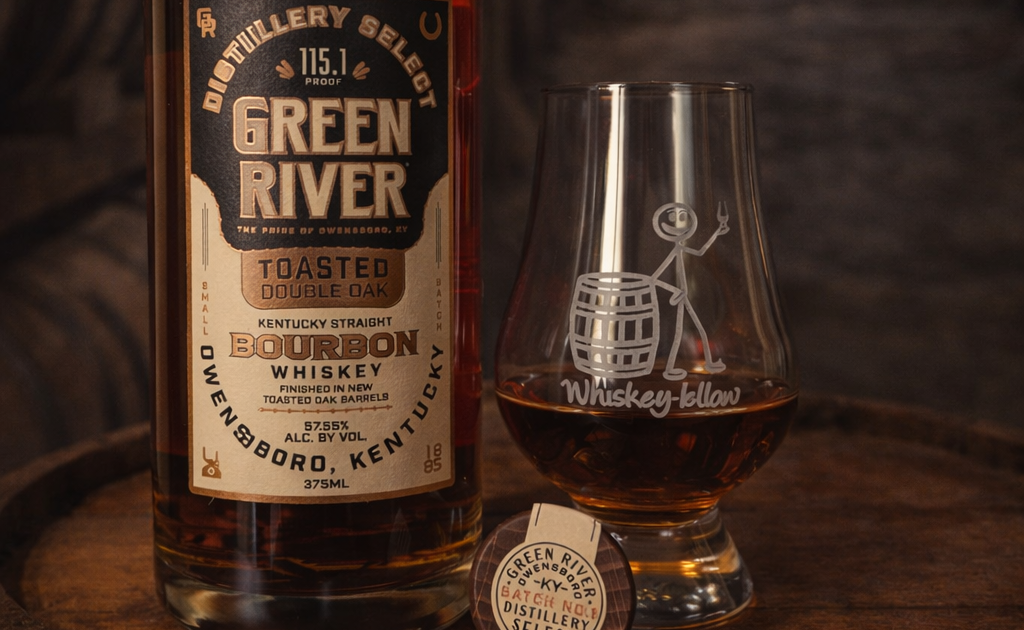
The oldest whiskey that Green River Distilling Co. has ever produced will debut at the Owensboro distillery on Saturday, June 20, and at the Louisville Tasting Room on Friday, June 26. What is it? I’m glad you asked! Before I tell you all about that whiskey, there is an important history lesson to tell. When your distillery number is DSP-KY-10 , you are registered as the 10th-oldest distillery in Kentucky. That license was granted to J.W. McCulloch in 1885 to build and operate the Green River Distilling Co. in Owensboro. McCulloch was one of the most prominent advocates of the Bottled-In-Bond Act of 1897 . He was also a former revenuer. He testified before Congress in favor of the law’s passage. His distillery was one of the country’s largest producers of bonded spirits under the J.W. McCulloch , Mountain Dew , and Green River brands. Green River’s whiskeys won prestigious awards such as the Medal of Excellence at the 1893 World’s Fair, the First Prize and Gold Medal in Paris in 1900, the Grand Prize Over All Competitors at the 1904 World’s Fair, and, in 1905, the Grand Prize at the Exposition Universelle de Liege. There were plenty of other awards earned during McCulloch’s tenure. Unfortunately, the entire Owensboro campus caught fire. In three short hours, most of the buildings, including the aging whiskey, were destroyed. McCulloch rebuilt his distillery, which would have been great if not for Prohibition, and McCulloch passed away before Green River was able to regain its foothold. The distillery changed hands several times, most famously to The Medley Distilling Company. However, as it fell into disrepair, the distillery was eventually abandoned, only to be acquired in 2014 by the Terressentia Corp. of South Carolina, which renamed it O.Z. Tyler Distillery . Two years later, the distillery was producing its first whiskeys, and in 2019, Terressentia purchased the rights to the Green River name: the following year, O.Z. Tyler was renamed Green River Distilling Co. That caught the attention of Bardstown Bourbon Company in 2022, who promptly snatched it up (which, incidentally, was the best thing to ever happen to the distillery since its resurrection). The parent company is now called Lofted Spirits . And now, back to the whiskey! Green River is launching its Distillery Select series, showcasing the best whiskeys the storied distillery produces. It will involve different proofs, rickhouse locations, and finishing cycles. The first entrant is called Toasted Double Oak . Toasted Double Oak starts with Green River’s traditional 70% corn, 21% rye, and 9% malted barley mashbill. The team chased down 13 barrels in Warehouse B, where temperatures of 100°F are common. The youngest slept in oak for 8 years. Once dumped, the Bourbon was transferred to a lightly charred, medium-toasted new American oak barrel from Independent Stave Company , where it rested for another 6 months. “The historic [...] distillery is sitting on some of the best whiskey in Kentucky, [and] the Distillery Select series will allow us to take our classic bourbon and rye mashbills to the next level. The strong fruit flavors of Green River are ideally suited for a double barrel. The bold flavor pairs perfectly with the additional wood sugars and spice imparted during the extra six months of double barreling.” - Dan Callaway , Master Blender, Lofted Spirits Packaged at 57.55% ABV (115.1°), you’ll be able to acquire a 375mL for $49.99 at either location. Is Distillery Select Toasted Double Oak worth picking up? The folks at Lofted Spirits were kind enough to send me a sample in exchange for my no-strings-attached, honest review. So, let’s #DrinkCurious and find out! Whiskey Type: Straight Bourbon Distiller: Green River Distilling Co. Age: 8 years Mashbill: 70% corn, 21% rye, and 9% malted barley Cooperage: 13 new, 53-gallon, charred oak barrels hand-selected from Warehouse B, then finished 6 months in a light char and medium toasted new American oak barrel Alcohol Content: 57.55% ABV (115.1°) Price per 375mL: $49.99 Appearance : I used a Glencairn glass to explore this Bourbon neat. I observed a pristine, orange-amber liquid forming a massive rim across the wall. Thick, syrupy tears fell back into the pool. Nose : While I uncorked the bottle and poured my glass, I noticed an unpleasant odor that concerned me. I brought the cork to my nose, and it seemed rather dank. I know better than to judge this early, and I gave the Bourbon about 15 minutes to breathe before exploring further. When that passed, I smelled buttered toffee, strawberries, dark chocolate, toasted oak, and pipe tobacco. As I drew the air in through my lips, I found more buttered toffee. Palate : The first sip unleashed a healthy dose of milk chocolate and oak tannins that rolled across my tongue thanks to the whiskey’s creamy, slow-moving mouthfeel. With the next, I identified buttered toffee, leather, and milk chocolate on the front. My mid-palate plucked notes of freshly-shredded tobacco, red currants, and earthiness. Black pepper, ancient oak, and cocoa nibs hit the back. Finish : Bold, earthy, and spicy flavors of old oak, black pepper, coffee, and cocoa desperately tried to squash buttered toffee and freshly-shredded tobacco. It was a lumbering finish with a slow fade, eventually vanishing at 1:38, making it somewhat long. Bottle, Bar, or Bust : Green River Distilling Co. consistently puts out some amazing pours at reasonable prices. Distillery Select Toasted Double Oak is more expensive than its usual offerings (even single-barrel cask-strength options), yet that’s also understandable considering the time, effort, and limited yield of this particular bottling. Toasted Double Oak is not your run-of-the-mill Green River Bourbon. It is bolder, with a more savory, spicier tone. It drank about 10 points below what the label suggested, yet tasted much older than its age statement, which left me wondering just how much of the blend had rested for only 8 years. My only complaint about Toasted Double Oak is that it isn’t available in a 750mL (or even a 700mL). I predict it won’t have a very long shelf life in my whiskey library; I can picture myself coming back to it time and time again. Yes, it is worth the extra investment. Grab a Bottle before they’re all gone. Cheers! My Simple, Easy-to-Understand Rating System Bottle = Buy It Bar = Try It Bust = Leave It Whiskeyfellow encourages you to enjoy your whiskey as you see fit, but begs you to do so responsibly.