3 of the best blue chip ASX shares I'd buy in March
These three ASX leaders have survived cycles and kept delivering.The post 3 of the best blue chip ASX shares I'd buy in March appeared first on The Motley Fool Australia.

These three ASX leaders have survived cycles and kept delivering.The post 3 of the best blue chip ASX shares I'd buy in March appeared first on The Motley Fool Australia.
Our favourite iPad accessories? After 14 years of testing, here's our top 6 Creative Bloq

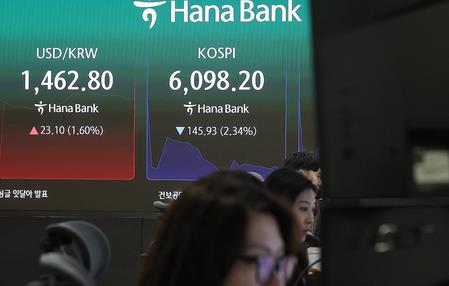
From left, an Atlas humanoid robot, Esther Yim, senior analyst at Samsung Securities, and Koh Tae-bong, executive director at the research headquarters of iM Securities. [YOMHAP/SAMSUNG SECURITIES/PARK SANG-MOON] [MONEY MOVER] Capital moves in and out of Korea, driven by a range of economic and geopolitical forces. In our "Money Mover" series, we explore key market developments that could shape investment decisions and influence the flow of global funds. — ED. For more than a decade, Hyundai Motor’s shares moved sideways in a 100,000 to 200,000 won ($70 to $140) band, even as the Korean automaker posted record profits and expanded its presence in the United States. The debut of its closely guarded Atlas humanoid robot, however, dramatically changed the narrative to send the stock soaring above the 600,000 won level. Now, some analysts even project that Hyundai could one day beat the market capitalization of Japan’s Toyota Motor — a scenario that long seemed far-fetched. Though a divergent view endures due to Hyundai’s commanding presence in EVs or autonomous driving and an unproven practical deployment of its robots, the consensus suggests that a substantial boost in Hyundai's market valuation could take hold by 2028, particularly contingent on the potential public listing of Massachusetts-based Boston Dynamics, 88 percent owned by Hyundai Motor. Related ArticleHyundai didn't bring more cars to CES 2026. It brought robots instead.Inside Hyundai’s calculated silence on Boston DynamicsExclusive: Hyundai's Georgia plant to use Boston Dynamics' Atlas humanoid robot from October Atlas, the brainchild of the robotics firm, was first introduced at CES 2026 in Las Vegas on Jan. 5, with a concrete production target of 30,000 units by 2028 and integration into actual manufacturing lines. “In a humanoid robotics market effectively dominated by Tesla’s Optimus, through Atlas, Hyundai Motor has demonstrated that it has the potential to mount a credible challenge to the incumbent," said Koh Tae-bong, executive director at iM Securities’ research headquarters, during a recent interview with the Korea JoongAng Daily. Toyota Group, by contrast, has yet to make any significant strides in humanoid robots and continues to emphasize hybrid technology over full EVs, prompting concerns that it may lag in future growth engines. An Atlas humanoid robot, developed by Boston Dynamics, greets visitors during a main presentation by Hyundai Motor Group at the CES 2026 in Las Vegas on Jan. 5. [SARAH CHEA] Investor enthusiasm was further amplified by the visible collaboration with Nvidia in the area of autonomous driving, a sector where Hyundai failed for a decade. Hyundai Motor’s market capitalization stands at roughly 138 trillion won as of Friday, and when combined with Kia’s 80 trillion won, the conglomerate’s total valuation exceeds 200 trillion won, while Toyota's stands at 470 trillion won. Hyundai’s shares, which traded at some 300,000 won before the CES, more than doubled to close at 674,000 won on Friday. The Korea JoongAng Daily spoke with Koh, Esther Yim, senior analyst at Samsung Securities, and Jason Lui, head of APAC equity and derivatives strategy at BNP Paribas, to discuss the future corporate value and stock outlook of Hyundai Motor. Q. Do you agree that Hyundai could surpass Toyota in market cap within the next few years? Yim: Hyundai is evolving into a robotics-driven company, transforming its Software-Defined Vehicle capabilities from a relative weakness into a strategic strength, while also possessing solid-state battery technology. If the market begins to fully recognize these assets, I believe Hyundai could surpass Toyota in market capitalization. In the EV segment, Hyundai already holds an edge over both Toyota and Volkswagen. Its traditional weakness in autonomous driving is being addressed through strategic talent acquisition and collaboration with Nvidia. Should Hyundai’s robotics and solid-state battery technologies be validated in the field, the company’s valuation benchmark would shift, with Tesla, rather than Toyota, becoming the more relevant comparator. Koh: It is entirely feasible. Hyundai’s current price-to-earnings ratio stands at roughly 12 times, while Tesla is trading at around 320 times. If you factor in the valuation of Boston Dynamics as well, Hyundai’s implied multiple would likely fall somewhere between 12 and 320 times. Liu: Our target price-to-earnings multiple of 12 times implies an effective 10.3 times price-to-earnings valuation for Hyundai's core automotive business in 2026, after excluding its stakes in Hyundai Motor India and Boston Dynamics. After the rerating of Korean carmakers, fueled by strong market sentiment for the humanoid robot concept, we think a ten-times next-twelve-months price-to-earnings is a fair valuation for their automobile business when we compare it with Japanese automakers, which stands at 9.8 times for the fiscal year ending March 2027. We think Kia has better growth potential in terms of automobile sales volume, and its share price is still currently trading at an attractive multiple relative to that of Hyundai Motor and the Japanese automakers. Koh Tae-bong, executive director at iM Securities’ research headquarters, speaks during an interview with the Korea JoongAng Daily in Yeouido, western Seoul, on Feb. 13. [PARK SANG-MOON] As Hyundai’s stock continues to set fresh records, fueling investor enthusiasm, some warn of overheating. How sustainable is the rally, and what catalysts could trigger further upside — or a pullback? Koh: Investors have long wondered why Hyundai’s robotics efforts haven’t mirrored the progress of Tesla’s Optimus. The recent stock rally, however, reflects a shift in perception: The public unveiling of Atlas convinced the market that Hyundai might actually be able to pull it off. In this context, news of Boston Dynamics collaborating with Google DeepMind is particularly significant. Previously, no matter how much Hyundai developed its hardware, it couldn’t match Optimus in terms of real-world data integration, which directly influences the robot’s "brain." But by leveraging DeepMind’s expertise, Hyundai is now taking steps in the same direction as Tesla, which is why the market is beginning to price in a more tangible probability of its robotics initiative coming to fruition. Last year, Nvidia partnered with Disney and DeepMind to advance robot cognitive learning capabilities, and Boston Dynamics stands to be the principal beneficiary of these technological synergies. Yim: In such a rapidly evolving environment, where AI is poised to reshape societal systems and future demand across the board, continued overreliance on internal combustion technology virtually guarantees a decline in Hyundai and Kia’s sales. Outside of markets such as the United States and India, where Chinese automakers have yet to establish a foothold, Hyundai and Kia are losing ground to Chinese competitors. Reflecting this uncertainty, just three months ago, the companies’ price-to-earnings ratios languished at a mere 4 to 5 times, which tells us that there is a bleak longer-term outlook over the next four to five years. Hyundai’s investment in robotics appears strategically sound. The initiative is not undertaken by Hyundai alone; Kia and Hyundai Mobis are also participating, providing ample capital resources. Key catalysts for further stock appreciation include announcements related to robotics investment, such as training centers or factory construction, as well as regulatory developments in the United States and milestones like Tesla’s Optimus launch. Conversely, stock downside could emerge if the pace of robotics development falls short of market expectations, or if Hyundai’s autonomous driving progress fails to meet investor optimism. Nvidia CEO Jensen Huang, center, takes a photo with Samsung Electronics Executive Chairman Lee Jae-yong, left, and Hyundai Motor Group Executive Chair Euisun Chung during a dinner in a chicken restaurant in southern Seoul on Oct. 30, 2025. [JOINT PRESS CORPS] Many in the investment community are projecting that Boston Dynamics’ valuation could reach up to 150 trillion won. What's your perspective, and when do you expect the company might go public? Koh: The closest U.S. comparison to Boston Dynamics is Figure AI, which is currently valued at roughly 56 trillion won. I believe Boston Dynamics could command at least that level — and likely more — because it has assets that Figure AI lacks. Figure AI does not own production facilities, while Hyundai alone will have the capacity to produce 30,000 units by 2028. This scale implies that robotics technology could advance dramatically over the next two to three years, justifying a projected valuation for Boston Dynamics in excess of 100 trillion won. The most logical timing for the potential initial public offering (IPO) appears to be 2028. By then, the stock price is likely to have risen significantly. There could be exceptional circumstances, however — for example, if honorary chairman Chung Mong-koo were to pass away before then, inheritance matters might necessitate a faster listing. Yim: The closest comparison to Boston Dynamics is Figure AI, which was valued at $38 billion during its Series C in 2025. Boston Dynamics has historically excelled in action-control technology but lagged in physical reasoning and general intelligence. The announcement at CES that Atlas would leverage Google DeepMind’s robotics foundation model has greatly increased confidence in its commercial viability. Figure AI develops both its foundation and action models in-house, using Nvidia’s Thor chip for inference. In contrast, Atlas combines DeepMind’s foundation model, Nvidia Thor chips, and Hyundai’s production, distribution and after-sales infrastructure. Hyundai also provides the data center and datasets, enabling rapid mass production, which is its clear advantage over Figure AI. Companies with superior technology to Figure AI include Tesla and China’s Xpeng, which develop foundation models, vision-action models, inference chips, and production entirely in-house. Boston Dynamics alone cannot match them technically, but Atlas is the product of a massive ecosystem — Google, Nvidia and Hyundai — and could be considered on par with Tesla’s Optimus. Taking these factors together, Boston Dynamics’ valuation is expected to be on par with Figure AI, or up to 50 percent higher when including a public listing premium. The anticipated IPO window is late 2027 to early 2028, once humanoid production is visible or external customers are secured. Atlas, a humanoid robot by Hyundai Motor-backed Boston Dynamics, demonstrates working at a factory at the CES 2026 in Las Vegas on Jan. 8. [YONHAP] Looking ahead, what are the principal challenges that Hyundai must tackle to sustain its growth and market momentum? Liu: We downgrade Hyundai Motor from Outperform to Neutral. Although we like Hyundai Motor for its sales volume growth potential from expanding product offerings with all-powertrain research and development and the capacity expansion in the United States and India, we think its automobile business is fairly valued with little upside potential after deducting the valuation of Boston Dynamics and its shareholdings in Kia and Hyundai Motor India. We have reduced our earnings forecasts for Hyundai Motor by 22 percent for 2026 and 21 percent for 2027. This revision reflects two factors: first, the impact of United States tariffs on imports of vehicles and automotive parts, which we do not expect the company to be able to materially pass on to consumers; and second, a slightly lower sales volume assumption, partially offset by a favorable foreign exchange effect. Jason Lui, head of APAC equity and derivatives strategy at BNP Paribas [BNP PARIBAS] Koh: Hyundai has been pursuing autonomous driving for years, but the past seven years were largely spent without success. The critical factor is Tesla’s real-time data approach. Tesla’s Full Self-Driving (FSD) system is supported by 15 billion kilometers (9.3 billion miles) of real-world driving data — a dataset that no one else can match. Hyundai tried to develop its system independently using synthetic data, but it ultimately fell short. Nvidia faced the same limitation; without real-world driving data, no autonomous AI has been able to surpass Tesla’s FSD. Now, Hyundai’s collaboration with Nvidia could change the equation. Nvidia has recognized that synthetic data alone is insufficient and that a mass production automaker is required to generate real-world driving data. In Korea, over 80 percent of vehicles are Hyundai and Kia, giving the company a unique advantage to harness real-world data at scale. This combination of production capacity and data access could enable Hyundai to catch up. Tariffs and other external factors still impart uncertainty. What strategic avenues might Hyundai pursue to steer its business successfully into the future? Yim: In the long term, the solution lies in expanding local production and boosting productivity through robots. For example, a humanoid robot costing $135,000 has an hourly operating cost of just $9.40, while a $30,000 robot costs only $1.30 per hour. By adopting robotics, Hyundai can mitigate not only tariff-related issues but also cost competition from Chinese EV manufacturers. Koh: From a broader perspective, tariffs are a transient issue. In the bigger picture, Korea is inevitably part of the global technology race. Deploying robots in factories is virtually guaranteed to improve profitability. Currently, the Atlas robot is priced around $150,000. Typically for a manufacturing company, labor costs account for about 7 percent of total production expenses overseas, whereas in Korea, it exceeds 11 percent. Cutting even half of this labor cost with robots could boost operating profit by six percent. The timing is ideal for Hyundai. Workers hired en masse at Hyundai’s Ulsan plant in the late 1970s and early 1980s are now approaching retirement. Robots can seamlessly fill these gaps as they exit. Additionally, as Hyundai continues to expand capacity at its U.S. plants, local production will naturally increase. BY SARAH CHEA, PARK EUN-JEE [chea.sarah@joongang.co.kr]

Like other foreign carmakers, Volkswagen faces an uphill battle in the U.S. auto market in 2026. But the debut of a power-enhanced edition of its popular Tiguan compact SUV does present a much more attractive...

Gee whiz, Gboard: You’re really falling behind.For all the many ways Google’s Gboard keyboard makes tapping out text a breeze on Android, its ability to transcribe your speech and turn it into words isn’t exactly awe-inspiring.Android’s voice-to-text setup has always been pretty good, relatively speaking—but now, newer and more effective options are popping up, and it’s suddenly seeming like a system from the past.Last month, I introduced readers of my Android Intelligence newsletter to a new Android voice typing tool called Typeless that blows Gboard out of the water with its ability to actually understand what you’re saying and transform it into accurate, neatly formatted, and impressively cleaned-up text.This week, another new contender has come along that’s a step better yet.Lemme show ya how.Psst: If you love these types of tools as much as I do, check out my free Cool Tools newsletter from The Intelligence. One useful, new discovery in your inbox every Wednesday!Android dictation, reinvented—againOur new Android voice typing champion is an app that has been available on other platforms for a while now and that just became available on Android this week.➜ It’s called Wispr Flow, and no exaggeration: It is the Android dictation upgrade you never knew you needed (even if its own name is annoyingly difficult to type!).Its Android presence is especially inspiring, too—thanks to the way it works seamlessly right alongside whatever regular keyboard you’re using, in a way that only Android allows.⌚ And it’ll take you all of two minutes to get up and running with it.First, the basics: Like Typeless before it, Wispr Flow lets you simply speak aloud and say whatever you want—without worrying about getting everything exactly right. You can stop and start, correct yourself as you go, and even include as many “ums,” “erms,” and “y’knows” as needed, and it’ll figure out what you’re trying to say and put it into proper form for you.It is light-years ahead of what Gboard or any other traditional Android keyboard app can accomplish. And compared to Typeless (as well as any voice typing experience on, ahem, other mobile operating systems), the reason it’s superior is because of the way it works as a supplement to any standard Android keyboard—Gboard or otherwise—you like to use for manual text entry.Typeless, y’see, requires you to select it as your active Android keyboard in order for it to work. That means you have to switch away from Gboard (or whatever else you’re using) over to it when you want to dictate, then switch back when you’re done. It isn’t unmanageable, but it’s absolutely awkward and an unfortunate bit of extra friction.Typeless, the previous Android voice typing champion, takes over your entire system keyboard.Wispr Flow, in contrast, works by adding a floating bubble above your regular Android keyboard whenever the keyboard is visible. If you want to type by tapping or swiping, you just ignore it. But if you want to dictate text, instead of tapping the microphone icon on your actual keyboard, you tap the Wispr Flow button and start talking.Wispr Flow exists as a small floating bubble above your regular keyboard.And, again, Wispr Flow just gets it right. It is consistently so much better than the standard Gboard/Android voice input, it’ll blow your mind.Wispr Flow in action—it just works, to borrow a phrase.In addition to tapping the Wispr Flow icon, you’ve got the option to press and hold the button. That way, you can talk and then just let go when you’re finished instead of having to make a second tap to tell it you’re done.With Wispr Flow’s press-and-hold option, you can talk and simply let go when you’re finished.Either way, though, you never end up having the system stop listening and cut you off before you’re finished, while you’re just pausing to think for a moment—as Gboard and the standard Android voice input methods often do.The finer points of (Wispr) FlowingMy only two gripes with Wispr Flow on Android are:The floating bubble icon occasionally sticks around a little longer than it should. In theory, it’s supposed to disappear as soon as your keyboard goes away—but every now and then, it doesn’t quite take the hint and ends up staying on-screen even after the keyboard is no longer visible. (When that happens, you can always press and hold it and drag it down to the bottom of the screen to dismiss it, though.)The bubble can also sometimes be slightly annoying, even when the keyboard is present and it’s supposed to be there—as it ends up appearing over text or other elements on the screen that you actually want to see. In such scenarios, you can either press and hold it to drag it to another spot, or press and hold it to dismiss it temporarily, so it really isn’t a major issue and is more of just a minor once-in-a-while pest.Wispr Flow also doesn’t format things quite as dramatically as Typeless—with automatically created bulleted or numbered lists, when appropriate—nor does it change and rewrite your words quite as aggressively. Whether that’s an upside or a downside is relative to your own personal preferences.But by and large, its interface is so much smarter and easier to use that it’s a no-brainer as the preferable all-around option and the best Android voice typing supertool available at this moment.As far as cost goes, Wispr Flow is completely free on Android—for now. That almost certainly will change eventually. The service’s standard pricing model is pretty similar to Typeless’s, with a limited free path (up to 1,000 dictated words a week) and the option to upgrade to a $144/year Pro plan that gives you unlimited use on all platforms, including in the desktop domain (with its equivalent native app on a Windows or Mac computer).And last but not least, for the ever-important asterisk of privacy: When you first set it up, Wispr Flow gives you the option to either allow your audio to be used for future model training or to keep it completely private. Provided you pick the privacy path, the company says your data will never be stored, shared, or used for any purpose.Wispr Flow’s privacy stance is simple and straightforward.If you spend any amount of time talking into your phone, this is an app well worth your while to try. And even if you don’t, you might just be surprised by how much it changes your perspective on on-the-go dictation as a result of how easy and effective it makes it—and how much that in turn encourages you to talk instead of tapping to take advantage of its top-notch transcribing talents.It’s absolutely had that effect on me already. And that’s quite a feat for a guy who’s long been determined to avoid talking to technology.Wispr Flow’s new Android app is available in the Google Play Store.It’s completely free to use for now, with a freemium model likely coming into effect at some point in the future.Its creator promises not to store your data or use it for any manner of training as long as you opt out of that during the initial setup. Want even more efficiency-enhancing goodness? Check out my free Cool Tools newsletter for an instant introduction to an incredible audio app—and another off-the-beaten-path gem every Wednesday!

As the Knights vs Cowboys from Las Vegas to kick off the season, here's how to watch NRL 2026 live streams with TV channels and FREE options explained.

Print classifieds might have joined the dinosaurs but the digital versions have grown into an even more important role, write Nalen Naidoo and George Mienie

By lifting the threshold to R2.3 million, the government has removed this invisible ceiling, allowing small businesses to scale with less fear of triggering an immediate administrative burden, writes Luncedo Mtwentwe

Dolores Huerta Middle School is very close to Maui Apartments but, more importantly, its poor maintenance by the BUSD is just one of the many infrastructure flaws that threatened Burbank taxpayers/bond interest payers with economic attack.

Embracing diversity drives innovation and resilience, writes Herman Bezuidenhout

A new era of fiscal sustainability will create the basis for higher economic growth, writes National Treasury director-general Duncan Pieterse.

Godongwana’s budget lays the groundwork, but without stronger growth the structure may not hold