Dashboard

Financial News

EUR/USD Downside Bias Intensifies: UOB Warns Break of 1.1665 Could Trigger Sharp Decline
bitcoinworld55d ago

EUR/USD Downside Bias Intensifies: UOB Warns Break of 1.1665 Could Trigger Sharp Decline

BitcoinWorld EUR/USD Downside Bias Intensifies: UOB Warns Break of 1.1665 Could Trigger Sharp Decline The EUR/USD downside bias remains firmly in focus as analysts at United Overseas Bank (UOB) warn that a decisive break of the 1.1665 support level could accelerate selling pressure. This critical juncture arrives amid a backdrop of shifting monetary policy expectations and renewed risk aversion in global markets. UOB Analysis: The 1.1665 Break Remains the [...] This post EUR/USD Downside Bias Intensifies: UOB Warns Break of 1.1665 Could Trigger Sharp Decline first appeared on BitcoinWorld .

#FOREX
FIIs Exit, Markets Stay Strong: What’s Powering India’s New Market Structure?
abplive55d ago

FIIs Exit, Markets Stay Strong: What’s Powering India’s New Market Structure?

<p>The Great Decoupling March 2026 was supposed to be the moment the Indian growth story finally buckled. As the US-Iran conflict escalated and trade tariffs tightened, the Nifty 50 plummeted by 11.31 per cent, its steepest decline since the pandemic shock of March 2020. In any previous era, a correction of this magnitude, coupled with a massive flight of foreign capital, would have triggered a multi-year bear market and systemic panic.</p> <p>What the headlines missed, however, is that the tectonic plates of Indian liquidity have shifted. India has moved from a foreign-flow-led market to a twin-engine structure, where domestic institutions and retail-led Mutual Fund flows now provide a stronger stabilising force. The scale of foreign selling in March 2026 was extraordinary, with FPIs pulling out about Rs 1.22 lakh crore from Indian equities, one of the sharpest monthly outflows on record.</p> <p>To put things into perspective, this selling is greater than the selling that we witnessed cumulatively in last six month from FII.s Yet, unlike earlier episodes such as the 2013 taper tantrum, the market did not face the same kind of systemic collapse. This is the Great Decoupling of Indian equities: foreign money still matters, but it no longer has the final word on India’s market destiny.</p> <p>The Rise of the "Patient Capital" Anchor</p> <p>The most significant revelation of 2026 is the maturing of the domestic investor. In March alone, FIIs exited with a massive Rs 1.22 lakh crore, specifically targeting high-liquidity heavyweights in the BFSI sector—selling Rs 60,655 crore in Bank stocks simply because they were the only "exit doors" large enough to accommodate the flight. For example, ICICI Bank saw FIIs ownership declined by huge 9.39 per cent between December 2025 ending March 2026. </p> <p>In the past, this intensity of selling would have created a liquidity void. Instead, Domestic Institutional Investors (DIIs) exploited this artificial valuation dip, absorbing the shock with a net purchase of Rs 1.42 lakh crore in the month of March 2026. This resilience is underpinned by "Patient Capital." Unlike the "Hot Money" of FIIs, which chases global macro arbitrage like the US 10-year Treasury yield (now at 4.4 per cent), DII capital is anchored by long-term mandates. Shareholding data corroborates a fundamental shift: Indian equities are becoming increasingly 'self-owned. FII ownership in the broader market has slipped below 17%, while domestic institutions and promoters now form a clear majority when it comes to ownership of Indian equities.</p> <p>This structural floor is reinforced by a retirement anchor: a significant share of DII flows is now backed by the EPF and NPS. This is capital that literally cannot leave the market for decades. When combined with monthly SIP inflows reaching Rs 32,000 crore, market dips have been transformed from a source of fear into a "clearance sale," where lower NAVs allow for higher unit allocation for millions of retail investors.</p> <p>We are witnessing strong domestic SIP inflows are acting as a powerful cushion beneath the market, helping absorb foreign selling and supporting the market. Our analysis, across the period from May 2020 to April 2026, FIIs were net sellers in 44 out of 72 months, while DIIs remained net buyers in most of these phases, often with much larger inflows. Notably, in those 44 months of FII selling, the BSE 500 still posted positive returns in 20 months, showing that foreign outflows did not always translate into market weakness. In recent periods, the domestic cushion has become even more visible.</p> <p>For instance, from April 2025 to April 2026, FIIs were net sellers to the tune of around Rs 3.8 lakh crore, while DIIs invested nearly Rs 8.85 lakh crore during the same period. This data suggests that while FII flows still influence sentiment and can trigger short-term volatility, their selling is no longer affecting the market in the same way as before. The reason is that strong domestic institutional inflows have increasingly absorbed foreign selling pressure, helping the broader market remain far more resilient than in earlier cycles. The "Goldilocks" Growth vs.</p> <p>The Energy Shock</p> <p>The RBI continues to navigate a "Goldilocks" environment—a rare state of strong GDP growth and contained inflation, which is likely to change if conflict in middle east takes any ugly turn and continues for longer. While the "Energy Shock" from the US-Iran conflict briefly sent oil prices soaring, India is fundamentally better insulated today than in the 1990s. Plentiful forex reserves and the strategic shift toward electric mobility have acted as buffers. As we navigate the "Year of the Horse," (according to Chinese Zodiac) the market is embodying the symbol's resilience.</p> <p>The temporary two-week ceasefire between the US and Iran has provided a necessary window for the "Goldilocks" narrative to regain its footing, proving that India’s internal expansion can survive external volatility.</p> <p>Sectoral Rotation: Betting on the Domestic Story</p> <p>Strategic positioning has moved decisively away from "export-heavy" plays toward domestic cyclicals. There is a clear "Underweight" stance on IT, as global investors remain cautious about US spending that is reflected in current earnings season, where majority of the companies could not meet the street estimates. Conversely, institutional capital is flowing into sectors with high earnings visibility, especially in Energy sector. Notably, Large Caps are currently the preferred vehicle for growth. While Mid-Caps and Small-Caps trade at premiums of 30% and 18% respectively above their historical averages, Large Caps offer "growth at reasonable valuations."</p> <p>The "AI Trade" Reversal Opportunity</p> <p>A counter-intuitive opportunity may emerge from the global exhaustion of the "AI Trade." In the US, capex for computing equipment is approaching levels not seen since the 2000 dot-com bubble. The overcrowding in US tech has created a valuation gap that makes India look like a bargain. The historical context is vital here: in late 2022, the Nifty and Nasdaq were at valuation parity, both trading at 22-23x trailing earnings. Today, that gap has widened to a cavernous 21x for the Nifty versus 35x for the Nasdaq.</p> <p>As global concerns mount regarding the return on investment for AI, India’s stable earnings growth and narrowed valuation premium offer a compelling alternative for global capital looking for a "risk-off" haven that still provides growth.</p> <p>Conclusion: Beyond the Foreign Noise</p> <p>The events of 2026 have finalized a decade-long transition. While FIIs may still dictate the "daily swings" through algorithmic trading, DIIs now command the "underlying stability." The Indian market is no longer a peripheral satellite of the US Federal Reserve; it is a self-correcting, internally funded machine. For the retail investor, the message is clear: ignore the foreign noise and focus on the structural compounding of the domestic economy. The ultimate question is no longer about when FIIs will return, but whether your own asset allocation has made the necessary shift towards compounding engine of Indian equities. The market is now self-owned; the only risk is not owning enough of it yourself.</p> <div><strong><em>(Disclaimer: This article uses information originally published by Dalal Street Investment Journal (DSIJ). The views expressed are those of the original authors and not necessarily of ABP Network Pvt. Ltd. This content is provided for general informational and educational purposes only and should not be construed as investment, financial, legal or tax advice. Readers are advised to conduct their own research and/or consult a qualified financial advisor before making any investment decisions. This content is for informational purposes only and should not be treated as investment advice. ABP Network, its employees and associates shall not be responsible or liable for any losses or damages arising directly or indirectly from the use of or reliance on this article or any information contained herein.)</em></strong></div>

#FOREX
Trump Memecoin Gala Leaves Crypto Battling Fresh Credibility Crisis
newsbtc55d ago

Trump Memecoin Gala Leaves Crypto Battling Fresh Credibility Crisis

Three sitting US senators have opened a formal investigation into a dinner event tied to US President Donald Trump’s memecoin, with questions mounting over whether the arrangement amounts to a “pay-to-play” scheme that funneled money from ordinary investors to a tight circle of insiders. Related Reading: Bitcoin’s Big Players Are Accumulating — Is $80K Just The Start? Senators Move To Examine The Event The dinner became a flashpoint after analyst Simon Dedic posted on X that the Trump-linked token had been used to drain money from retail buyers at a scale that dwarfs many past crypto failures. Based on his figures, roughly $4.3 billion left the pockets of everyday investors. About $1.2 billion of that ended up in wallets controlled by insiders, while $320 million reportedly went to entities connected to the Trump family. I am wondering whether the Trump memecoin dinner tonight is one of the most damaging thing that has happened to crypto’s reputation in years. Even worse than FTX or Luna. Those at least pretended to be something legitimate before they collapsed. But this is the President of the... pic.twitter.com/l9nzwaN1jv — Simon Dedic (@sjdedic) April 25, 2026 The token itself has lost around 95% of its value from its peak. An estimated 2 million holders are now sitting on losses — most of them late buyers who entered based on hype and name recognition rather than any underlying project. A Different Kind Of Collapse What sets this situation apart from earlier crypto disasters is how it unfolded. The FTX collapse and the Terra Luna crash were painful. But both projects, at least on the surface, claimed to offer something real before they fell apart. Reports indicate that critics see this situation differently — less about a failed experiment, more about a structure that was designed to benefit a few from the start. That framing is what has made the Trump memecoin dinner such a charged topic in crypto circles. The blending of political branding, celebrity influence, and speculative trading has put the story in front of audiences far beyond the usual crypto crowd. That visibility cuts both ways. It draws attention to the losses suffered by retail investors, but it also puts crypto itself under a harsher light at a time when the industry has been trying to build mainstream credibility. Related Reading: XRP Signals Imminent Breakout — Is A 10% Rally Coming? Credibility On The Line The congressional scrutiny comes as the broader crypto industry watches closely. Two million holders are now on record as having lost money on the token, a number large enough to draw attention from lawmakers who have long questioned whether the space needs tighter oversight. That pressure was already building before this event surfaced. The investigation by the three senators has yet to produce formal findings. But its existence alone signals that this story is moving beyond crypto forums and into the kind of political and regulatory territory that could have lasting consequences for the industry. Featured image from Unsplash, chart from TradingView

#TECH
India's Energy Security Push: A Policy-Driven Investment Theme
newsable_asianetnews55d ago

India's Energy Security Push: A Policy-Driven Investment Theme

India's push for energy security is becoming a major investment theme, driven by policy shifts towards resilience and self-reliance. Experts see long-term opportunities across the energy value chain, despite stocks already showing strong returns.

#ECONOMY
Inside China’s robotics revolution – podcast
theguardian55d ago

Inside China’s robotics revolution – podcast

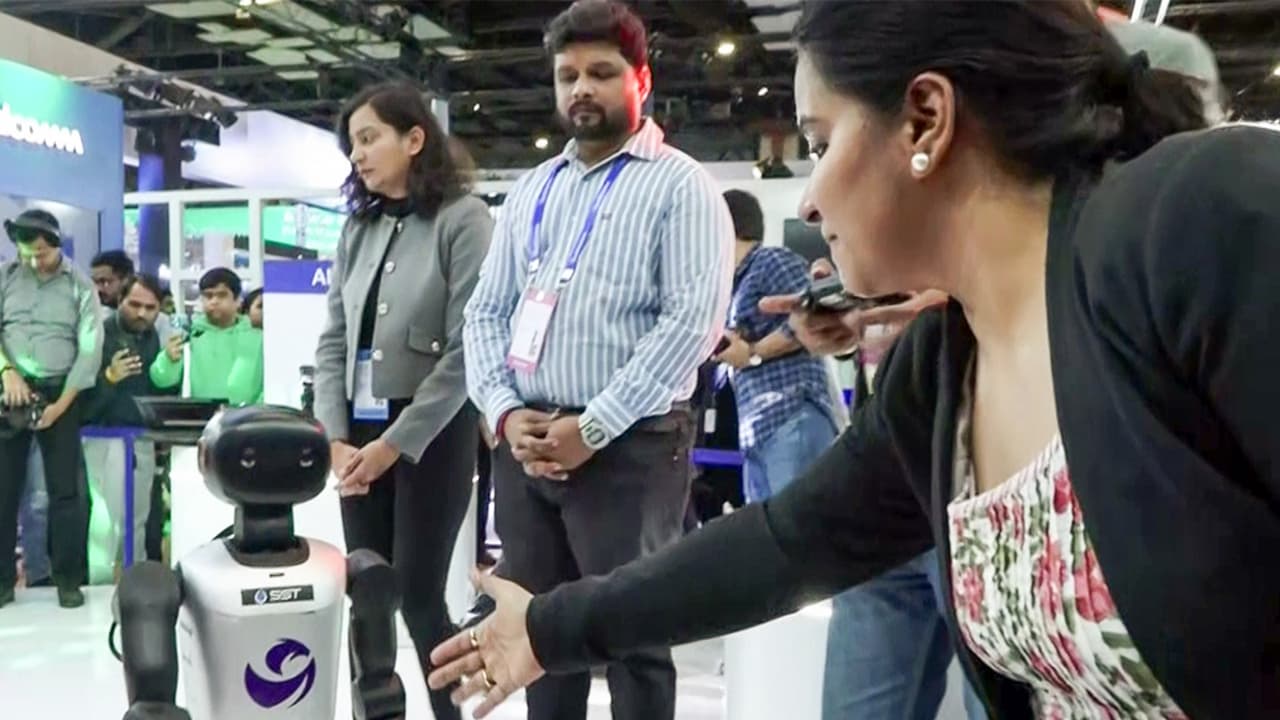
How close are we to the sci-fi vision of autonomous humanoid robots? I visited 11 companies in five Chinese cities to find out By Chang Che. Read by Vincent Lai Continue reading...

#TECH
Product showcase: LuLu reveals unauthorized outbound connections from Mac apps
helpnetsecurity55d ago

Product showcase: LuLu reveals unauthorized outbound connections from Mac apps

LuLu is a free, open-source firewall for macOS that lets you control which apps are allowed to send data from your computer. macOS includes a built-in firewall, but it mainly handles incoming connections. LuLu also monitors outgoing traffic. Installing and setting Up LuLu After downloading and installing the app, I allowed the LuLu Network Extension in macOS Settings. I then followed the configuration process. When I launched the app for the first time, the Settings ... More → The post Product showcase: LuLu reveals unauthorized outbound connections from Mac apps appeared first on Help Net Security .

#TECH
financialtimes55d ago

Inside China’s plans to fight in space

From seizing satellites to striking Earth from orbit — Beijing is developing dual-use capabilities in an intensifying arms race with the US

#ECONOMY