
Financial News

dubaicityguide52d ago
Maktoum Bin Mohammed Meets With CEO Of CVC Capital Partners
During the meeting, the two sides discussed new opportunities for cooperation to advance the growth of the financial services sector in the UAE and the broader region. [Wired by: DubaiCityGuide.com - A Cyber Gear Company]
#ECONOMY

investing_in52d ago
DBS Q1 net profit rises 1%, beats expectations on wealth management strength
DBS Q1 net profit rises 1%, beats expectations on wealth management strength
#CRYPTO

guardian52d ago
Is Nigeria Considered a Rich or Poor Country?
Is Nigeria considered a rich or poor country? Nigeria is a lower-middle-income nation with Africa's largest GDP but 63% poverty rate.
#COMMODITIES

investingnews52d ago
Quarterly Activities and Cashflow Report - March 2026
Asara Resources (AS1:AU) has announced Quarterly Activities and Cashflow Report - March 2026Download the PDF here.
#COMMODITIES

opalesque52d ago
Ackman's Pershing Square drops as retail demand falls short
Bill Ackman's new vehicle saw a weak market debut, with retail demand failing to meet expectations. The performance raises questions about appetite for hedge fund-style products among individual investors. It also highlights the challenges of translating institutional strategies to retail markets.... Article link
#CRYPTO

ibtimes52d ago
Major Trump Business Fail: Report Claims Saudi Donors Pull Aid While Faithful MAGA Base Loses 97%
Donald Trump's brand faces scrutiny as LIV Golf funding ends and his meme coin drops 97%, challenging his influence beyond politics.
#CRYPTO
afaqs52d ago
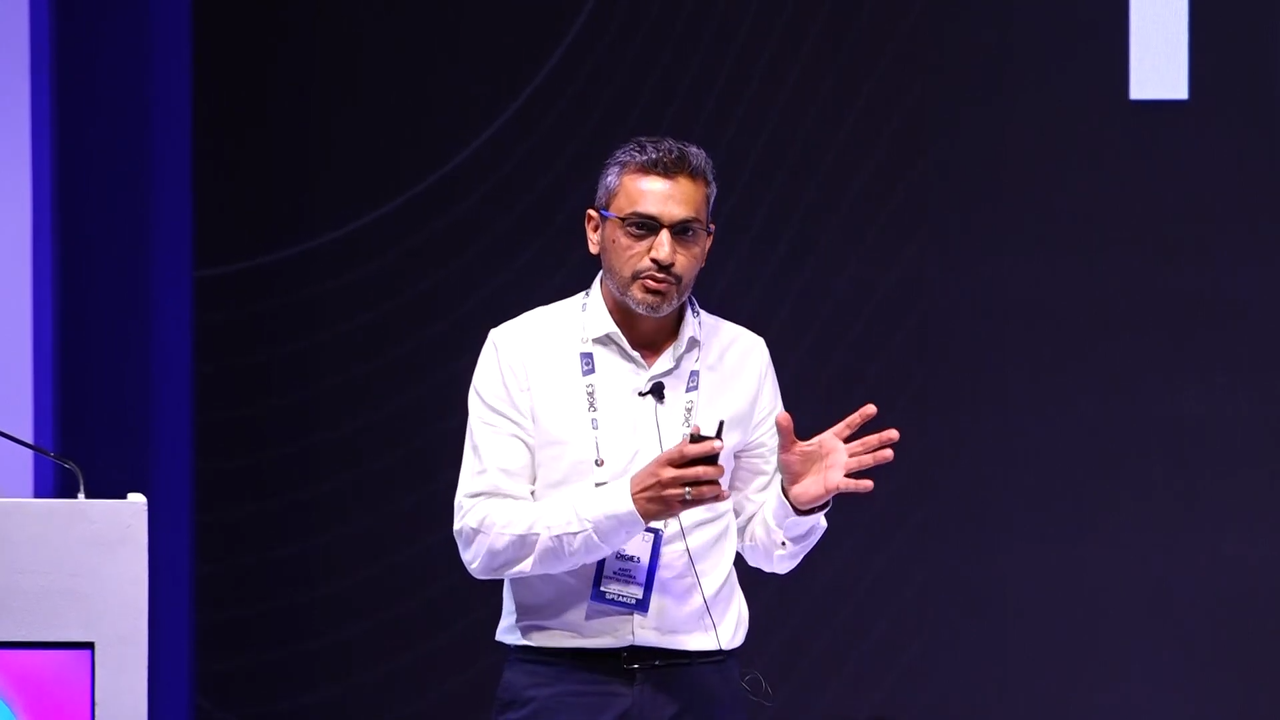
AI is not the enemy, stagnation is: Amit Wadhwa’s blunt take on agency survival in an AI world
Every few years, the agency world finds itself staring at a new disruption. This time, the stakes feel higher. Artificial intelligence is not just another tool, it is reshaping how ideas are created, distributed, and measured. Unsurprisingly, it has triggered a wave of unease across the ecosystem. At the 10th edition of afaqs! Digies Digital Awards and Conference , held on March 26, 2026, at The Westin, Gurgaon, Amit Wadhwa, chief executive officer, Dentsu Creative , addressed this tension head-on in his closing keynote on The Future of Agencies – Thriving in a World of AI & Automation . Wadhwa did not dismiss the anxiety. He acknowledged it, framed it, and then began to dismantle it. “Why are we talking about this? The reality is, it stems out of fear. Everyone in this industry is thinking about whether we will be relevant, whether jobs will stay, whether remuneration will come down,” he said. “This is possibly one of the biggest changes we have seen, not just in our industry but across industries.” Yet, his argument was clear: disruption is not new. What matters is how agencies respond to it. Every disruption feels existential until it isn’t To make sense of AI, Wadhwa zoomed out. Industries, he argued, have always evolved through waves of transformation. What feels like an existential threat in the moment often becomes a stepping stone to something larger. “Change is not new,” he said. “The entire economy once ran around horses. Then cars came. Did the world end? No. It evolved into something bigger.” Advertising, too, has undergone similar shifts. From long-copy print ads to radio, from television to tech-driven experiences, each transition demanded adaptation. “Our industry has seen many such ‘car moments’. Print to radio, radio to television, television to tech,” he noted. “Agencies didn’t become irrelevant. They became more important, but only for those who changed with the change.” AI, in his view, is simply the next, albeit larger, version of that transition. The choice remains the same: resist or adapt. AI can answer, but it cannot ask Much of the fear around AI stems from its expanding capabilities. It can write, design, analyse data, and even generate media plans in minutes. But Wadhwa drew a sharp line between capability and judgment. “AI will give you lots and loads of answers,” he said. “What it will not do is ask the right questions. The right questions sit with us.” That distinction, he argued, is where agencies continue to hold their edge. Brand building is not just about outputs, it is about interrogation. About knowing what to ask, what to challenge, and what to prioritise. “I feel the best prompt person in a creative agency would be the creative or the strategy person, because they know exactly what builds brands,” he said. At the same time, he cautioned against complacency. The role of agency professionals will evolve. Familiar skills will need to be reconfigured, not abandoned. “Will they keep doing what they’re doing? No, they have to change. They need to understand these tools.” From fragmentation to integration If AI is forcing one structural shift in the agency world, it is this: the dismantling of silos. Over the years, agencies have splintered into increasingly specialised units. Creative, media, digital, influencer, performance, each carving out its own territory. In the process, their influence over the client’s business often diminished. “We broke ourselves into such small parts that we started becoming insignificant,” Wadhwa observed. “We had 2.2 percent or 1.1 percent of the client’s share.” AI, paradoxically, is reversing that fragmentation. “What AI is doing is bringing everything back together. It is the great leveller,” he said. “The creative person now understands media. The media person understands creative. Everyone is looking at performance, insights, and outcomes together.” This reintegration, he suggested, is not optional. It is already underway across large networks and will increasingly define how agencies operate. “Every agency group will move in that direction. And even smaller agencies doing well will start owning the entire brand journey,” he added. Collaboration over competition Another mindset shift Wadhwa emphasised was how agencies choose to view AI itself. As a threat, it shrinks possibilities. As a collaborator, it expands them. “If we look at AI as competition, we will shrink,” he said. “This is the age of collaboration.” He drew parallels with creative industries where collaboration has become a norm rather than an exception. The same principle, he argued, applies to technology. “When two come together, there is magic,” he said. “AI is not just about efficiency. It can bring magnificence in what we create and how we create.” The implication is subtle but important. Agencies that lean into AI as a partner will likely unlock new creative and business possibilities. Those that resist it risk being left behind. The rise of the hybrid thinker If the structure of agencies is changing, so is the profile of the talent that will power them. Wadhwa was unequivocal about what the future demands: hybrid thinking. “You don’t want someone who understands AI but not brands. And you don’t want someone who understands brands but refuses to embrace change. That is the worst combination,” he said. Instead, agencies must cultivate professionals who can straddle disciplines. “We are looking for hybrid thinkers. People who are comfortable with data and storytelling. Who understand media and creative. Who use AI but also trust their instinct.” This shift, he stressed, is not limited to younger talent. “It’s not about juniors knowing tech. Everyone needs to know it. I need to know it. You need to know it.” The hybrid model, in his view, is not just a hiring strategy. It is a survival strategy. Reclaiming the role of growth partner Beyond tools and talent, Wadhwa pointed to a deeper opportunity: reclaiming the agency’s role in the client relationship. Over time, agencies have drifted from being strategic partners to execution units. AI, he suggested, offers a chance to reverse that drift. “Clients are also changing. They want someone who can guide them through this change,” he said. “If we are integrated and owning the full journey, we can go back to being true partners.” He recalled a time when agencies operated with a stronger sense of ownership. “I used to work on a brand where I could take decisions on behalf of the client. That ownership has reduced. This is our chance to go back.” The convergence of brand building and business impact, particularly through performance marketing, further strengthens this role. “We are not just building brands anymore. We are impacting business,” he noted. A more optimistic future than feared Despite acknowledging the scale of disruption, Wadhwa’s closing note was unmistakably optimistic. “I feel there has never been a better time,” he said. “We can do more creatively, we are more connected, and we can impact business directly.” His prescription for agencies was distilled into three ideas: be hybrid, be integrated, and stay open. “We are worried about the changes that have already come. There is much more that will come,” he said. “If we are not open, we will be defunct very soon.” For an industry prone to nostalgia, his message was a quiet nudge forward. The past may feel reassuring, but the future, he argued, is far more expansive. “I am worried, but I am more optimistic than worried,” he concluded. “The best is yet to come.” We would like to thank our partners: Presenting Partner: Creativefuel Gold Partner : SocioClout Co - Partners: Apptrove, Comscore, Lemma, Clinikally, and Roshan Space Entertainment Partner: Miss Malini
#COMMODITIES

bitcoinworld52d ago
Parallel Web Systems Hits $2B Valuation: The AI Agent-Tool Startup’s Meteoric Rise
BitcoinWorld Parallel Web Systems Hits $2B Valuation: The AI Agent-Tool Startup’s Meteoric Rise Parallel Web Systems, the AI agent-tool startup founded by former Twitter CEO Parag Agrawal, has achieved a $2 billion valuation just five months after its last major funding round. The company announced a $100 million Series B led by Sequoia, with participation from existing investors including Kleiner Perkins, Index Ventures, Khosla Ventures, First Round Capital, [...] This post Parallel Web Systems Hits $2B Valuation: The AI Agent-Tool Startup’s Meteoric Rise first appeared on BitcoinWorld .
#CRYPTO
opalesque52d ago
How Bill Perkins climbed the rungs of the trading world to start his own hedge fund
Bill Perkins' career journey highlights the path from trader to hedge fund founder, emphasizing persistence and adaptability. His experience reflects broader trends in the industry where individual track records and networks play a key role. The story offers insight into the personal side of hedge f... Article link
#COMMODITIES

investing_in52d ago
SoftBank plans to list AI firm Roze in the US at up to $100 bln valuation- FT
SoftBank plans to list AI firm Roze in the US at up to $100 bln valuation- FT
#CRYPTO

investing_in52d ago
BioCardia CEO Peter Altman buys $5,550 in common stock
BioCardia CEO Peter Altman buys $5,550 in common stock
#CRYPTO#COMMODITIES