
kathmanduposthace 149d
Villagers find a livelihood in motorcycle repairs
As motorcycle use has increased in villages, demand for repair services has grown.
#TECH
As motorcycle use has increased in villages, demand for repair services has grown.

Hundreds of artists have signed a petition calling on AI firms to properly compensate creators for their work.

Embrace a day full of joy and ease, thanks to the Moon and Jupiter casting a harmonious vibe. Revel in quality moments with family and friends, expect seamless achievements in your work affairs, and enjoy a financial uplift, possibly through new car investments or support from parents. Your well-being is stable, with the love of a nurturing mother providing comfort.

The device can produce a 180-inch image from just 13 feet away.

BELTON — Bell County taxpayers have two extra days to pay their property taxes this year. Penalty and interest charges begin to accrue immediately for payments received or postmarked after the deadline.

This mission which was held from January 19 to January 22 looked at tapping into prospects in India’s fast-expanding green economy, according to a press release

KUALA LUMPUR: The MADANI government’s bold measures to reinforce the economy has proven to be a positive reset, culminating in the ringgit breaking through the psychological barrier of 4.0 versus the US dollar and reaching a more than seven-year high of 3.99 in intra-day trading. Financial reforms coupled with structural adjustments and policy recalibration have borne [...]

Figure Technology Solutions (NASDAQ: FIGR) has recently received a number of price target changes and ratings updates: 1/14/2026 – Figure Technology Solutions had its price target raised by analysts at Piper Sandler from $55.00 to $75.00. They now have an “overweight” rating on the stock. 1/13/2026 – Figure Technology Solutions had its price target raised [...]

Sen. Kirsten Gillibrand, D-N.Y., is "very optimistic" the Senate Agriculture Committee's updated legislation to regulate cryptocurrencies will advance, even though Republicans have yet to reach a deal with Democrats."Senators have been working on a bipartisan basis for the last six months pretty...

Ahead of a hearing next week to debate and vote on a sweeping crypto bill, members filed several changes to the legislation.
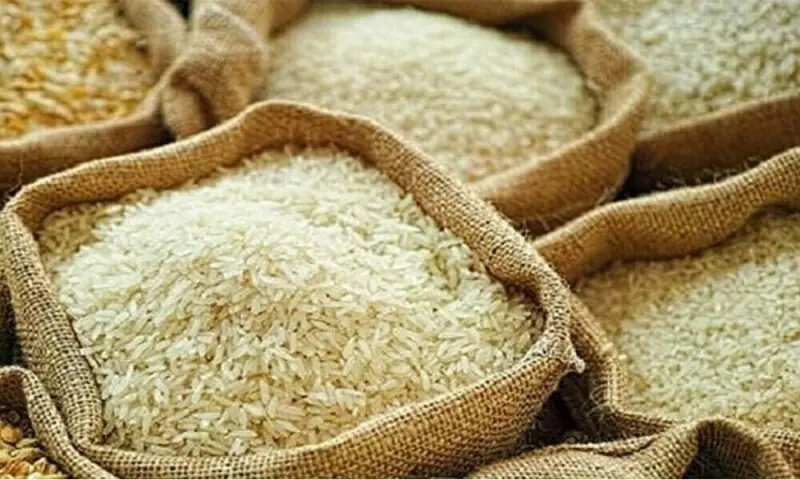
ISLAMABAD: The Ministry of Commerce (MoC), in consultation with the State Bank of Pakistan (SBP), Pakistan Single Window (PSW), and Customs, is framing a stringent mechanism to prevent misuse of the Rs15 billion financial assistance approved for rice exporters for a three-month period, sources close to the Secretary Commerce told Business Recorder.The Export Development Board (EDF), chaired by the Commerce Minister, approved the financial assistance for the rice sector despite opposition from several board members.Chairman of the Rice Exporters Association of Pakistan (REAP), Faisal Jahangir, said rice is Pakistan’s second-largest export after textiles and a critical source of foreign exchange, rural employment, and agri-industrial activity.READ MORE: Industries hit back at decision to extend over Rs15bn to rice exportersHe noted that rice exports rose from USD 2.04 billion in FY2021 to USD 3.93 billion in FY2024 due to temporary global supply disruptions, but eased to USD 3.35 billion in FY2025 as major suppliers re-entered the market.The decline has intensified in the current financial year, with exports during July–December falling by approximately USD 854 million year-on-year. Of this, non-basmati rice accounted for USD 716 million, while basmati exports declined by USD 138 million, reflecting a broad-based loss of competitiveness across both premium and volume segments.Global oversupply, led by India’s return to the export market with heavy subsidies, has depressed prices and widened the price gap. Indian basmati is priced at around USD 850–900 per metric ton, compared to USD 1,150–1,275 per metric ton for Pakistani basmati.At the same time, elevated domestic paddy prices, high financing costs, stock accumulation in importing countries, and regional trade frictions have further constrained exports, creating liquidity stress across the value chain.Jahangir emphasized that production is not the constraint, as Pakistan has an exportable surplus of about 4.1 million metric tons, translating into near-term export potential of around USD 2 billion if short-term competitiveness issues are addressed. He requested financial support until June 30, 2026, at the rate of 9 percent for basmati and 3 percent for non-basmati rice exports.Chief Executive of TDAP, Faiz Ahmad Chadhar, observed that last year’s export increase was primarily due to India’s export ban, which benefited Pakistani exporters. With India’s return, the decline in global share was not unexpected. He added that farmers have already sold their crops, raising concerns that the subsidy may benefit only a few supply-chain participants.Chairman of PHMA, Babar Khan, stressed that DLTL is a federal policy initiative under the Ministry of Commerce and not an EDF matter. He opposed the proposal, arguing that similar challenges are faced by the value-added apparel and textile sectors.PHMA called for a uniform and equitable policy framework for all export sectors and recommended returning EDS collections to exporters rather than cross-subsidizing a single sector. He also pointed out that the meeting was convened at short notice and no detailed proposal had been shared in advance.Bilal Shahid Tata, CEO of Tata Best Food Ltd, also opposed the proposal, stating that such subsidies contradict the mandate of the EDF. He warned that approving the scheme could trigger similar demands from other sectors and noted that subsidies are not a long-term solution.Instead, he emphasized EDF’s role in addressing structural issues such as R&D, branding, technology upgradation, and skill development.Board members suggested that REAP submit proposals focused on improved crop management, water-efficient farming techniques, and higher per-hectare yields, warning that short-term subsidies could distort domestic markets and fail to address long-term competitiveness.Chairman of the Fruit and Vegetable Exporters, Importers & Merchants Association, Waheed Ahmed, said similar challenges are faced by fruit and vegetable exporters and stressed the need for long-term planning and unbiased support across all exporting sectors.Secretary Commerce, who is also Vice Chairman of the Board, informed members that in November 2025 the Prime Minister directed the MoC and relevant ministries to engage with chambers and associations to identify export challenges.He noted that Pakistan’s exports have declined during the current year, with the rice sector being the most affected. Rice exports have dropped by nearly 50 percent, accounting for almost 60 percent of the total export decline of USD 1.4 billion.He added that the Prime Minister has directed the Finance Division to provide a Rs20 billion federal grant to EDF in the next financial year, addressing concerns over EDF replenishment.Executive Director General (EDG) MoC, Muhammad Ashraf, said REAP had shared data with the ministry’s Agro Wing, based on which a presentation was developed. He stated that rice production increased from 9.02 million MT to 9.34 million MT, with an export surplus of 0.6 million MT of basmati and 3.5 million MT of non-basmati rice.Export volumes declined from 2.9 million MT to 1.8 million MT during the first six months of the current year, while the average price gap of USD 100–150 per MT continues to hurt competitiveness.He estimated that Rs30 billion would be required for a six-month scheme.The Commerce Minister, as Chairman of the Board, recommended approval of the proposal in light of the Prime Minister’s directives and assured that EDF’s financial strength would not be compromised.The Secretary Commerce proposed approval of the scheme with a 90-day review to assess its impact on supply, demand, and pricing trends. He also directed that SBP, PSW, and Customs be consulted to launch the scheme through a digital payment system within a week to prevent mis-declaration and misuse.Following detailed deliberations, the Board approved funding of Rs15 billion at 3 percent for non-basmati and 9 percent for basmati rice on FOB value until June 30, 2026.The Board also approved increasing EDF’s annual budget to Rs27.3 billion and outlined strict monitoring, digital disbursement, and a mandatory 90-day performance review.Copyright Business Recorder, 2026
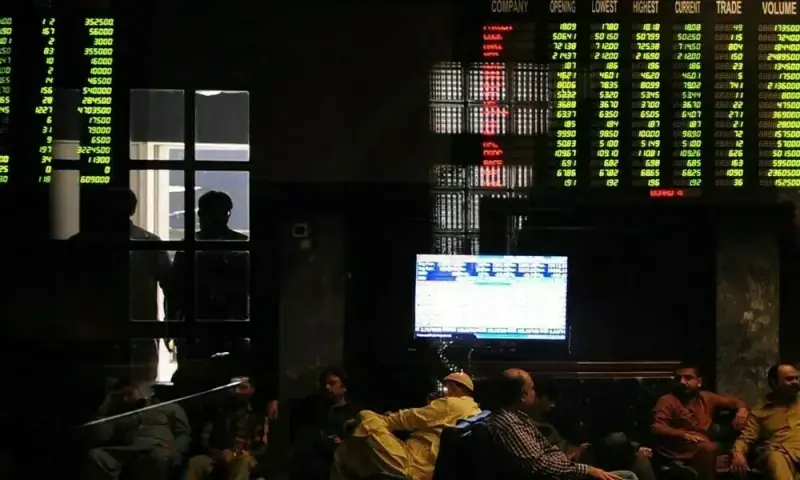
KARACHI: Pakistan’s capital market is set to enter a faster and more efficient era as the Pakistan Stock Exchange (PSX) transitions from a T+2 to a T+1 settlement cycle, effective February 9, 2026, marking a major reform aligned with international best practices.The move, spearheaded by the Securities and Exchange Commission of Pakistan (SECP), will reduce the time required to complete securities transactions, allowing trades to be settled within one business day instead of two.Market participants say the initiative represents a significant step toward enhancing operational efficiency, risk management, and investor confidence.Under the new settlement framework, shares purchased on a trading day will be credited to investors’ accounts on the next business day, while sellers will receive funds within 24 hours of trade execution. Previously, the settlement process required two business days, often tying up capital and limiting trading flexibility.Industry experts believe the transition will substantially reduce counterparty risk by narrowing the settlement window and minimizing the chances of default. Faster settlements are also expected to improve market liquidity, enabling investors to redeploy capital more quickly and manage portfolios with greater agility.The shift to T+1 is anticipated to enhance the overall attractiveness of the Pakistan Stock Exchange, particularly for foreign institutional investors who increasingly favour markets with shorter settlement cycles. By adopting this model, Pakistan joins leading global markets such as the United States and India, both of which have already implemented T+1 settlements.The successful rollout of the new system is the result of coordinated efforts among key market institutions, including the National Clearing Company of Pakistan Limited (NCCPL) and the Central Depository Company (CDC), along with industry stakeholders such as the Mutual Funds Association of Pakistan (MUFAP), the Pakistan Stock Brokers Association (PSBA), and the Pakistan Banks Association.Leading equity markets such as the USA, China, Mexico, Argentina, and India have already embraced faster settlement cycles, while the European Union is planned to transition in October 2027.Regulators and market participants view the reform as a critical milestone in the modernization of Pakistan’s capital markets, reinforcing the country’s commitment to building a more resilient, transparent, and globally competitive financial ecosystem.Copyright Business Recorder, 2026