Panel

Noticias Financieras

Spending cycle leaves little respite
theborneoposthace 136d

Spending cycle leaves little respite

MOUNTING expenses in the first three months of 2026 weigh heavily on the minds of many Malaysians, especially those from the low- and medium-income groups. Even before the burden of school-related expenses begins to ease, Ramadan is set to arrive, followed closely by Hari Raya Aidilfitri in March. They are not complaining, but it would [...]The post Spending cycle leaves little respite appeared first on Borneo Post Online.

#ECONOMY
Vonage Unlocks Agentforce’s Messaging Powerhouse
webpronewshace 136d

Vonage Unlocks Agentforce’s Messaging Powerhouse

Vonage's new integration embeds SMS, WhatsApp and RCS into Salesforce Agentforce Marketing, enabling AI-powered two-way conversations and personalized journeys at scale for enhanced engagement.

#TECH
Sealion 6 is impressive
geelongindyhace 136d

Sealion 6 is impressive

BYD’s Sealion 6 is one of the new breed of super hybrids. So called because they are plug-in hybrids with [...]

#TECH
WEEKLY RECAP: Trump at center stage in Davos
biztochace 136d

WEEKLY RECAP: Trump at center stage in Davos

The week ending January 25 was marked undoubtedly by the World Economic Forum (WEF) in Davos, with United States President Donald Trump putting on the greatest spectacle. During the summit, Trump form...

#TECH
Could you be fined for AI content? What to know about Korea's latest technology law.
koreajoongangdaily_joinshace 136d

Could you be fined for AI content? What to know about Korea's latest technology law.

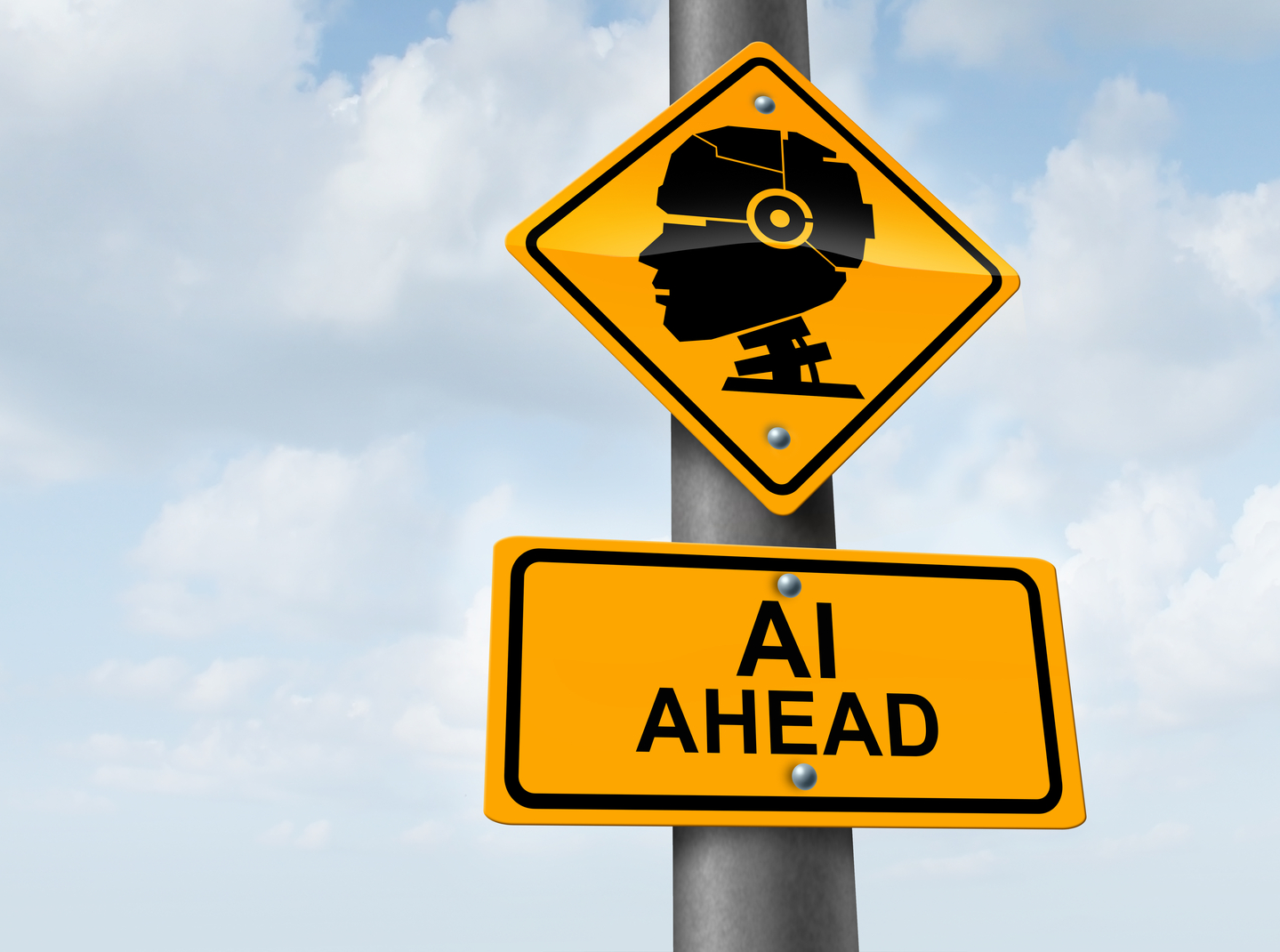
An AI warning sign [GETTY IMAGES BANK] [EXPLAINER] Korea is now the first country to enforce a comprehensive and nationwide artificial intelligence law. With the measure taking effect on Thursday, uncertainty remains over how its provisions will be interpreted and applied. The law, formally titled the Framework Act on the Development of Artificial Intelligence and the Establishment of Trust, was passed by the National Assembly in December, 2024. It aims to protect human rights and dignity by regulating AI-generated content while promoting what the government calls the sound development of the industry. Related ArticleKorea's groundbreaking AI law requires watermarks on generated content, but enforcement gaps remainKorean performers join global campaign to protect creative rights in AI eraKorea becomes 1st nation to enact comprehensive law on safe AI usage The legislation includes a one-year grace period intended to give companies time to adjust before penalties are imposed. The move comes as governments around the world race to regulate the rapid advance of AI. The European Union adopted its own AI Act in 2024, and the law entered into force on Aug. 1 of that year, though most of its provisions will be phased in gradually through 2027. Why was the law adopted? Korean officials say the law is meant to strike a balance between fostering innovation and establishing safeguards at a moment of explosive growth in the AI sector. The act lays out principles for AI-related policymaking and imposes obligations on businesses that develop or deploy AI systems. The law also comes as public concern rises over crimes involving manipulated digital content, especially deepfake content. During a nationwide police crackdown from November 2024 to October 2025, authorities recorded 3,411 cyber sexual crime cases, of which 35.2 percent involved deepfake material. A passerby walks past a poster warning of the harms of deepfake content in Daejeon on Aug. 30, 2024. [NEWS1] What are the main provisions? The law introduces several core elements, including rules governing transparency requirements for AI-generated content and so-called high-impact AI systems, penalties for violations and a requirement that foreign AI companies that meet certain benchmarks designate a domestic representative in Korea to serve as a point of contact with regulators. That last requirement applies only to companies that meet at least one of three thresholds: global revenue of 1 trillion won ($680 million), domestic revenue of 10 billion won or an average of more than one million daily users in Korea. In practice, officials acknowledge that the provision is likely to apply only to a handful of global technology companies, such as Google and OpenAI. On the industrial policy side, the law provides a legal basis for government support for AI research and development, assistance for AI adoption and commercialization, support for startups, the promotion of AI convergence across industries, the cultivation of specialized talent and the development of AI data centers. Notably, however, the law does not include provisions specifically addressing the protection of minors who use AI services. Key provision of the AI Basic Act [YUN YOUNG] Who is penalized for failing to disclose AI-generated content? Under the law, penalties apply to providers of AI services rather than end users. This includes foreign companies that offer AI products or services to users in Korea. Individual consumers are not subject to punishment. The utilization of AI tools in itself is not grounds for liability; responsibility rests with AI developers and service operators, not with private users, broadcasters or publishers that rely on those tools. What transparency requirements apply? According to the Ministry of Science and ICT, transparency obligations vary depending on the service environment and the type of AI-generated output. For content delivered within a service platform or used within a service user interface, the providers are required to let users know that AI was used to produce content, with both general AI-generated material and deepfake content clearly identified. The visibility of the Gemini logo on its website while users input prompts is one example. When gamers engage in an AI-based chat service on a gaming platform, the service provider is required to clearly note that the response is generated by AI. Disclosure may take the form of a logo or explanatory text accompanying the content, an advance notice to users that generative AI is being used or a direct watermark on the output. A screencapture of Google’s Gemini shows its logo and an explicit disclosure of AI use, cited by the Ministry of Science and ICT as an example under the AI Basic Act. [SCREEN CAPTURE] For content distributed outside a platform — content that can be downloaded and shared externally — the requirements differ. General AI-generated material must be disclosed in a way that is perceptible to users, either through visible watermarks or through nonvisual methods such as audio notices or disclosure messages displayed during downloads. For example, if AI-generated text files were shared, such as from ChatGPT, the file must explicitly state that the text came from the service, or the file's metadata must contain an disclaimer. If nonvisual approaches such as metadata are used, the provider should notify users either through text or audio that the file was generated by AI during downloading. Deepfake content distributed externally must be labeled in a manner that is clearly recognizable to humans. In cases involving artistic or creative works, the law allows for alternative methods that do not interfere with exhibition or appreciation. For deepfake content distributed externally, rules are medium-specific. Audio content must include an announcement at the beginning indicating that it was generated by AI. Images must display a visible watermark, such as a logo. Video content must carry a watermark throughout its entire playback. What qualifies as 'high-impact AI'? The law defines high-impact AI as systems that are likely to have a significant effect on human life, physical safety or fundamental rights. It applies to systems used in at least 10 designated areas, including health care, energy, drinking water, nuclear power, criminal investigations, hiring, loan screening, transportation, public services and education. Examples cited by the government include vehicles equipped with Level 4 fully autonomous driving technology or higher. As debate has grown over how the designation should be applied, government officials have emphasized that the definition does not extend to AI systems in which humans retain meaningful control over final decisions. At the current level of technological development, this means that only systems such as fully autonomous driving technologies and certain hyperscale AI models would be classified as high-impact, while AI tools used to support decision-making, such as in loan approvals, would generally fall outside the scope if a human makes the final determination. To address uncertainty among businesses, the government has said it plans to establish an “AI Basic Act support desk” to provide consultations and guidance on whether systems qualify as high-impact AI and on how companies should meet their compliance obligations. Under Article 33 of the new law, business operators are required to review in advance whether the AI falls under the high-impact category, and if necessary, ask the ministry for confirmation. What obligations do operators of high-impact AI face? Operators of high-impact AI systems are required to establish and operate risk management plans and implement measures to protect users. They must also develop explanations that describe, to the extent technically feasible, the final outcomes produced by AI systems, the main parameters used to generate those outcomes and an overview of the training data involved. In addition, companies must assign human personnel to oversee and manage high-impact AI systems, prepare and retain documentation verifying the safety and reliability measures they have taken and comply with any additional requirements deliberated and approved by the government’s AI oversight committee. Lawmakers pass the revised AI law at the National Assembly in Yeouido, western Seoul, on Dec. 30, 2025. [YONHAP] How will the government enforce the law? The Ministry of Science and ICT is authorized to conduct fact-finding investigations if violations are reported or suspected. These may include requests for documents or on-site inspections by public officials. Companies that refuse to cooperate may face administrative fines. To minimize confusion during the initial rollout, the government has said that such investigations will be suspended during the one-year grace period. Even after that period ends, officials say enforcement will be kept to a minimum and will be reserved for exceptional cases involving serious social harm, such as loss of life or major human rights violations. Is the law ready to work as intended? Amid lingering confusion over how the law will be implemented, experts say the framework will require further refinement. “It is true that multiple revisions are needed,” said a source familiar with the discussions who wished to remain anonymous, noting that the presidential National AI Strategy Committee has already proposed a series of improvements. Those recommendations include easing certain obligations on AI service operators, particularly during the operational phase, and further differentiating compliance requirements based on how AI systems are used in practice. Business preparedness for the AI law [YUN YOUNG] The committee has also called for the creation of a cross-ministerial coordination mechanism to encourage ministries overseeing sectors designated as high-impact AI areas to revise their existing laws in line with the AI transition. Once those revisions are completed, the Ministry of Science and ICT would review additional enforcement decrees under the AI Basic Act to eliminate overlapping regulations, according to the proposal. Industry preparedness remains limited. Only 2 percent of 101 Korean AI startups surveyed last month said they had established a substantive compliance system to respond to the new law, according to a report by the nonprofit Startup Alliance. What penalties apply? Violations of transparency requirements, failures to designate a domestic representative when required or noncompliance with government investigations may result in administrative fines of up to 30 million won. No penalties will be imposed during the grace period. BY CHO JUNG-WOO [cho.jungwoo1@joongang.co.kr]
#TECH
Kospi passes 5,000: Is the rally just getting started?
koreajoongangdaily_joinshace 136d

Kospi passes 5,000: Is the rally just getting started?

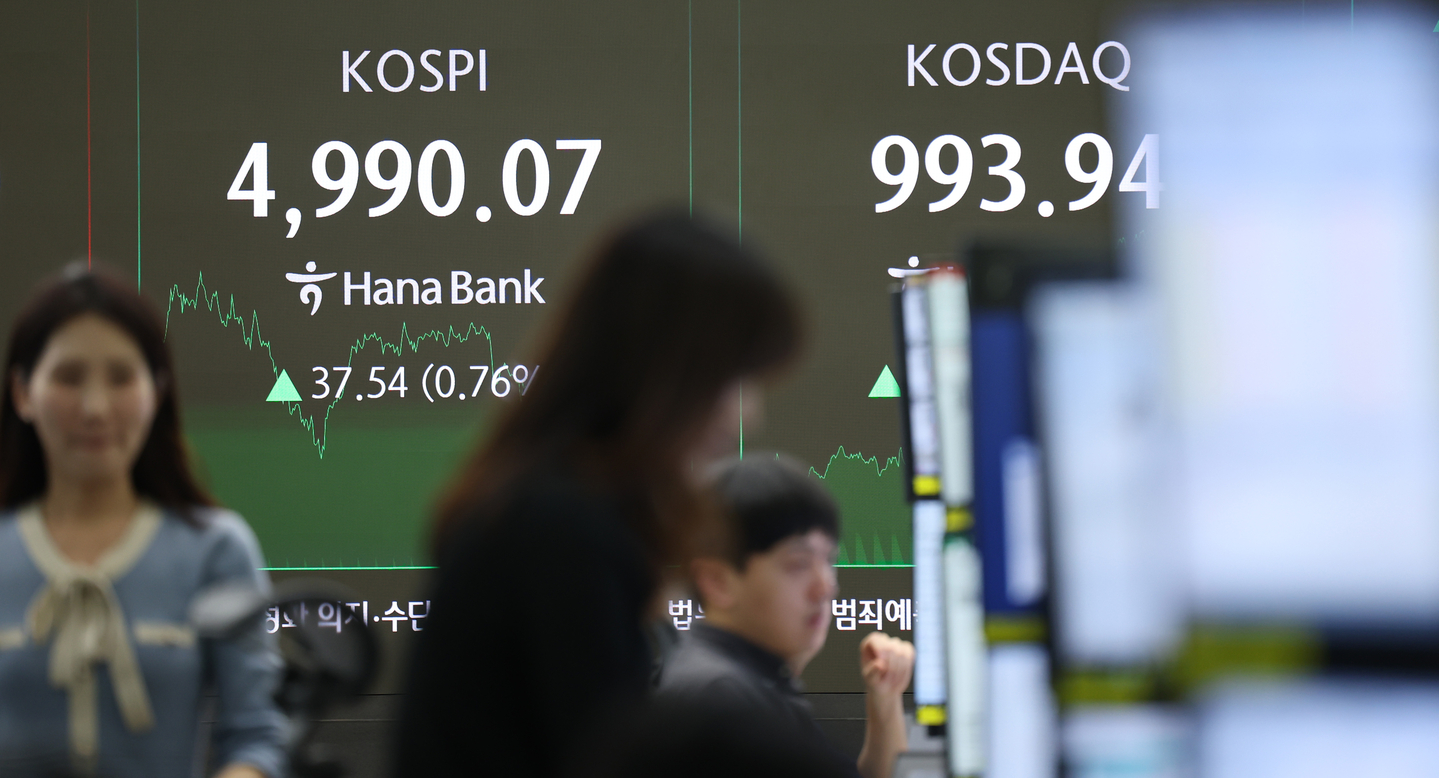
Electronic display boards at Hana Bank dealing room in central Seoul show financial markets on Jan. 23. [JOONGANG ILBO] The Kospi has broken through the 5,000-point threshold, but doubts remain over whether the rally is sustainable. While some expect to see further gains, potentially beyond 5,500 points, others warn of a possible pullback. Experts generally say the surge is built on solid foundations — strong corporate earnings and the government’s market-friendly policies. But critics warn of a potential market correction, pointing to performance overly concentrated in specific sectors, such as semiconductors, and the unproven run-up in certain stocks like Hyundai Motor that may not be supported by underlying earnings. Related ArticleKospi hits 5,000, but not yet time for a victory lap (KOR)Kospi tops 5,000, but ascent precarious on shaky real economyGov't pledges efforts to further boost Kospi after topping 5,000 mark After the Kospi surpassed 5,000 points on Thursday — just three months after breaking the 4,000-point milestone — the benchmark index closed up 0.76 percent at 4,990.07 points on Friday, led by institutions and foreigners. Further upside vs imminent correction The Kospi nearly doubled in just a year, far outpacing the growth of major indexes in the United States, Europe and Japan. Yet, analysts say there is still potential for further gains, citing the ongoing semiconductor boom and growing optimism that the auto sector will contribute to the rally. Optimists believe stronger earnings from the two major chipmakers — Samsung Electronics and SK hynix — could push the index even higher. “Semiconductor companies’ earnings this year are projected to come in at surprise levels, so it’s hard to say the recent Kospi rally has exceeded expectations,” said Park Seok-hyun, an analyst at Woori Bank. “There’s still plenty of room for further gains, with the index potentially climbing to 5,500 points this year.” Samsung Electronics is projected to record an operating profit of 145 trillion won ($98.89 billion) this year, up 233 percent from last year, driven by rising memory chip prices amid tight supply, according to KB Securities. It estimates SK hynix’s operating profit will jump 154 percent over the same period to 115 trillion won. The brokerage projects the index to range between 4,200 and 5,700 points, describing the recent milestone as the early phase of a structural upswing. “Last year, the market was largely driven by semiconductors, along with shipbuilding and defense. This year, the rally has broadened to include the auto sector, helping push the index to the 5,000-point mark,” Park added. Hyundai Motor shares have surged 70 percent this year, overtaking General Motors as the world’s fourth most valuable automaker on investor optimism over the life-size Atlas humanoid robot by Boston Dynamics, the robotics company owned by the automaker. The rally began earlier this month following the unveiling of the latest version of the humanoid robot, with momentum fueled by its signal that Hyundai Motor is evolving from a conventional automaker into a robotics-driven company. However, some warn that Hyundai Motor’s market could face a correction, describing the recent gains as speculative. “The sharp climb in the days leading up to the 5,000-point mark was largely driven by the auto sector, which is showing strong momentum,” said Huh In, an economics professor at the Catholic University of Korea. “However, because the rally is based on speculation over the potential earnings impact of Hyundai Motor’s investment in robotics, much of it has yet to be realized in concrete terms, making it vulnerable to significant volatility.” Zachary Jackowski, Vice President, General Manager of Atlas at Boston Dynamics, appears on stage with the ATLAS prototype robot during a press conference at the 2026 International CES, at the Mandalay Bay Convention Center in Las Vegas, Nevada, on Jan. 5. [UPI/ YONHAP] Key market influencers Major drivers of future market performance include the implementation of market-friendly policies and the U.S. economy. The government has pledged several ambitious policies to make the financial market more attractive and stable. These include the third revision of the Commercial Act, which mandates the cancellation of treasury shares, and the extension of foreign exchange trading hours from the current 2 a.m. to 24 hours starting in July — a major step aimed at upgrading Korea’s status in the Morgan Stanley Capital International (MSCI) index from emerging-market to developed-market status. This move is expected to attract net foreign inflows ranging from $5 billion to $36 billion. “Along with efforts to enhance shareholder returns through value-up initiatives and the road map toward inclusion in the MSCI developed market index, foreign investors are more likely to increase inflows and maintain long-term investments,” said Lee Won, an analyst at Bookook Securities. Another key factor that could shape market performance is the government’s sustained involvement — whether it be direct or indirect — in supporting markets, a trend that reflects broader global developments. "Whether through fiscal expansion or monetary policy, governments globally — from the United States to Japan — are stepping up interventions that could support markets, and Korea is likely to move in the same direction as well," said Hwang San-hae, an analyst at LS Securities, especially ahead of the local elections scheduled for June. Korea’s economy has entered a phase of large-scale fiscal expansion with this year's national budget set at 730 trillion won to stimulate economic growth and innovation. But any signs of weakening in the U.S. economy could also pull down the Kospi, as the index's leading companies are largely chip-reliant exporting firms. “If the U.S. economy were to turn around and economic indicators forced the Fed to cut rates, the market could move in the opposite direction,” Prof. Huh added. “But the likelihood seems low as the economy appears more stable than expected, looking at recent indicators, like the labor market.” BY JIN MIN-JI [jin.minji@joongang.co.kr]

#ECONOMY
End Of This Reaccumulation Phase Could Trigger Most Aggressive XRP Rally Ever
newsbtchace 136d

End Of This Reaccumulation Phase Could Trigger Most Aggressive XRP Rally Ever

XRP has spent most of the past few months trading with lower highs since July 2025, frustrating traders and compressing price action into an increasingly tight range. However, a technical breakdown shared by crypto analyst ChartNerd argued that what looks like stagnation may actually be the final preparation phase before a historic move. The price structure suggests something far bigger that sends XRP on its most aggressive rally in eight years, but the implications only become clear when the full setup is examined. Related Reading: Bitcoin Influencers Get Spotlight In X’s New ‘Starterpacks’ A 400-Day Rectangular Reaccumulation Still Holding Structure According to technical analysis done by ChartNerd, XRP’s price action has been locked inside a rectangular reaccumulation zone for about 400 days, and this has led to the formation of what looks like a rectangular bull flag on a macro timeframe. The technical chart shows a strong impulsive move from July 2024 to December 2024 acting as the flagpole, right when XRP peaked at the $3.4 price zone back then. This impulsive flagpole has been followed by a long period of sideways trading where XRP’s price has repeatedly respected a clearly defined support around $1.8 and resistance boundaries around $3.6. This type of structure is associated with reaccumulation within the support and resistance zones, especially when it is playing out after a sharp expansion move and holding for this length of time. Each dip into reaccumulation support has been absorbed, preventing any sustained breakdown and keeping the broader pattern intact. ChartNerd noted that the rectangular flag will be valid as long as this support level is defended, and this will activate the expansion journey. XRP Price Chart. Source: @ChartNerdTA on X Macro Breakout Projection Puts XRP Price Target At $23 According to ChartNerd, bearish participants are increasingly pressured by the fact that this fractal is still holding despite repeated attempts to invalidate it. The longer XRP’s price action is trapped inside the rectangle without breaking down, the more likely it becomes that the eventual resolution favors the dominant trend that preceded the consolidation. In this case, that trend was bullish, which strengthens the case for an upside breakout once resistance is cleared. If the rectangular bull flag resolves to the upside as projected, the chart outlines a breakout trajectory that would carry XRP into double-digit territory, with a long-term target region near $23. This price target projection is derived from the height of the flagpole extended from the top of the reaccumulation range. Related Reading: Crypto Meets Private Banking: UBS Weighs New Offering ChartNerd labelled this possible move as one of the most aggressive rallies XRP could see in seven to eight years. At the time of writing, XRP is trading around $1.92, meaning a move toward the $23 region would represent a gain of over 1,000% from current levels, which is a type of percentage expansion XRP has played out well in the past. Featured image from Unsplash, chart from TradingView

#CRYPTO
Trump's Energy Policy Backfires as Consumer Bills Soar
oilpricehace 136d

Trump's Energy Policy Backfires as Consumer Bills Soar

Despite President Trump’s big promises of driving down consumer energy bills, the cost of energy actually rose for consumers in 2025. Throughout his electoral campaign and during his first year in office, Trump pledged to slash Americans’ energy bills. However, his new approach to energy seems to have done the opposite, with higher prices expected for 2026 and beyond. Upon entering office for his second term, President Trump announced a state of energy emergency, quickly passing executive orders to curb the rollout of former-President...

#ECONOMY
Left-Wing NGOs Transition To Targeting 'Critical Economic Chokepoints' In Minneapolis
zerohedgehace 136d

Left-Wing NGOs Transition To Targeting 'Critical Economic Chokepoints' In Minneapolis

Left-Wing NGOs Transition To Targeting 'Critical Economic Chokepoints' In Minneapolis Left-wing nonprofit groups in Minneapolis appear to have moved beyond pressure campaigns targeting ICE agents and federal law enforcement, shifting from street protests/riots toward actions that may disrupt critical infrastructure on Friday. The apparent objective is to target economic chokepoints and critical infrastructure, a pressure tactic consistent with the color revolution playbook previously deployed by dark-money funded NGO networks aligned with the Democratic Party’s protest-industrial complex and financed by left-wing billionaire foundations.Local media outlet The Minnesota Star Tribune reported on Friday evening that "at a demonstration outside Minneapolis–St. Paul International Airport's main terminal, a Metropolitan Airports Commission spokesman said police arrested roughly 100 demonstrators."Following a morning demonstration outside Minneapolis–St. Paul International Airport's main terminal, a Metropolitan Airports Commission spokesman said police arrested roughly 100 demonstrators.📸 Elizabeth Flores/The Minnesota Star TribuneFollow updates here:... pic.twitter.com/h39Z5689IN— The Minnesota Star Tribune (@StarTribune) January 23, 2026Footage from the protest area appears to show demonstrators - mainly white liberal boomers - blocking the main access road to Terminal 1 at the international airport.We're not quite certain who organized the protest at the airport, but a flyer floating around social media appears to show the same left-wing nonprofit that organized 'No Kings' rallies across the country last year - largely seen as a failure because the mobilization effort only attracted white liberal boomers.Here’s the flyer showing that Indivisible Twin Cities and 50501, dark-money-funded NGOs, could've been the organizers of the event to shut down critical infrastructure:According to previous reporting by Peter Schweizer & Seamus Bruner of the Government Accountability Institute, the 'No Kings' protest brand was created by The Indivisible Project (or "Indivisible"). That entity and its eponymous offshoots - "Indivisible Civics," "Indivisible Action," "Indivisible East Bay," et al - sprung up as an activist mobilization machine in response to Trump's 2016 victory.Parsing through 990 filings: Indivisible Civics funds the Indivisible Project.As for Indivisible Project, the typical foundations that fund chaos nationwide also fund this entity.The evolution of the protest to now shut down critical infrastructure comes as left-wing NGOs are attempting an "economic blackout" across Minnesota. As we noted days ago, the state is being used as a testing ground by Marxist revolutionists who will replicate pressure campaigns that work in the metro area across every sanctuary city when spring rolls around.Left-Wing NGOs Plan "Economic Blackout" Across Minnesota As State Becomes Testbed For RevolutionLet's take a step back because the protest at the airport is a similar playbook that was used by revolutionary pro-Palestine groups in recent years that targeted critical economic chokepoints of the economy, from highways to bridges to airports and even land ports (read here). The goal of the protest industrial complex is not to help the cause; rather, it is all part of a sinister plan to collapse the nation from within. There is good news: Treasury Secretary Scott Bessent sat down with journalist Christopher Rufo earlier this month to discuss plans to investigate dark-money-funded NGOs sowing chaos nationwide.Among the topics discussed in the Bessent-Rufo interview were left-wing nonprofits, with Bessent acknowledging that "we are examining" NGO activities and funding structures...Bessent continued:Yes, yes, and yes. So, these groups that are engaging in this—we have the authority and are examining them. Because when you see these protesters, someone is financing them. There are safe houses. When you see the 300 people with the same laser that they're using to blind DHS agents in courthouses in Portland, someone bought those lasers.And again, what we do is follow the money—just like we followed it with the mafia, just like we follow it. We'll find out who's done this.I announced today that we are going to put in effect a whistleblower program. And my sense is that the rats will turn on each other.As I believe you reported—or someone talked about in a roundtable—one of the Somali fraudsters tried to bribe a juror with $120,000. What turned out, she'd been given $200,000 to bribe the jurors, and she skimmed. It's like the scorpion—it's in their nature.EXCLUSIVE: Treasury ⁦@SecScottBessent⁩ tells me that the Trump Administration will launch investigations into left-wing nonprofits that serve as a front for violent protests and criminal obstruction of ICE operations. It’s time to stop left-wing terrorism in America. pic.twitter.com/roorsk4XLA— Christopher F. Rufo ⚔️ (@christopherrufo) January 9, 2026Bessent said "rats," the question there is whether he was referring to the actual rodent, or an acronym for the Rockefeller Foundation (R), Arabella network (A), Tides Foundation (T), and Soros Foundation (S), some of the foundations that have been funding the protest industrial complex against President Trump and attempting to derail the America First agenda.Let's circle back to retired Lt. Gen. Michael Flynn's comments in late November:General Flynn Calls For National Address From Trump On Color Revolution ThreatAs spring and warmer weather approach, the protest industrial complex will be operating at full steam. It is time for the Trump administration to get ahead of these Marxist revolutionaries, whose main goal is a color revolution and regime change in the White House, the end of America First, and to collapse the nation from within. Tyler DurdenSat, 01/24/2026 - 16:55

#ECONOMY