Panel

Noticias Financieras

The age of digital currencies—II
brecorderhace 132d

The age of digital currencies—II

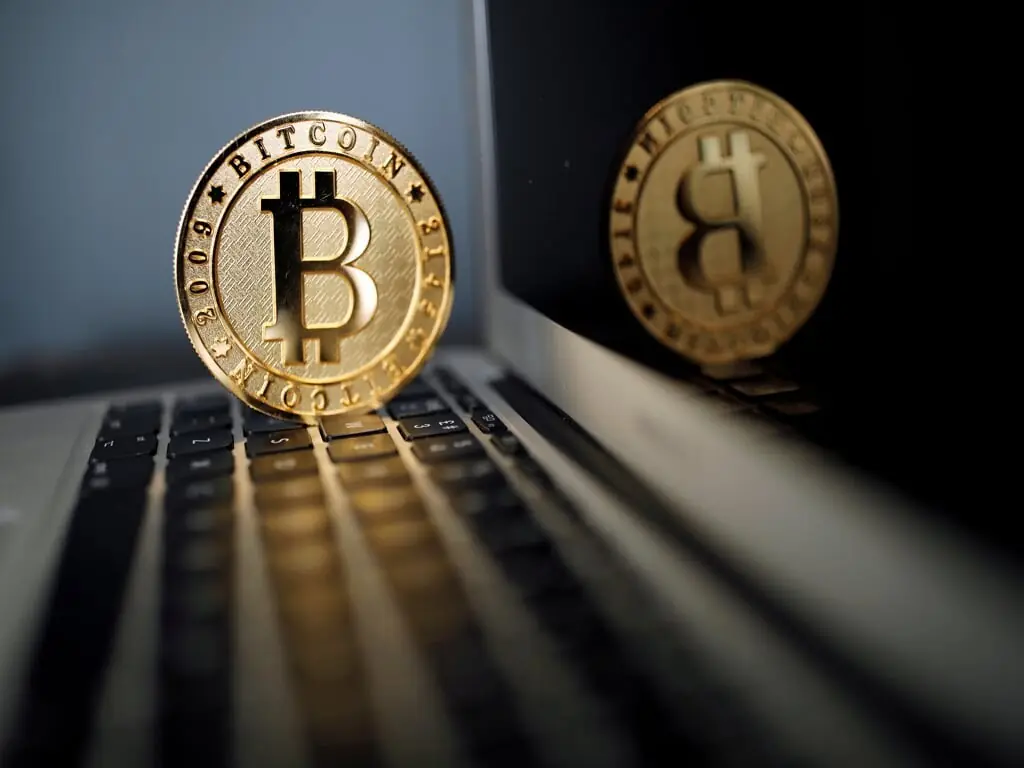
Pakistan is pivoting towards a proactive regulatory framework for digital assets, looking to unlock the immense value of this growing asset class. The challenge for today’s policymakers is clear: building an ecosystem that fuels economic growth without compromising financial integrity.With initiatives such as the formation of the Crypto Council and the Virtual Assets Regulatory Authority, Pakistan has signaled its readiness to lead. Now, a synergetic partnership between the government and the banking sector will be the catalyst that turns digital currencies into a cornerstone of national development.A persistent challenge, however, lies in perception. Digital assets are often viewed through a binary lens—either as speculative instruments or as threats to monetary sovereignty. This overlooks the fact that stable-coins, unlike unbacked crypto currencies, can be engineered for highly specific and productive use cases within a regulated financial system.OPINION: The age of digital currencies—IWhile the government’s role is undoubtedly at the forefront of digital transformation, their efforts need to be duly supplemented by financial institutions. In essence, a comprehensive digital ecosystem within banks will be conducive to digital currency usage.From a banking perspective, stable-coins offer a modular toolkit rather than a single product. They can underpin cross-border settlements, automate trade finance workflows, enable instant reconciliation, support tokenized deposits, and facilitate low-cost remittance corridors. When embedded within regulatory guardrails, these applications strengthen—not weaken—formal financial intermediation.The Bank of Punjab (BOP), in particular, has focused on building the necessary digital infrastructure and market use cases over several years. This has resulted in significant milestones, including the management of eight million branchless wallets, a million mobile users, and a PKR 200 billion digital lending portfolio. BOP’s strategy emphasizes that for digital transformation to succeed, financial institutions must leverage the existing technology stack and collaborate with FinTech companies and government bodies like NADRA and the SBP. This proactive approach includes exploring advanced frontiers such as cross-border stable-coin settlements in regulatory sandboxes and integrating single sign-on (SSO) identities through the NADRA Pak ID.The State Bank of Pakistan (SBP) is another key entity that has transitioned from a cautious observer to an active architect of this digital future. It has already envisioned the central bank digital currency (CBDC) project and has been exploring its veracity since 2022, specifically evaluating how a digital rupee can add value beyond existing systems like RAAST. Through the 5P methodology—comprising Preparation, Proof of Concept (PoC), Prototype, Pilot, and Production—the SBP has already transitioned from initial preparation to the PoC stage. This phase involves collaboration with international partners like the World Bank and IMF to test specific use cases, such as improving cross-border payments and streamlining social disbursement.The development of a CBDC is strategically designed to address two primary local challenges: reducing the high volume of physical currency in circulation, which currently fuels the informal economy, and enabling offline payment capabilities to supplement the RAAST network when internet access is unavailable. Current exploration focuses on critical design choices, such as whether the system will be centralized or DLT (Distributed Ledger Technology) based, and its status as a remunerated or non-remunerated asset. Pakistan’s approach mirrors global trends—such as China’s need for private sector backups, Sweden’s response to declining cash, and the Bahamas’ efforts to reduce distribution costs—by seeking a more cost-effective and resilient financial infrastructure.While the aforementioned benefits are evident, it is equally pertinent to assess risks associated with Pakistan’s embrace of digital assets, particularly in the context of its ties with the United States. It is first important to acknowledge, that proximity to the U.S presents a prime opportunity for companies in Pakistan to raise capital from US investors, as demonstrated by the startup ‘ZAR’, which recently raised USD 13 million. This provides a tailwind for Pakistani businesses, including those in sectors like critical metals, to attract US investment.At the same time, it is important to draw attention towards potential concerns. For instance, the role of private entities like ZAR has been scrutinized; by explicitly stating that the Pakistani Rupee could be replaced by dollar stable-coins, these platforms are seen as potentially extending US financial control.Market stability remains a secondary, yet equally pressing area of concern. With major crypto currencies such as Bitcoin dropping 25 percent from its recent peaks, significant capital is being lost by the Pakistani public, particularly through leveraged contracts on popular platforms like Binance. This level of financial disruption raises questions about how the government intends to manage these risks while appearing to support the sector.Pakistan therefore faces a delicate balancing act: it must navigate the friction between fostering a globally competitive tech ecosystem and safeguarding its economic sovereignty from both external geopolitical influence and internal market volatility.The Bank of Punjab hosted an experts’ panel during the 2025 SDPI Sustainable Development Conference, where the experts proposed a host of recommendations, which can be undertaken in the medium term to ensure a smooth adoption of digital currencies into the financial system.Pakistan possesses a wealth of talent and natural resources that provide a strong foundation for a digital economic transformation. To harness this potential, the government must design robust onshore tokenization frameworks, while regulators work to translate these policies into seamless execution.With this regulatory backing, financial institutions and banks can launch innovative services such as tokenized deposits and stablecoin-based remittances to improve efficiency. Furthermore, these advancements would enable modern trade finance transactions, stablecoin-collateralized lending, and secure custody services, ultimately positioning Pakistan as a competitive player in the global digital economy. Furthermore, the existing Crypto Council must be restructured into a more inclusive and broad-based body that ensures diverse representation across the financial and tech sectors. To ensure these efforts meet global standards, Pakistan should actively leverage the technical assistance and expertise of international development partners such as the United Nations Development Programme (UNDP) and the Asian Development Bank (ADB).Pakistan’s digital future is not a choice; it is a dual-track necessity. It is not sustainable to pursue regulated crypto and state-backed initiatives in isolation. To win, we must move now: adopt a Central Bank Digital Currency (CBDC) to drive domestic inclusion and maintain sovereignty, while simultaneously leveraging stable-coins as the strategic gateway into the crypto market.We must appreciate that crypto currency is an overarching term which detonates a broader asset-class encompassing both the speculative features - like bitcoins - and genuine transactional efficiencies - like stable-coin. It’s our choice at the end of the day which genre of crypto to be regulated and how - bitcoin with circuit-breakers like in the case of PSX, and Stable-coins with or without sovereign reserves to allow and promote the underlying use-cases, as the regulator may decide. But throwing baby with the bathwater by painting all crypto currencies with the same brush is not a wise narrative and will only put Pakistan behind on this imperative adoption in due course of time, especially given that 70 percent of our population is below the age of 23 years, who’ve digital adoption flowing in their veins and use of it comes naturally to them. This is not the “good to have” or a “sexy proposition” to offer but a survival for sustainable future, accelerating the much needed financial inclusion for the welfare of our people, our communities.(Concluded)Copyright Business Recorder, 2026
#CRYPTO
ECC approves TSGs of over Rs66.11bn
brecorderhace 132d

ECC approves TSGs of over Rs66.11bn

ISLAMABAD: The Economic Coordination Committee (ECC) of the Cabinet on Wednesday approved several technical supplementary grants (TSGs) of over Rs66.11 billion, including Rs23.42 billion for sharing of subsidy on imported urea at a 50:50 basis between the federal government and provincial governments.ECC of the Cabinet met under the chairmanship of Federal Minister for Finance and Revenue Muhammad Aurangzeb to consider a range of economic, fiscal and sectoral matters aimed at ensuring macroeconomic stability, protecting consumers, strengthening social services and addressing operational requirements of key public sector entities.The ECC approved the sharing of subsidy on imported urea at a 50:50 basis between the Federal Government and provincial governments through a Technical Supplementary Grant of Rs. 23.42 billion requested by the Ministry of Commerce. Of this amount, Rs. 15 billion will be released by the Finance Division, while the remaining amount will be arranged subject to fiscal space.READ MORE: ECC approves Rs15.6bn technical supplementary grantsWhen asked about the subsidy, Khurram Schehzad, Adviser to Finance Minister told Business Recorder that it is not new but accounted for and targeted.The ECC approved the disposal of 500,000 metric tons of PASSCO wheat stock through competitive bidding, with the objective of managing surplus stocks, reducing carrying and storage costs, and ensuring price stability in the domestic wheat market while safeguarding food security considerations.In a related decision, the Committee approved the provision of 300,000 metric tons of PASSCO wheat to the Food and Consumer Protection Department of the Government of Punjab, aimed at maintaining adequate wheat supplies for flour mills, stabilizing prices and ensuring uninterrupted availability of wheat flour to consumers.The ECC also considered and approved funds required for clearing outstanding liabilities of utility companies against the Pakistan Post Office Department (PPOD), authorizing the release of Rs. 10.98 billion as a Technical Supplementary Grant to address long-pending payables accumulated over several years.In the health sector, the Committee approved a Technical Supplementary Grant amounting to Rs. 29.663 billion for the Federal Directorate of Immunization under the Ministry of National Health Services, Regulations and Coordination to ensure uninterrupted procurement of vaccines and syringes under the Expanded Programme on Immunization.The approval aims to sustain routine immunization coverage across the country, prevent outbreaks of vaccine-preventable diseases, and meet Pakistan’s international commitments in public health.In the housing and development sector, the Committee approved a Technical Supplementary Grant of Rs. 1.9 billion in favour of the Ministry of Housing and Works for meeting capital outlay under the Sustainable Development Goals Achievement Programme for execution of development schemes in Khyber Pakhtunkhwa through Pakistan Infrastructure Development Company Limited, aimed at accelerating infrastructure development and improving service delivery.The ECC also approved a Technical Supplementary Grant of Rs. 150 million in favour of Cadet College Hasan Abdal under the Ministry of Federal Education and Professional Training to meet operational and developmental requirements and ensure the smooth functioning of the institution.The ECC approved the distribution of confiscated solar panels by the Federal Board of Revenue to the Government of Gilgit-Baltistan, along with the associated transportation and distribution plan, to help address electricity shortages in the region, promote renewable energy solutions, and support public service facilities through sustainable power generation.The meeting was attended by Federal Minister for National Food Security and Research Rana Tanveer Hussain, Federal Minister for Investment Qaiser Ahmed Sheikh, along with federal secretaries and senior officials from the concerned ministries, divisions and regulatory bodies.Copyright Business Recorder, 2026

#STOCKS
China invited to ‘PMIF 2026’
brecorderhace 132d

China invited to ‘PMIF 2026’

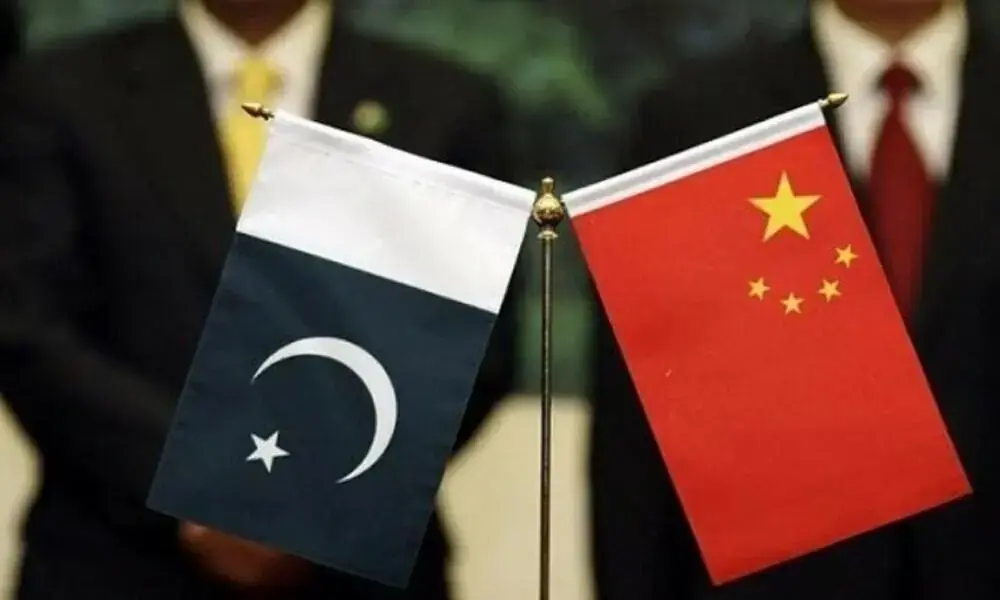
ISLAMABAD: The federal government said that Pakistan has the potential for USD 6 to USD 8 billion in mineral exports annually and invited Chinese companies to participate in the Pakistan Minerals Investment Forum (PMIF) 2026, to be held on April 8 and 9, to strengthen economic and investment cooperation between Pakistan and China under CPEC.“Pakistan’s mineral exports have the potential to reach USD 6 to USD 8 billion annually within this decade through value addition. We extend a formal invitation to all the Chinese companies and delegates present here to participate in the PMIF-2026 scheduled to be held in April.Pakistan is richly endowed with mineral resources, including copper, gold, coal, zinc, lead, gemstone rare earth elements, and other strategic minerals.READ MORE: Meeting reviews PMIF 2026 preparationsThe government is taking concrete initiatives to enhance mineral exploration, promote value addition, and ensure maximum economic benefit through sustainable and responsible development of the mineral sector,” Minister for Planning, Minister for Petroleum Ali Pervaiz Malik and Minister for Board of Investment (BOI) Qaiser Ahmed Sheikh expressed these views while addressing separately to Pak–China Mineral Cooperation Forum in Islamabad on Wednesday.The forum was attended by Ambassador of the People’s Republic of China to Pakistan Jiang Zaidong, senior government officials, representatives of Chinese and Pakistani companies, investors, and key stakeholders from the mineral and industrial sectors.Speaking at the launch ceremony of the China-Pakistan Mineral Cooperation Forum, Federal Minister for Planning, Development and Special Initiatives Ahsan Iqbal said “Pakistan and China are entering a new and important phase of their economic partnership by making mineral development a key focus of CPEC Phase-2, which aims to turn connectivity into productivity, exports, and long-term economic growth.”He said both countries are reshaping their strategic partnership around mineral-based industrial development, with Gwadar set to play a central role as the main gateway linking Pakistan’s mineral-rich areas to regional and international markets.The minister said the China-built international airport in Gwadar has put the port city in a strong position to support Pakistan’s next phase of growth. He added that “Gwadar is now ready to operate not only as a modern port city but also as a centre for the mining industry by connecting Pakistan’s mineral resources with global markets.”Highlighting Pakistan’s unused mineral potential, Ahsan Iqbal said the country has about 92 known minerals, of which 52 are currently being mined, with nearly 5,000 active mines and yearly production of around 68.5 million metric tons. Despite this, he noted that mineral exports remain low, contributing only 2 to 3 percent to the country’s GDP.“This gap between potential and performance is largely due to lack of value addition,” he said, adding that over 90 percent of mineral exports were raw or semi-processed, while only about 40 percent of Pakistan’s land had been geologically mapped.Citing marble and granite reserves stretching from Turbat to Chitral, the minister said, “There is a huge opportunity for Chinese enterprises to invest in modern cutting and processing technologies so Pakistan can become a global hub for world-class marble and earn billions of dollars from this sector alone.”He said with improved governance, technology and strategic partnerships, Pakistan’s mineral exports could rise to USD 6–8 billion annually within this decade, support GDP growth of around six percent and generate more than 350,000 direct and indirect jobs.He said “China plays a key role in this transformation because of its experience in the entire mining process, including geological surveys, modern mining, processing, smelting, refining, environmental protection, and project financing.” He added that existing projects such as Saindak Copper-Gold, Duddar Lead-Zinc, and Thar Coal show the strong potential of cooperation between the two countries.The minister said “Pakistan is now moving beyond simple mining by setting up mineral processing plants, smelters, refineries, and mineral-based industries connected to special economic zones and transport corridors.”He identified the Naukundi–Mashkhel–Turbat–Gwadar corridor as a potential flagship project to directly connect Balochistan’s mineral belt with Gwadar Port.Ahsan Iqbal said the government had strengthened institutional coordination through the Special Investment Facilitation Council to ensure fast-track approvals, policy consistency and robust security arrangements, reaffirming that the safety and security of Chinese nationals and investments remained a top national priority.Inviting Chinese enterprises to take a leading role in developing copper, gold, rare earths and other critical minerals vital for clean energy and advanced manufacturing, the minister said, “With China as our trusted partner, Pakistan is determined to convert its mineral wealth into industrial strength, export competitiveness and shared prosperity.”Addressing the ceremony, Federal Minister for Petroleum Ali Pervaiz Malik invited Chinese companies to take part in the PMIF 2026, scheduled for April 8 and 9 this year.He said Chinese participation would be especially welcome through a country pavilion displaying mining skills, technologies, and equipment. He added that the forum would provide a focused platform for direct engagement with policymakers, regulators, and project sponsors.The minister said that under the China-Pakistan Economic Corridor (CPEC), Chinese investment has played a key role in quickly expanding Pakistan’s power generation capacity through various energy projects, helping to overcome a long-standing barrier to economic growth.He noted that China was among the first countries to recognise the strategic importance of the mining sector and now holds a strong position in rare earth elements and key metals such as antimony, while also leading globally in copper smelting and refining.The minister said rising confidence among local investors shows a stable and sustainable business environment, adding that more Pakistani companies are entering the mining sector and forming partnerships with international firms.With global demand increasing for copper and other critical minerals needed for the energy transition, he said Pakistan, with China’s support, is positioning itself as a dependable long-term partner in the global mineral supply chain.Federal Minister for Board of Investment (BOI) Qaiser Ahmed Sheikh said the Forum was a significant initiative aimed at further strengthening economic and investment cooperation between Pakistan and China.He said that more than 300 Pakistani companies visited China in September 2025, resulting in the signing of 167 Memorandums of Understanding (MoUs) during the Pak-China Business-to-Business Conference. He informed that the BOI is actively pursuing the implementation of all signed MoUs to translate commitments into tangible investment outcomes.Highlighting Pakistan’s vast untapped potential, the Minister said “Pakistan is richly endowed with mineral resources, including copper, gold, coal, rare earth elements, and other strategic minerals.” He emphasized that the government is taking concrete initiatives to enhance mineral exploration, promote value addition, and ensure maximum economic benefit through sustainable and responsible development of the mineral sector.The minister reiterated that the BOI is providing maximum facilitation to investors by improving the Ease of Doing Business, offering incentives through Special Economic Zones (SEZs), and streamlining approval processes.He added that regulatory reforms are under way to further improve the investment climate and create a more conducive environment for foreign investors in Pakistan.Delivering the keynote address, Ambassador Jiang Zaidong reaffirmed China’s strong interest in investing in Pakistan’s mining sector and in supporting skills development and the use of modern technology. He stressed that steady cooperation and innovation are important to move the sector forward, while responsible mining can improve the use of resources and build positive relations with local communities.He noted that the Saindak project alone has trained more than 5,200 local workers and repeated China’s commitment to increasing local participation and providing organized support to companies operating in Pakistan. He also highlighted China’s focus on developing “small and beautiful projects,” including initiatives in infrastructure, education, and healthcare, as part of wider development cooperation.Wang Jicheng, Chairman of MCC (Metallurgical Corporation of China) shared insights from Chinese mining operations in Pakistan, highlighting the role of technology transfer, workforce training, and adherence to best practices. He reaffirmed MCC’s long-term commitment to Pakistan’s mineral sector and its focus on expanding cooperation in exploration, mining, and downstream development while contributing to local employment and skills enhancement.Copyright Business Recorder, 2026

#COMMODITIES
Hedging the messenger rather than the message?
brecorderhace 132d

Hedging the messenger rather than the message?

You’d think it’s as simple as short the dollar, buy gold, load up on some safe-haven Swiss francs and let a disorderly world do the rest. The trade looks almost too clean. The signals align almost too easily. Escalatory policy signals emanate from Washington, the dollar weakens, gold pushes to new highs, and capital drifts toward assets designed to absorb uncertainty.If markets genuinely believed that sequence pointed to an imminent systemic rupture, the stress would already be visible in persistent volatility, widening credit spreads and dislocated funding markets.It is not. That is the tension worth examining.The puzzle is not whether Donald Trump’s return has unsettled the international order. It clearly has. The question is why market responses feel decisive yet contained. Why trades line up neatly while strain remains oddly selective. Why investors appear to be hedging something they are not yet prepared to name.Gold’s rally is the most conspicuous signal, yet even here the message resists a simple reading. This does not resemble a classic inflation trade. Nor does it look like a growth scare. Equity markets remain buoyant. Earnings expectations have not collapsed. Capital continues to flow into risk assets. Gold is rising alongside them rather than displacing them.That pairing is unusual. When gold surges into recessions, it tends to crowd out risk. When it rises while equities hold their ground, what exactly is being insured? Is the hedge aimed at macro outcomes, or at something more elusive, such as confidence in the framework through which those outcomes are now produced?Perhaps the more precise question is whether markets are hedging results at all, or whether they are hedging the process.The dollar’s behaviour fits the same uneasy pattern. It is weakening, but not fracturing. It is being questioned, not abandoned. Its share of global reserves remains dominant. Its infrastructure still anchors global trade and finance. Yet political stress now leaves visible marks where it once dissipated. Currency traders appear less focused on where policy ultimately lands than on how casually it is articulated along the way.When a president dismisses dollar weakness as “great,” how should markets interpret that signal? As reassurance that disorder is manageable, or as indifference to the costs of it? Markets tend to assume that tone matters, especially when it comes from the issuer of the world’s reserve currency.And yet, if this were a full-blown confidence shock, would the response not be more forceful? Volatility rises, but struggles to remain elevated. Credit spreads widen, but only incrementally. Funding markets remain orderly. Capital has not exited US assets en masse. It has paused. It has hesitated.What does it mean when markets hedge aggressively while refusing to panic?Part of the answer may lie in positioning. Equity markets sit near record highs. Volatility protection remains relatively inexpensive by historical standards. Many investors openly acknowledge they are under-hedged. That configuration is sustainable only if disruption remains bounded, if escalation eventually gives way to correction. In other words, it works only if the recent reflex still holds: markets flinch, Washington blinks, order reasserts itself.That reflex now has a name. The TACO trade. Trump Always Chickens Out.It has been a remarkably durable assumption. Tariff threats are announced, then softened. Institutional pressure mounts, then recedes. Markets wobble, then recover. Each episode reinforces the belief that escalation has limits.But does repetition strengthen that belief, or quietly erode it?Because there is an irony embedded in this dynamic that markets rarely confront directly. If escalation is discounted in advance, what mechanism remains to enforce restraint? If pain is pre-empted rather than imposed, how does discipline function? At what point does the expectation of reversal itself become destabilising?This is where politics intrudes in ways markets cannot fully hedge. Trump’s posture no longer appears episodic. It is structural. Trade policy is no longer framed solely as negotiation, but as leverage. Economic instruments bleed into strategic rhetoric. Institutional boundaries are tested repeatedly rather than incidentally. Discretion begins to substitute for rules.None of this produces immediate collapse. Why should it? Systems rarely fail all at once. They fray. They absorb stress incrementally. Participation continues, but conviction thins. Confidence becomes conditional.That conditionality is increasingly visible beyond US borders. “Middle powers” speak openly about reducing reliance on Washington. Trade arrangements proceed without it. Currency exposure is reconsidered at the margin. None of this dethrones the dollar. It simply introduces choice where there was once assumption.Is that how reserve currencies erode, not through rebellion, but through optionality?What is striking is that markets appear to grasp this intuitively while refusing to dramatise it. Gold rises, yet credit remains calm. Safe haven currencies also strengthen, yet funding markets remain functional. Volatility flares, then recedes. Investors seem to be preparing for a future they are not yet ready to price.Perhaps that is the defining feature of this moment. Not fear, but vigilance. Not panic, but anticipation. The sense that something has shifted, without consensus on how far that shift can extend.Which raises an uncomfortable question. Are markets leaning too heavily on their own adaptability? Have they mistaken resilience for immunity? Have years of trading through disruption bred genuine robustness, or complacency?Trades built on behavioural certainty tend to expire quietly, right up until they do not.The deeper risk may not be that Trump breaks the system abruptly. It may be that markets normalise conduct that once would have triggered alarm. That each shock is absorbed faster than the last. That irony becomes insulation.And then, eventually, a boundary is crossed not because anyone intended to cross it, but because no one believed it still existed.Markets will not flag that moment in advance. They never do. They will not label it a crisis of governance or institutional drift. They will register it in the only language they trust. Through price. Through correlations that stop behaving. Through hedges that no longer hedge what they were designed to.Until then, the trade still looks deceptively straightforward. Short the dollar. Buy gold. Hold some Swiss francs. Trade the noise.The harder question is what happens when the noise stops being noise, and markets realise they have been hedging the messenger rather than the message.Copyright Business Recorder, 2026
#COMMODITIES
APTMA explains how textile exporters are being squeezed
brecorderhace 132d

APTMA explains how textile exporters are being squeezed

ISLAMABAD: The All Pakistan Textile Mills Association (APTMA) on Wednesday warned the government that surging input and energy costs, mounting regulatory burdens and shifting global market dynamics are squeezing textile exporters.The association cautioned that the sector’s competitiveness, export growth, and jobs creation are under serious threats without stable and supportive policy framework.Federal Minister for Finance and Revenue Senator Muhammad Aurangzeb, along with Federal Minister for Petroleum Ali Pervaiz Malik, held a meeting on Wednesday with a delegation of the APTMA and assured the industry of the government’s continued engagement to address key challenges facing the textile sector.READ MORE: Value-added textile segment grows to $7.70bn YoY in 1H FY26APTMA delegation briefed the ministers on the prevailing situation of the textile sector and highlighted the pressures being faced by exporters in an increasingly competitive global environment.The delegation noted that changing international market dynamics and rising input costs have created challenges for the sector and underscored the need for a supportive and stable operating framework to sustain export growth and employment.The delegation also drew attention to issues related to energy costs, regulatory compliance and taxation, noting that cumulative cost pressures affect competitiveness in export markets.The need for consistency in policies, timely resolution of operational issues and continued dialogue with the Government was emphasized to enable the industry to plan and invest with confidence.APTMA delegation presented a number of demands to the ministers, focusing on restoring industrial competitiveness and export viability. They called for regionally competitive power tariffs of 8–9 cents/kWh, compared to the current 13 cents/kWh, and demanded removal of Rs. 102 billion in cross-subsidies on industrial power.APTMA urged replacing the outdated Time-of-Use (ToU) regime with a single 24-hour tariff for B3/B4 consumers to improve capacity utilization, stabilize industrial operations, and discourage off-grid migration.The delegation highlighted power shortages in LIEDA, seeking exemption from the captive power levy until grid supply meets demand, and clearance of RCET differential payments for verified zero-rated industries.APTMA also flagged miscalculation in OGRA’s RLNG price actualization (2015–22), estimating an industry overcharge of USD 260–442 million, and demanded transparent recalculation and suspension of recoveries.They called for recalculation of the captive power levy using lawful methodology, removal of legacy costs from wheeling charges, and reforms to Pakistan’s 18% sales tax structure, proposing a graduated tax regime to ease liquidity pressures.APTMA demanded restoration of the 1% fixed tax regime for exporters, reduction of minimum turnover tax to 0.5%, single-digit interest rates, and immediate safeguards for domestic spinning and weaving sectors against rising imports, particularly from China.During the meeting, the Ministers emphasized that the textile industry remains a cornerstone of Pakistan’s economy due to its significant contribution to exports, employment and industrial activity, and reiterated the Government’s resolve to support its sustainability within the broader economic reform framework.The Ministers further reaffirmed the government’s commitment to maintaining a fair and predictable policy environment for businesses, highlighting the importance of equity, transparency and broad-based participation across the economy. It was emphasized that efforts are underway to address genuine concerns of compliant sectors, while advancing structural reforms through consultation and institutional processes.The Finance Minister acknowledged the concerns raised by the delegation and stated that the Government is actively reviewing various issues affecting the cost of doing business for export-oriented industries.He noted that energy affordability and reliability remain important priorities and that relevant options are being examined in consultation with concerned ministries and stakeholders to improve efficiency and competitiveness, while ensuring fiscal responsibility and system sustainability.Aurangzeb underlined that reforms in the energy sector are being pursued in a balanced manner to support industrial productivity and protect the long-term interests of the national economy.He noted that immediate issues requiring attention are being reviewed on priority, while broader policy matters would be taken forward through established budgetary and reform mechanisms.Copyright Business Recorder, 2026

#ECONOMY
Banking sector: NADRA chief assures ZTBL’s CEO of supporting evolving needs
brecorderhace 132d

Banking sector: NADRA chief assures ZTBL’s CEO of supporting evolving needs

ISLAMABAD: Chairman National Database and Registration Authority (NADRA), Lieutenant General Muhammad Munir Afsar, on Wednesday reaffirmed the authority’s commitment to supporting the evolving needs of the banking sector.He made these remarks during a meeting with President and Chief Executive Officer (CEO) of Zarai Taraqiati Bank Limited (ZTBL), Tahir Yaqoob Bhatti.Chairman NADRA highlighted the vital role of his organisation in providing comprehensive identity verification and financial services to banks, thereby strengthening digital banking security, regulatory compliance, and financial inclusion.ZTBL President Bhatti acknowledged NADRA’s crucial role in facilitating banking operations. He also highlighted the bank’s remarkable turnaround over the past three years, marked by record loan disbursement, recovery of long-standing advances, and highest-ever profits.Additionally, Bhatti emphasized ZTBL’s milestone achievements, including the launch of various digital banking products and services for the first time.Chairman NADRA appreciated ZTBL’s outstanding performance and its contribution to strengthening the rural economy. In turn, President/CEO Bhatti expressed gratitude for the prompt resolution of a critical NADRA-related issue faced by the bank. Both reaffirmed their commitment to working closely together to promote inclusive growth and improve access to financial services for the country’s small farmers.Copyright Business Recorder, 2026

#ECONOMY
Gold sets fresh historic benchmark of Rs551,662/tola
brecorderhace 132d

Gold sets fresh historic benchmark of Rs551,662/tola

KARACHI: Gold and silver prices further soared, hitting new all-time highs on Wednesday, with international bullion market inching closer to USD 5,300 per ounce, traders said.Local gold prices posted a record single day increase of Rs21,100 to set fresh historic benchmark of Rs551,662 per tola and Rs180,90 to Rs472,961 per 10 grams, according to All Pakistan Sarafa Gems and Jewellers Association.Domestic silver prices also grew further by Rs271 and Rs232, settling at new height of Rs11,911 per tola and Rs10,211 per 10 grams, respectively, the association added.Copyright Business Recorder, 2026

#COMMODITIES
benzingahace 132d

Waton Financial Limited Reports Unaudited Financial Results for the First Six Months of Fiscal Year 2026

HONG KONG, Jan. 28, 2026 (GLOBE NEWSWIRE) -- Waton Financial Limited (NASDAQ:WTF) ("Waton" or the "Company"), a provider of securities brokerage and financial technology services, today announced its unaudited financial results for the first six months ended September 30, 2025, representing the first half of fiscal year 2026.Management Commentary"We are pleased with our revenue growth in the first half of fiscal 2026, particularly in our core brokerage operations, which benefited from investor interest in the Hong Kong market," said ZHOU Kai, Chairman of the Board and Chief Technology Officer of the Company. "While we continue to invest in talent, technology, and compliance to support our and long-term expansion, including potential enhancements in virtual assets and AI-driven services as outlined in our recent Form 20-F filing, we remain focused on driving sustainable profitability and shareholder value amid evolving market dynamics."First Six Months of Fiscal Year 2026 Financial HighlightsTotal Revenues: Increased by 106.3% to $6.10 million for the six months ended September 30, 2025, from $2.96 million for the six months ended September 30, 2024, driven primarily by growth in brokerage and commission income.Brokerage and Commission Income (including related parties' portion): Increased by 223.1% to $4.17 million for the six months ended September 30, 2025, from $1.29 million for the six months ended September 30, 2024, reflecting increased trading volumes and customer engagement.Interest Income (including related parties' portion): Increased by 83.8% to $0.96 million for the six months ended September 30, 2025, from $0.52 million for the six months ended September 30, 2024, supported by expanded margin financing to customers.Operating Loss: Increased to $8.45 million for the six months ended September 30, 2025, from $0.92 million for the six months ended September 30, 2024, primarily due to an increase in staff compensation and benefits in share-based compensation as a result of our business expansion, our research and development initiatives and professional fees for our initial public offering we closed on April 1, 2025 (the "IPO"), all of which were recognized during the six months ended September 30, 2025 (2024: nil).Net Loss: Increased to $8.37 million for the six months ended September 30, 2025, or $0.17 per basic and diluted share, as compared to $1.15 million, or $0.03 per basic and diluted share for the six months ended September 30, 2024.Adjusted Net Loss: Being net loss excluding share-based compensation expenses of $6.10 million and its corresponding tax effects. Approximately $2.26 million for the six months ended September 30, 2025, as compared to $1.15 million for the six months ended September 30, 2024.Cash Position: Cash and cash equivalents plus cash segregated under regulatory requirements increased by 115.0% to $29.88 million as of September 30, 2025, from $13.90 million as of March 31, 2025, primarily attributable to the closing of the IPO.Total Assets: Increased to $68.98 million as of September 30, 2025, from $30.72 million as of March 31, 2025, reflecting our business expansion during the period.First Six Months of Fiscal Year 2026 Financial ResultsRevenueRevenue increased by 106.3% to $6.10 million for the six months ended September 30, 2025, from $2.96 million for the six months ended September 30, 2024. The increase in revenue was mainly driven by the increase in brokerage and commission income:Revenue from brokerage and commission income, including the related parties' portion, increased to $4.17 million for the six months ended September 30, 2025, from $1.29 million for the six months ended September 30, 2024, primarily attributable to the increase in security brokerage income resulting from the increased trading activity amid enthusiasm in the Hong Kong stock market during the period.Interest income, including the related parties' portion, increased by 83.8% to $0.96 million for the six months ended September 30, 2025, from $0.52 million for the six months ended September 30, 2024. The increase was primarily due to an increase in margin loan extended to margin customers during the six months ended September 30, 2025 in comparison with the six months ended September 30, 2024.Revenue from software licensing (including subscription-based licenses) and related support services income, including the related parties' portion, decreased by 42.3% to $0.66 million for the six months ended September 30, 2025, from $1.15 million for the six months ended September 30, 2024. The decrease was mainly due to the decrease in the number of software licensing and related support services customers for the six months ended September 30, 2025 in comparison with the six months ended September 30, 2024.Operating Costs and ExpensesTotal operating costs and expenses increased to $13.81 million for the six months ended September 30, 2025, from $3.88 million for the six months ended September 30, 2024. The increase was mainly due to an increase in staff compensation and benefits (including share-based compensation) as a result of our business expansion.Compensation and benefits increased to $8.23 million for the six months ended September 30, 2025, from $1.47 million for the six months ended September 30, 2024. Primarily as a result of i) an increase in number of employees as well as average salary level, as a result of our business expansion; and ii) increase in share-based compensation expenses of $6.10 million for the six months ended September 30, 2025, from nil for the six months ended September 30, 2024, resulting from the granting of restricted share units following its 2024 Global Equity Incentive Plan adopted in November 2024.Professional service fee increased to $1.01 million for the six months ended September 30, 2025, from $0.77 million for the six months ended September 30, 2024, primarily resulting from the effort for listing of the Company's share on Nasdaq and ongoing compliance costs as a listed company during the period.Commissions and brokerage fees increased to $1.64 million for the six months ended September 30, 2025, from $0.17 million for the six months ended September 30, 2024, and interest expenses increased to $0.35 million from $0.09 million during the period were primarily in line with our business expansion.Loss from OperationsLoss from operations increased to $7.71 million for the six months ended September 30, 2025, from $0.92 million for the six months ended September 30, 2024, primarily attributable to the increase in operating costs and expenses described above.Other ExpenseThe total other expense, net increased to $0.66 million during the six months ended September 30, 2025, from total other expense, net of $0.30 million for the six months ended September 30, 2024, which was primarily attributable to the decrease in loss from the equity method investment to $0.03 million and an increase from changes in net asset value, or NAV, of investment securities to $0.74 million during the period.Net Income (Loss) Net loss increased to $8.37 million for the six months ended September 30, 2025, from the net loss of $1.15 million for the six months ended September 30, 2024, due to the above-referenced reasons.Adjusted Net LossOur adjusted net loss, which excludes share-based compensation expenses of $6.10 million and its related income tax effects for the six months ended September 30, 2025 (2024: nil), was approximately $2.26 million for the six months ended September 30, 2025, as compared to the adjusted net loss of approximately $1.15 million for the six months ended September 30, 2024.Basic and Diluted Loss per ShareBasic and diluted loss per share increased to $0.17 for the six months ended September 30, 2025, from loss per share of $0.03 for the six months ended September 30, 2024 due to the above-referenced reasons.Financial ConditionAs of September 30, 2025, cash and cash equivalents, plus cash segregated under regulatory requirements, increased by 115.0% to $29.88 million as of September 30, 2025, from $13.90 million as of March 31, 2025.Net cash used in operating activities was $1.44 million for the six months ended September 30, 2025, compared to $2.55 million for the six months ended September 30, 2024, primarily attributable to a slight increase in outstanding payments to suppliers during such period.Net cash used in investing activities was $2.38 million for the six months ended September 30, 2025, compared to net cash used in investing activities of $0.01 million for the six months ended September 30, 2024, attributable to the subscriptions in certain investment funds during such period.Net cash provided by financing activities increased to $19.79 million for the six months ended September 30, 2025, compared to net cash used in financing activities of $1.90 million for the six months ended September 30, 2024, primarily attributable to the proceeds of our IPO share issuances during such period.Non-GAAP Financial Measures and Forward-Looking StatementsThis press release contains certain non-GAAP financial measures, including Adjusted Net Loss, that are used by management to evaluate our operating performance and to provide investors with additional insight into the Company's underlying results. These non-GAAP measures should not be considered in isolation, as a substitute for, or superior to financial information prepared in accordance with U.S. GAAP. They may differ from similarly titled measures used by other companies.We believe the presentation of these non-GAAP measures provides useful supplemental information for investors by facilitating period-to-period comparisons of our operating performance. A reconciliation of each non-GAAP measure to the most directly comparable GAAP measure is included in the accompanying financial tables. To the extent that forward-looking non-GAAP measures are provided, such measures are presented without reconciliation to the most directly comparable GAAP measures because such reconciliations are not available without unreasonable efforts.This press release also contains certain "forward-looking statements" within the meaning of federal securities laws, including, but not limited to statements regarding plans, objectives, strategies, future events, performance, and underlying assumptions and other statements that are not historical facts. These forward-looking statements involve known and unknown risks and uncertainties and are based on the Company's current expectations and projections about future events, which may affect the Company's financial condition, operating results, business strategy, and capital needs. Investors can identify these forward-looking statements by words such as "believe," "plan," "expect," "intend," "should," "seek," "estimate," "will," "target," "anticipate," or similar expressions. Except as required by law, the Company does not undertake any obligation to publicly update or revise any forward-looking statements to reflect subsequent events or circumstances or changes in its expectations. While the Company believes the expectations reflected in these forward-looking statements are reasonable, it cannot guarantee these expectations will prove correct and cautions investors that actual results may differ materially from anticipated results, and encourages investors to review the Company's registration statements and other filings with the U.S. Securities and Exchange Commission for additional factors that could affect its future performance.CONTACTSMedia Inquiries

#STOCKS
Altcoin Season Index Surges 7 Points: A Crucial Signal for the 2025 Crypto Market
bitcoinworldhace 132d

Altcoin Season Index Surges 7 Points: A Crucial Signal for the 2025 Crypto Market

BitcoinWorldAltcoin Season Index Surges 7 Points: A Crucial Signal for the 2025 Crypto MarketGlobal cryptocurrency markets witnessed a notable shift on March 21, 2025, as CoinMarketCap’s pivotal Altcoin Season Index climbed seven points to reach a reading of 32. This significant movement provides a crucial, data-driven signal for investors navigating the complex digital asset landscape. The index serves as a primary barometer for identifying whether capital is flowing [...]This post Altcoin Season Index Surges 7 Points: A Crucial Signal for the 2025 Crypto Market first appeared on BitcoinWorld.

#CRYPTO
NAS demands funding shift to turn research into economic value
vanguardngrhace 132d

NAS demands funding shift to turn research into economic value

Nigeria’s scientific community has renewed calls for improved research funding, warning that without sustained investment, the country risks missing out on the economic and social benefits of innovation.The post NAS demands funding shift to turn research into economic value appeared first on Vanguard News.

#COMMODITIES