Panel

Noticias Financieras

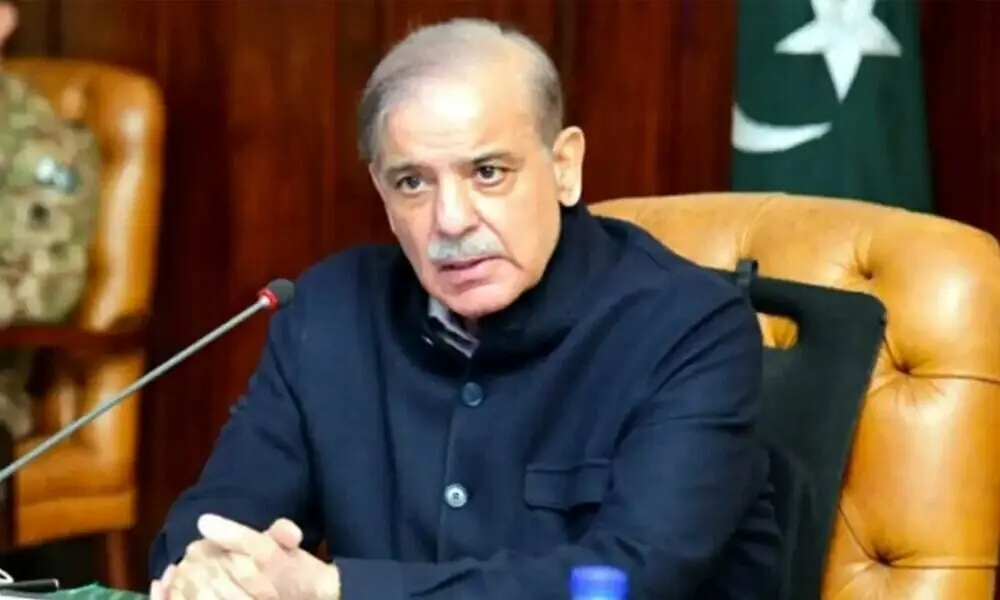
Businessmen laud PM’s new incentives for export industry
brecorderhace 112d

Businessmen laud PM’s new incentives for export industry

LAHORE: The business community has expressed appreciation for Prime Minister Shehbaz Sharif’s recent announcement of incentives for Pakistan’s export industry, according to former Chairman of the Pakistan Readymade Garments Manufacturers & Exporters Association (PRGMEA) North Zone, Adeeb Iqbal Sheikh, who spoke on Sunday. Industry leaders recognised this initiative as a crucial step toward revitalising the country’s manufacturing sector and enhancing its global competitiveness.The timely announcement comes at a critical juncture when Pakistan’s export industry faces unprecedented challenges, particularly with India’s impending free trade agreement with the European Union. There are legitimate concerns among Pakistani exporters that international buyers may shift their sourcing to India once the FTA becomes operational, which could potentially devastate Pakistan’s marketshare in key sectors including textiles, leather goods, and light engineering products.While welcoming the prime minister’s commitment to supporting the export sector, industry stakeholders have emphasised the urgent need for comprehensive policy interventions to safeguard Pakistan’s export interests. They have called for the establishment of a dedicated Export Development Fund, which should be prioritised to provide financial cushioning and capacity building forexporters who are navigating increasinglycompetitive international markets.Most critically, Pakistan must take decisive action to maintain its GSP Plus status with the European Union, which currently provides preferential tariff access to European markets. This trade preference has proven essential for Pakistani exporters to remain competitive in the global marketplace. However, the business community stresses that merely retaining GSP Plus status will be insufficient once India secures its comprehensive FTA with the EU, as Pakistani products would still face a competitive disadvantage.Adeeb Sheikh stated that to level the playing field, Pakistan’s export industry requires a zero percent GST regime. The current taxation structure places an unnecessary burden on exporters, reducing their profit margins and making them less competitive internationally. According to industry leaders, eliminating GST for export-oriented industries would directly translate into better pricing, enhanced competitiveness, and increased market share in global markets.He suggested that Pakistan must urgently reform its labour laws by following the Bangladesh model, which has proven highly successful in attracting foreign investment and facilitating rapid export growth. Bangladesh’s flexible yet fair labour framework has been instrumental in transforming the country into a manufacturing powerhouse, particularly in the ready-made garment sector. Industry experts believe that similar reforms in Pakistan would improve the ease of doing business, attract international buyers, and create millions of employment opportunities for Pakistani workers.Adeeb Sheikh further emphasised that while the government’s recognition of the export sector’s importance is commendable, implementation will be the key to success.The business community stands ready to collaborate with policymakers in developing and executing a robust export strategy that can protect Pakistan’s interests in an increasingly competitive global marketplace. He stressed that time is of the essence, warning that decisive action taken today will determine Pakistan’s economic trajectory for decades to come.The export sector represents a vital component of Pakistan’s economy, and the challenges posed by regional competition require immediate and comprehensive responses. Industry leaders are hopeful that the government will move swiftly to implement the necessary reforms and support mechanisms that will enable Pakistani exporters to maintain their competitiveness and grow their presence in international markets despite mounting regional and global challenges.Copyright Business Recorder, 2026


#ECONOMY
India budget ‘tactical’, not ‘breakthrough’: Moody’s
brecorderhace 112d

India budget ‘tactical’, not ‘breakthrough’: Moody’s

MUMBAI: India’s annual federal budget was “tactical” but not a “breakthrough”, Moody’s Ratings said in its reaction to a government roadmap for the next financial year.Planned fiscal consolidation, which will bring the budget gap to 4.3 percent from 4.4 percent in the current year, will not change India’s credit profile, Christian de Guzman, senior vice president at Moody’s Ratings, told Reuters. “(Despite India’s) lengthening track record of deficit consolidation or fiscal discipline, this deficit is still wider than what it was prior to Covid,” Guzman said.“We haven’t seen the fiscal metrics improve sufficiently enough to actually change the credit profile,” he said.The economy is seen growing at 7.4 percent in the current financial year, with inflation likely to be near 2 percent. The fiscal deficit for the year is set to be 4.4 percent of gross domestic product.Moody’s Ratings last year affirmed its long-term local and foreign-currency sovereign ratings for Indian and retained its “stable” outlook, citing sustained strength in its economy and reliable domestic funding for its budget deficits.

#ECONOMY
Pakistan’s remittance mirage
brecorderhace 112d

Pakistan’s remittance mirage

Pakistan’s recent brush with macroeconomic stability looks impressive, until one inspects the scaffolding. The economy is being held up not by productivity, exports, or investment, but by an extraordinary and historically anomalous surge in workers’ remittances.These inflows are now brushing up against 9 to 10 percent of GDP, placing Pakistan among the most remittance-dependent large economies on record. Bangladesh, often cited as a peer success story, sits closer to 6 percent, while India, with its vast diaspora, is around 4 percent. This is not diversification. It is concentration risk on a grand scale. More than half of these inflows originate in the Gulf, a region hardly known for geopolitical calm or cyclical stability.In 2025, remittances exceeded $40 billion, roughly equal to the combined value of goods and services exports and comfortably above goods exports alone, by roughly a quarter. Exports, meanwhile, remain stuck below their FY22 highs. Over the past two years, remittances have surged by more than 40 percent, while exports have gone nowhere. This is not an export-led recovery. It is a transfer-fueled one.To be sure, remittances have played a critical stabilizing role. They have plugged balance-of-payments gaps, supported the exchange rate, and powered a modest cyclical rebound. Large-scale manufacturing has posted eye-catching growth rates, reaching double digits in late 2025 and averaging around 6 percent in early FY26. This has prompted the State Bank to lift its FY26 growth forecast above 4 percent.But this rebound is more illusion than renaissance. Growth is being driven by revived domestic demand, not by competitiveness or external traction. Export-oriented sectors continue to underperform. Autos and cement have recovered, but from deeply depressed levels and well short of past peaks. The telltale signs remain: a negative output gap, high unemployment, and chronically underutilized capacity.Investment, the true engine of durable growth, has been conspicuously missing. There has been little progress on export upgrading or credible import substitution. Much of the recent “feel-good” momentum in domestic sectors reflects administrative fixes, such as crackdowns on smuggling via Afghanistan and Iran, rather than productivity gains or structural reform.Macro stability has been engineered the hard way: through punishing fiscal tightening, elevated taxes, and prolonged inflation that has crushed real incomes. For most households, purchasing power remains below 2019 levels. Consumption has revived largely because remittances cushions recipient families, not because the economy has healed.The recovery is sharply K-shaped. Upper-middle and high-income households are snapping up SUVs and crossovers, with volumes soaring. Mass-market vehicles, motorcycles, and other staples lag in the recent growth momentum. Tractors, a reliable proxy for rural health, tell the bleakest story. Sales are down roughly 26 percent in the first half of FY26 and stand at barely half their 2022 levels. Agriculture is under strain from poor pricing policies, shrinking rice exports, border disruptions, and falling farm incomes.Outside a narrow band of services exports, ICT and business process outsourcing may reach $6 billion in FY26, but the cupboard is thin. Textiles are squeezed by weak domestic competitiveness and external headwinds, including US tariffs and intensifying competition in Europe. Even higher-end segments face pressure as trade realignments, including a potential EU–India deal, reshape market access.Geopolitics only sharpens the vulnerability. Pakistan’s strategic relevance attracts attention, but it also magnifies risk, especially when roughly a quarter of remittances come from Saudi Arabia and the bulk from an increasingly volatile Middle East.Remittances have bought Pakistan time, not transformation. They have delayed the next crisis, not removed it. Unless this window is used to rebuild exports, revive investment, and restore productivity growth, today’s stability will look less like a turning point and more like an intermission.Copyright Business Recorder, 2026

#ECONOMY
ecns_cnhace 112d

AI push moves innovation into everyday life

For Huang Xiaozhen, the future of artificial intelligence isn't about computing power or algorithmic scale, but about something far more ordinary: the quiet click of a light switch.

#TECH
Telegram founder calls WhatsApp users ‘brain-dead’ if they believe app is secure
arynewshace 112d

Telegram founder calls WhatsApp users ‘brain-dead’ if they believe app is secure

Telegram founder Pavel Durov has attacked WhatsApp’s security after Meta, its parent company, faced a U.S. class-action lawsuit. The suit alleges the messaging app misled users about the privacy of its encrypted messages. On Jan. 26, Durov wrote on X: “You’d have to be brain-dead to believe WhatsApp is secure in 2026. When we analyzed [...]

#TECH
SmartKem, Inc. (NASDAQ:SMTK) Short Interest Down 43.6% in January
themarketsdailyhace 112d

SmartKem, Inc. (NASDAQ:SMTK) Short Interest Down 43.6% in January

SmartKem, Inc. (NASDAQ:SMTK – Get Free Report) was the recipient of a large decrease in short interest in the month of January. As of January 15th, there was short interest totaling 14,773 shares, a decrease of 43.6% from the December 31st total of 26,215 shares. Currently, 0.3% of the shares of the company are short [...]

#STOCKS
ING Group, N.V. (NYSE:ING) Short Interest Down 46.0% in January
thelincolnianonlinehace 112d

ING Group, N.V. (NYSE:ING) Short Interest Down 46.0% in January

ING Group, N.V. (NYSE:ING – Get Free Report) saw a large decline in short interest during the month of January. As of January 15th, there was short interest totaling 2,318,170 shares, a decline of 46.0% from the December 31st total of 4,291,953 shares. Based on an average trading volume of 2,034,391 shares, the short-interest ratio [...]

#STOCKS
Short Interest in Bluerock Homes Trust, Inc. (NYSEAMERICAN:BHM) Decreases By 42.5%
tickerreporthace 112d

Short Interest in Bluerock Homes Trust, Inc. (NYSEAMERICAN:BHM) Decreases By 42.5%

Bluerock Homes Trust, Inc. (NYSEAMERICAN:BHM – Get Free Report) was the recipient of a large decline in short interest in the month of January. As of January 15th, there was short interest totaling 11,524 shares, a decline of 42.5% from the December 31st total of 20,046 shares. Based on an average daily volume of 7,833 [...]

#STOCKS
Short Interest in Intellinetics, Inc. (NYSEAMERICAN:INLX) Drops By 44.1%
watchlistnewshace 112d

Short Interest in Intellinetics, Inc. (NYSEAMERICAN:INLX) Drops By 44.1%

Intellinetics, Inc. (NYSEAMERICAN:INLX – Get Free Report) saw a significant decrease in short interest in the month of January. As of January 15th, there was short interest totaling 1,197 shares, a decrease of 44.1% from the December 31st total of 2,142 shares. Based on an average daily volume of 4,971 shares, the days-to-cover ratio is [...]

#STOCKS